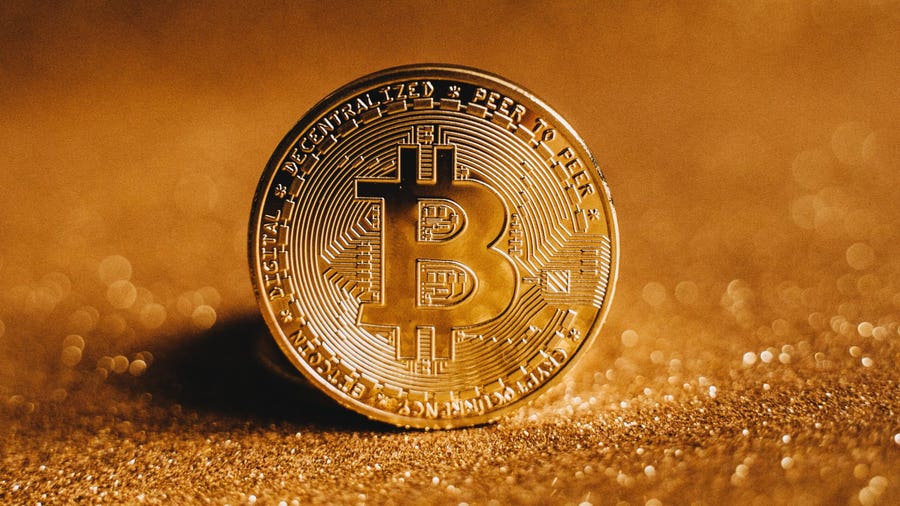
On Saturday, Feb. 10, 2024, bitcoin’s price soared beyond the $48K mark, reaching heights unseen since prior to Dec. 28, 2021. On Sunday, the leading digital currency maintained its robust momentum, consistently staying above the newly established price level. Over the last 24 hours, the crypto asset’s value has risen by over 2.6%, and it […]
Source link

CoinNews
Your eyes aren’t fooling you — your car repair bill really is getting more expensive.
Several factors are pushing costs up: heavier, more complex vehicles, new materials and manufacturing methods, a worsening dearth of talented technicians and pandemic-induced supply shortages.
“Customers definitely are getting sticker shock,” said David Goldsmith, who owns Urban Classics, a repair shop in the Brooklyn borough of New York City.
Repair costs are rising relative to the overall rate of inflation. Motor vehicle maintenance and repair costs increased 4.1% per year from November 2013 to November 2023, compared with just 2.8% for the overall consumer price index.
The increase has been especially sharp since the pandemic. Prior to it, repair costs increased at an annual rate of somewhere around 3.5% to 5%, according to Mitchell, which makes software for the collision repair and auto insurance sectors. But in 2022, the rate jumped to about 10%, and hasn’t dropped since.
The problem is mysterious.
“I think the thing that we can say is true is that the cost of collision insurance claims are increasing,” said Matt Moore, who is senior vice president of the Highway Loss Data Institute, at the Insurance Institute for Highway Safety. “After that, it’s difficult to say why that is.”
Vehicles could be more expensive to repair. Crashes could also be more severe.
Cars were 33% heavier in 2022 than they were in 1985, and about twice as powerful, according to HLDI. Meanwhile, speeding and traffic crashes have increased.
Heavier vehicles colliding at higher speeds means worse crashes.
Data could also be skewed. Low speed crashes, which tend to be less severe and lower cost, are happening less often as safety technology improves.
Cars are also stuffed with more stuff, so more can go wrong. Nearly 20% have turbochargers attached to engines, which squeezes more power out and improves efficiency. Two-thirds have all-wheel drive systems — a huge jump over the 10% in the 1980s. All these tweaks add equipment that can break.
Lightweight materials such as aluminum are increasingly popular but can be brittle and require replacement. Cars have fewer parts thanks to new manufacturing methods, but the ones they have are huge and more costly to replace.
Changes don’t stop there.
“Your average regular car now is basically a rolling network of computers,” Goldsmith said.
The computerization of cars has been slowly developing for decades, but it changed “dramatically” in the last decade, said Ryan Mandell, director of performance consulting at Mitchell.
“You can have the same kind of accident that you would have 10 years ago,” Mandell said. “But now you have three additional sensors that are on the part of the vehicle that was impacted that you now have to potentially replace.”
Meanwhile, talent to repair cars is scarce. The Covid-19 pandemic exacerbated a longstanding shortage.
In 2019, the average labor rate for repairs was under $50 an hour in the U.S., according to Mitchell. At the end of 2023, it was close to $60. Most of those increases came in 2022 and 2023.
As people drove less during the Covid years, demand for repairs dried up. Technicians left the industry in search of other work.
The pandemic also drove up the cost of parts. Shipping disruptions contributed to the increase.
In 2022, the cost of parts sourced from automakers rose 10%, and aftermarket parts rose 17%, compared with the usual annual inflation rate of 0% to 4%.
Many in the auto space think costs can’t continue to rise at these rates. The industry is making its biggest shifts in the last hundred years — from gasoline to electric, and from mechanical to digital.
“If cars are to be affordable, they must also be affordable to maintain,” said Alan Amici, president and CEO of the Center for Automotive Research. “And they must be affordable to repair, or else we’re going to have fewer vehicle sales. So I think the automakers are going to be motivated to drive those costs down.”
Watch the video to learn more.
She’s at it again: Cathie Wood, the head of Ark Invest, is snapping up shares of Tesla (TSLA 2.12%) with purchases worth more than $160 million so far in 2024.
Is it a brilliant move or a huge mistake? Here’s what you need to know.
What’s going on
As noted above, Wood and her team have purchased over $160 million worth of Tesla stock since the start of the year. Wood’s flagship fund, the ARK Innovation ETF (ARKK 2.37%), now owns about $640 million of Tesla stock, making the company the fund’s second-largest holding behind Coinbase.
| Ticker | Company Name | Market Value (in millions) | Weight |
|---|---|---|---|
| COIN | Coinbase Global | $628.1 | 8.11% |
| TSLA | Tesla | $626.7 | 8.09% |
| ROKU | Roku | $625.1 | 8.07% |
| PATH | UiPath | $490.1 | 6.33% |
| SQ | Block | $489.6 | 6.32% |
Data from ARK-funds.com as of Feb 7, 2024.
ARK Invest remains bullish that Elon Musk and the rest of Tesla’s management team will find a way out of the predicament they’ve found themselves in following a disappointing fourth-quarter earnings report and weak guidance.
To recap, Tesla’s gross margins continue to crater, reducing its appeal over rival automakers.
Data by YCharts.
Furthermore, the company issued lackluster guidance for vehicle volume growth in 2024, blaming the ramp-up to its next-generation model, which is due in 2025.
At any rate, Wood’s massive bet on Tesla shows that she believes brighter days are ahead for the company. But what’s her exact thesis?
Wood’s Tesla thesis, valuation, and Elon Musk
In short, Wood and her team are taking the long view on Tesla. ARK Invest has a price target of $2,000 on the stock owing to its ability to perfect and monetize its full self-driving (FSD) software. Moreover, Wood believes the company can parlay its FSD breakthroughs into a fleet of robotaxis that could revolutionize transportation, allowing society to rethink how people and cargo move from place to place.
In any event, Wood is placing a big bet on a company with an expensive valuation. Tesla’s shares trade with a price-to-earnings (P/E) multiple of 43, despite the recent sell-off.
Data by YCharts.
Given its valuation, Tesla is not a stock for value investors or those who are income-oriented. Rather, it’s a stock for growth investors with a long time horizon.
However, for those inclined to that investing style, the current dip in Tesla shares may offer an opportunity, one that Wood has already pounced on in the past several weeks. If Musk has proven one thing on his way to becoming the world’s richest person, it’s that he knows how to rally when the chips are down.
Jake Lerch has positions in Tesla. The Motley Fool has positions in and recommends Block, Coinbase Global, Roku, Tesla, and UiPath. The Motley Fool has a disclosure policy.
The Sei (SEI) Network is a Cosmos-based layer-1 blockchain that aims to change the world of digital asset trading, especially in the decentralized exchange (DEX) ecosystem. It was specifically designed for the world of trading, featuring various sectors of the cryptocurrency space spanning GameFi, NFTs, and, most especially, decentralized finance (DeFi). Sei is positioned as the “Decentralized NASDAQ,” as it offers a seamless blend of centralized finance (CeFi) trading experiences with decentralized finance tools.
Since its inception, it has established itself as a major player in the cryptocurrency space by providing cutting-edge features and advantages over rivals. With its innovative technology stats and passionate community, it has become one of the fastest-growing Layer 1 blockchains for trading and other purposes.
At its core, the SEI token is designed to optimize and streamline business operations and interactions. It is expected to be not just a cryptocurrency but a comprehensive solution that addresses several challenges in the contemporary blockchain ecosystem.

Who Are The Founders Of Sei Network?
Sei (SEI) network founders and brains behind the SEI are Jayendra Jog, Dan Edlebeck, and Jeffrey Feng. Jayendra Jog was the former lead software engineer at Robinhood, a popular centralized crypto exchange.
Dan Edlebeck is the co-founder and CEO of Exidio, a decentralized VPN application in the Cosmos ecosystem. Lastly, Jeffrey Feng brought his investment experience from his role at Goldman Sachs.
Investors And Institutions Backing the SEI Token
The Sei network has a lot of credible investors and institutions backing it, such as Coinbase, which is one of the largest centralized exchanges (CEX) in the world; Jump, Muitcoincapital, Layer Zero, GSR, and many more, as shown in the screenshot from the website below.

What Sei Network Aims To Achieve In The Crypto Space And Beyond
Sei aims to foster smart, efficient, and sustainable enterprises, and it does so by leveraging the power of blockchain technology to automate processes, reduce costs, and eliminate intermediaries. This makes Sei tokens a frontrunner in the race toward a decentralized future.
Sei token is unique in its approach and functionality as it goes beyond the standard features of cryptocurrencies and offers a sophisticated governance model encouraging active community participation. It takes the decentralization aspect a notch higher by ensuring fair and transparent decision-making.
The token is designed for compatibility and scalability, allowing seamless integration with new and existing business systems. This means whether you are a large corporation like Blackrock, which manages $10 trillion in assets, or a small business startup, the Sei token is designed to fit right into your operations, providing you with the benefits of blockchain without the hassle of overhauling your business system.
How Does Sei (SEI) Work?
One of the major problems with decentralized exchange (DEXs) is that orders are either not processed on-chain or are processed on-chain on a fast blockchain at the expense of decentralization and security.
Given this bottleneck, the Sei network has implemented several innovative features to resolve the challenges faced by decentralized exchanges (DEXs) by combining off-chain speed with on-chain security. It aggregates orders at the end of the block and executes them all at once rather than executing them one at a time, and in this way, it prevents the persistent problem of front-running in decentralized trading.
The Sei network also makes use of native price oracles that minimize external dependencies while offering trustworthy data feeds. It handles the placement and execution order of a single transaction as opposed to doing so in two (2).
What Makes The Network Unique?
The Sei network stands out from the rest due to its self-executing smart contracts with the terms of the agreement directly written into code lines. The code and the agreement contained therein then exist across a distributed blockchain network.
This means that the transactions are irreversible and trackable, and they do not require a third-party intermediary. This automation process drastically reduces costs and increases efficiency, making transactions smooth and very easy.

Sei tokens also utilize a decentralized infrastructure, which means any single central entity or authority does not control it. Instead, control is spread out amongst many different nodes or computers that participate in the network to ensure that even if one node goes down, the entire network continues running smoothly.
The decentralized nature of the SEI token fosters a sense of community and mutual trust among its users. It boasts a democratic system that encourages active participation and promotes transparency and fairness.
Notable Features Of The Sei (SEI) Network
Twin-Turbo Consensus Mechanism: The Sei network leverages the Cosmos SDK and Tendermint Core to provide decentralized trading apps with speed, security, capital efficiency, and decentralization.
Parallelization: The Sei blockchain divides work into smaller chunks, processing and executing them simultaneously to prevent front-running.
Native Order Matching: The Native Order Matching feature ensures that decentralized exchanges (DEXes) are able to have their own central limit order book (CLOB).
Order Bundling: Sei offers order bundling at the client and chain level to enhance user experience and efficiency.
Price Oracles: It’s integrated into a native system for trustworthy assets with real-time oracles provided by validators, meaning that Sei provides users with an Oracle module that functions as a token price reference.
Lightning Speed Transactions: Sei claims to offer 600 milliseconds in transaction finality, making it highly scalable compared to other crypto projects like Bitcoin, Ethereum, and even Solana.
Fee Structure: At launch, SEI tokens have no chain-level trading fees; however, decentralized exchanges (DEX) may introduce their transaction fees through smart contracts.
Potential Applications Across Various Industries
Banking and Financial Industry: The Sei blockchain technology is designed to streamline operations, eliminating the need for intermediaries and reducing transaction costs. This will bring a new level of transparency to the banking and financial industry, with every transaction recorded and traceable on the blockchain.
Medical and Healthcare Industry: The Sei network offers an efficient way to manage and share patient data securely. This can help eradicate fraudulent activities, improve patient care, and enhance data interoperability.
Supply Chain (Import and Export) Industry: The Sei blockchain network token can ensure the authenticity and traceability of products, from the raw materials to the end consumers. Every step can be recorded on the blockchain, providing full visibility and reducing the emergence of counterfeit goods and products.
Impact on the Environment: Sei’s eco-friendly consensus mechanism significantly reduces energy consumption compared to traditional cryptocurrency. Its smart contracts can automate carbon credit trading, supporting businesses in their sustainability efforts.
Digital Identities: The Sei network can be employed to develop a secure decentralized solution for managing digital identities and protecting individuals’ privacy and digital data.
The Tokenomics Of SEI Coin
Sei’s native cryptocurrency, SEI, does not have a maximum supply of tokens to be mined. However, it has a total supply of 10 billion coins. This means all of the tokens in circulation have been free-mined on the blockchain, including those that are locked or reserved. The token has a circulating supply of 2.4 billion at the time of publication.
According to its website, 48% of the supply is in an Ecosystem Reserve, with Private Sale Investors and the Team receiving 20% of the supply, respectively. 9% of the supply went to the Sei Foundation and the Launchpool received 3% of the supply.

Sei token is up 619% since its all-time low of $0.09536 on October 19, 2023, and its latest all-time high of $0.8778 was recorded on January 3, 2024. With a market cap of $1.5 billion, it is currently the 48th-largest cryptocurrency in the industry.
Conclusion
The Sei network aims to solve issues not only in the crypto industry but also in other industries. This includes the likes of the banking and financial industry, where it aims to reduce the costs of transactions by eliminating the use of intermediaries and providing top-notch security measures to protect user privacy and identities.
The blockchain is energy-efficient compared to the likes of Bitcoin as it doesn’t consume as much energy. Its super-fast 600-millisecond transaction finality makes it highly scalable on a scale comparable to Kaspa, whose full confirmation transactions are at an average of 10 seconds.
Featured image from Dall.E
Disclaimer: The article is provided for educational purposes only. It does not represent the opinions of NewsBTC on whether to buy, sell or hold any investments and naturally investing carries risks. You are advised to conduct your own research before making any investment decisions. Use information provided on this website entirely at your own risk.
Comparing your retirement nest egg to another investor’s savings isn’t always a meaningful — or even fair — exercise. Different people earn and save their money at different rates. And not everybody needs the same amount of retirement income once they start living off their savings.
Still, a comparative benchmark can confirm that you’re on track or perhaps indicate you could be doing more.
To this end, here’s a look at the average 401(k) balance for Americans between the ages of 55 and 64. That’s an important age bracket to study. It’s not yet at the very end of your opportunity to sock money away. However, in most cases, it’s getting close to that point in time.
Average 401(k) balance for 55 to 64 year olds
Mutual fund company Vanguard crunches the numbers every year using data from its own clients. Other brokerage firms and data sources might come up with slightly different figures, but since it’s one of the nation’s biggest retirement plan service providers, Vanguard can provide useful data regarding where the average U.S. investor stands. As of the end of 2022, the average 55 to 64-year-old’s 401(k) is worth $207,874.
Shocked? Maybe a little discouraged that yours isn’t anywhere near that amount? If so, don’t be. The number is a bit misleading. As I noted recently, a relatively small number of individuals’ 401(k) accounts have been boosted by unusually fortunate circumstances. A far more meaningful figure is Vanguard’s median — or 50th percentile — account value. That’s $71,168.
Just bear in mind that even this figure comes with an important footnote. That is, the underlying data can still widely vary. Many workers are only able to start saving substantial amounts of money when they’re in their 50s, often when children are out of the house and when incomes finally start to be markedly greater than living expenses. The typical 64-year-old is just wrapping up a very fruitful 10-year stretch.
Nevertheless, you’ve now got a ballpark comparison for yourself.
Next steps
If you’re doing better than average, congratulations! You probably don’t want to change much (if anything) about your savings plan. The only thing you might want to consider is this — if you’re closer to 55 years of age than 64, you likely still have 10 or more years of wages to earn before retirement. Don’t undermine your eventual nest egg by underexposing yourself to growth and overexposing your portfolio to safer havens like bonds. Ten years is a long time! It’s possible to squeeze a couple of bull markets into a single decade.
If your retirement savings are lagging those of your peers, though, there’s a handful of things you’ll want to think about doing.
First and foremost, don’t panic! Panicking can prompt you to make quick changes that end up doing more harm than good. Rather, take at least a few days before starting to make changes to your portfolio and your savings regimen.
What’s the one thing you absolutely don’t want to do immediately? Suddenly swap out everything you own for growth stocks. You may want to replace everything you own, but you’ll still want to think over your entry and exit points carefully.
Image source: Getty Images.
Second, take a good, close look at your spending. Is there anything you can realistically cut out? You might be surprised to find out how much you can trim your budget when you’re really trying.
One area where many consumers are shocked to learn how much they spend once they start looking at the numbers is restaurant dining. Another area ripe for savings? Subscriptions to streaming services that are rarely, if ever, used. Credit card and banking fees are yet another cost that can be minimized with just a little effort.
Wherever it comes from, even a few hundred dollars per month in additional savings flowing to your 401(k) can add up to tens of thousands of dollars over a 10-year period.
Last but not least, if your retirement savings aren’t yet what you’d like them to be, you may want to make sure your portfolio is optimized for the amount of growth you want to achieve relative to the amount of risk you’re willing to take.
That’s admittedly easier said than done. Most 401(k) plans only offer a limited number of mutual funds to choose from. Finding the right mix among equity, fixed income, commodity, and international mutual funds is possible though. Make an allocation plan that’s right for you and put it into action.
In this vein, know that the default purchase for newly contributed money in a 401(k) is a low-paying money market fund. You’ll probably have to instruct your plan’s service provider as to how you want your contributions put to work (and automate your choice going forward).
Don’t forget to look beyond your 401(k)
With all of that said, although 401(k) plans are great tax-deferring vehicles to help you save for retirement, you don’t have to stop there. You can also always fund an individual retirement account that has nothing to do with your company-sponsored retirement plan.
In fact, while many people’s 401(k) accounts make up the single biggest portion of their retirement nest egg, even above-average 401(k) balances may not be enough to maintain their standard of living once they quit their jobs for good. It’s likely to take a combination of 401(k) savings, Social Security income, and self-directed IRA savings to fully cover their living expenses in retirement.
Crypto analyst Adam Back believes there is a chance Bitcoin (BTC) could hit the $100,000 price mark ahead of the halving event in April. This prediction comes as Bitcoin continues its recovery from a rather bearish January. Data from the price tracking site, CoinMarketCap, reveals that BTC’s price gained by 11.02% in the last week, moving into the $47,000 zone.
Dual Bull Cycle? Analyst Forecasts Bitcoin Bull Run Pre-Halving
In a post on X on February 10, Adam Back shared a Bitcoin price forecast in which he predicted the digital asset to attain a new all-time high (ATH) price before the much-anticipated halving event on April 12, 2023. Back based his projections on Bitcoin’s historical price data stating that just like on Friday, BTC crossed the $47,000 mark on October 1, 2021, in what would be a 41-day journey to its current ATH of $69,045.
1st oct 2021 #bitcoin crossed $47k like yesterday, then on it’s way to the $69k ATH. that run-up took 41 days. there are 70 days to the halving. just another data point for what it looks like, and how we may yet get a new ATH or even $100k before the halvening. pic.twitter.com/jmtQIHcenR
— Adam Back (@adam3us) February 10, 2024
The analyst explained that he anticipates that BTC will maintain its present upward trajectory, embarking on a bull run to possibly notch a new ATH within the next 70 days leading up to the Bitcoin halving event. Back’s price prediction comes across as somewhat unique as, historically, the Bitcoin bull run usually occurs months after the halving event.
However, the crypto analyst explains in subsequent responses to certain X users that he anticipates the recent launch of the Bitcoin spot ETFs to induce a bull run before the halving event. Following a rather rocky launch, the Bitcoin spot ETF market appears to have finally found its expected rhythm, with consistent positive net inflows recorded throughout last week.
Notably, on Friday, the budding ETF market experienced a total net inflow of $541.5 million, second only to the $655.3 million recorded on the first trading session on January 11. In addition, Grayscale’s GBTC continues to see a consistent decline in outflows recording a new low of $51.8 million.
Adam Back predicts that a consistent development of the Bitcoin spot ETF market over the next few weeks could trigger a bull run pre-halving, causing the asset to potentially reach the $100,000 price mark. In addition, the analyst supports Bitcoin still to repeat its bull run months after the halving event, painting a dual bull cycle.
BTC Price Overview
At the time of writing, Bitcoin trades at $47,716, reflecting a 0.88% gain in its price over the last day. However, the token’s daily trading volume is down by a staggering 59.68% and is valued at $15.92 billion. Meanwhile, BTC continues to dominate the crypto market with the largest asset market cap of $936.17 billion.
BTC trading at $47,668 on the daily chart | Source: BTCUSDT chart on Tradingview.com
Featured image from Forbes, chart from TradingView
Disclaimer: The article is provided for educational purposes only. It does not represent the opinions of NewsBTC on whether to buy, sell or hold any investments and naturally investing carries risks. You are advised to conduct your own research before making any investment decisions. Use information provided on this website entirely at your own risk.
Jamie Dimon believes U.S. debt is the ‘most predictable crisis’ in history—and experts say it could cost Americans their homes, spending power and national security
In the late 19th century Alexander Hamilton wrote “national debt, if it is not excessive, will be to us a national blessing.” A nice idea in theory, but America’s governments since then haven’t quite stuck to the plan.
Instead, the U.S. economy is resting atop a public debt exceeding $34 trillion, with its debt-to-GDP ratio sitting at around 120%. Perhaps not the blessing the Founding Fathers had once envisioned.
Now, alarm bells are beginning to ring with increasing frequency and volume.
Jamie Dimon says Washington is facing a global market “rebellion” because of the tab it is racking up, while Bank of America CEO Brian Moynihan believes it’s time to stop admiring the problem and instead do something about it.
Elsewhere The Black Swan author Nassim Taleb says the economy is in a “death spiral”, while Fed chairman Jerome Powell says it’s past time to have an “adult conversation” about fiscal responsibility.
And despite the issue being the “most predictable crisis we’ve ever had” according to former Speaker of the House Paul Ryan—a summary Dimon agrees with—it’s an item that isn’t yet top of the political agenda.
It’s also worth noting this isn’t the job of one party or the other to fix—this debt has been accumulated courtesy of spending by both Republicans and Democrats.
The list of presidents who added the most debt by percentage begins with FDR (Dem.), followed by Woodrow Wilson (Dem.) and Ronald Reagan (Rep.).
Whoever’s shoulders it falls on to address, it’s clear the public now wants action.
Last year Pew Research found that ‘reducing government debt’ was a key concern for 57% of the 5,152 people surveyed—up from 45% just a year prior.
But do individuals—who currently have a sum of more than $100,000 dangling over their heads when debt is divided by capita—need to be so concerned about the issue?
How will it impact their purse strings, their living costs, and their savings plans?
How big is the threat?
It depends on who you ask.
If it’s the Peter G. Peterson Foundation you’re talking to, the issue is pretty sizable.
The New York-based nonpartisan organization dedicates itself to increasing public awareness around fiscal challenges, with the increasing government debt being one of its top concerns.
The group believes debt could lead to reduced public spending, private investors losing faith in America’s economy, a shrinking window of prosperity for U.S. families thanks to worsening housing and jobs markets, and a threat to national security.
Laura Veldkamp, a professor of finance at Columbia University, has a less catastrophic view.
She encourages the public to use real-world comparisons to understand the context around the headline-grabbing figures.
Professor Veldkamp explained to Fortune: “If the US were a household, we might measure its debt by the debt-to-income ratio. The debt is about 1.3 times the national income (GDP).
“The payment each year for federal debt interest is around 4% of the debt. This means the U.S. government needs to pay about 5.2% of GDP in interest expenses.
“Federal tax income is around 18% of GDP. So, the debt payments are less than one-third of the income. If this were a household or firm, we wouldn’t call that highly indebted.”
The far more difficult issue is whether or not this debt is being accumulated responsibly, and will result in a positive return in the future.
This is where JPMorgan boss Dimon gets concerned: in a slowing economy, can the government expect to see an uptick in output to offset the investment?
“Instead of focusing on the level of debt, we should be asking: What is the return on the investment?” Professor Veldkamp added. “If the government is issuing debt to invest in high-return projects, then debt is good. If it is not, then the debt will be tough to pay off because of low future productivity.”
And in The Deficit Myth, Stephanie Kelton, professor of economics at Stony Brook University, points out that public debt in the past has made economies more equitable and prosperous, but that scary words like “deficit” quell societies into not pushing fiscal support far enough for it to truly pay off on a large scale.
While Professor Kelton’s belief is a far cry from the doomsday opinions of some, she doesn’t advocate for limitless spending without cause or future societal payoff either, as investing in areas of the economy that are already working well merely results in inflation.
Could the housing market be impacted?
Housing, construction, cars and any other interest-rate sensitive sectors will be “disproportionately” impacted by an attempt to rebalance public debt, William G. Gale of the Brookings Institute told Fortune.
“Higher government debt will tend to raise interest rates,” the author of Fiscal Therapy: Curing America’s Addiction to Debt and Investing in the Future said.
“If government creates debt, it has to be financed somehow—taxes or money creation. If debt gets out of hand, money creation historically has been the (false) solution as it is easier to issue money than raise taxes but often more disastrous in the long term.”
Any rise in interest rates will shock younger generations coming up the housing ladder over the next few decades.
While many economists point out the controversial Fed rate hikes of the 2020s are merely normalizing the rates of many eras before, homeowners and prospective buyers have grown accustomed to a Federal base rate of effectively less than 1%.
Beyond having negative psychological impacts, rising rates is also bad news for the already unattainable market.
According to the latest National Realtors’ Association index, the median family income is $99,432 while the median amount needed to qualify to buy a home is $105,504.
Will public debt impact America’s national security?
This is a long-held fear from experts in the field.
More than a decade ago when national debt sat at a measly $19 trillion, America’s former joint chiefs of staff chairman Admiral Michael Mullen said debt was the top threat to national security.
Fourteen years on, former Speaker Ryan told the Bipartisan Policy Centre in January that before long the government will be spending more on servicing its debt than it is on investing in the Pentagon.
Dimon added: “This is about the security of the world. We need a stronger military, we need a stronger America. We need it now. So I put this as a risky thing for all of us.”
Couldn’t the government just keep spending?
If the government’s racked up this level of debt and the economy is still surviving—after all, inflation is down, jobs are steady, consumers are in ‘decent shape’—some might question why politicians can’t keep spending seemingly without confidence.
There are a couple of issues with that.
The first is well known: the government has a self-imposed debt ceiling which it cannot spend above, and it needs congressional approval to raise or extend it.
This is a fairly regular occurrence—it’s happened 78 separate times since 1960—however, negotiations reached the eleventh-hour last summer when Republicans pushed hard for promises from President Biden’s government to reign in spending.
When the issue comes around again just after the 2024 election, a deal may be more difficult.
The other issue is that, at some point, investors may no longer want to buy government debt if they fear the government won’t be able to pay it back.
That’s a primary concern for Joao Gomes, senior vice dean of research and Professor of finance at the University of Pennsylvania’s Wharton School.
“The most important thing about debt to me that people to keep in mind is you need somebody to buy it,” Gomes told Fortune. “We used to be able to count on China, Japanese investors, the Fed to [buy the debt.] All those players are slowly going away and are actually now selling.”
America’s ability to pay its debts is a concern for the nations around the world that own a $7.6 trillion chunk of the funds.
The nations most exposed are Japan, which owned $1.1 trillion as of November 2023, China ($782 billion), the U.K. ($716 billion), Luxembourg ($371 billion), and Canada ($321 billion).
“If at some moment these folks that have so far been happy to buy government debt from major economies decide that ‘You know what, I’m not too sure if this is a good investment anymore, I’m going to ask for a higher interest rate to be persuaded to hold this’ then we could have a real accident on our hands,” Gomes said.
He added: “The moment the government in any country realizes that it cannot sell $1.7 trillion in [annual] debt anymore, you will have to impose major cuts on some programs. That opens a Pandora’s box of social unrest that I don’t think anybody wants to think about.”
This story was originally featured on Fortune.com
Kevin Svenson, a crypto analyst on YouTube, recently provided an analysis of the future price trajectory of Bitcoin, predicting a strong surge to $100,000 this year. According to the analyst, BTC is poised to go parabolic after its halving in April as the crypto is looking very bullish on the weekly chart.
The halving cuts the block reward for Bitcoin miners in half, reducing the supply of new Bitcoins in circulation. With demand remaining steady or increasing, the reduced supply has been historically known to drive up the price of BTC.
Bitcoin Parabolic Surge Not Far Off
Bitcoin is currently leading a crypto market surge after four weeks of lackluster action following the launch of spot Bitcoin ETFs in the US. Bitcoin recently broke above $47,000 for the first time this year, pushing the narrative of the return of a strong crypto market bull run.
Svenson noted in his YouTube video that Bitcoin is yet to close above $44,000 on the weekly timeframe this year. However, recent price action indicates this is about to change, giving the highest weekly close so far in the current cycle. The analyst noted that if Bitcoin were to successfully clear trapped liquidity around the wicks, it could lead to the crypto reaching the first step of the $60,000 price level.
On a larger timeline, Svenson looked at past Bitcoin halvings to note a recurring trend before and after each halving. History shows that the price of BTC has always trended up in the months leading to the halving and then going on a parabolic trend in the months after.
Of course, past performance does not necessarily guarantee future price action, but Svenson believes several factors are lining up that could send Bitcoin surging past its all-time high once again.
“There’s no reason for me to not think that we’re just going to do what we’ve been doing in these past cycles,” he said.
Now, looking forward, the analyst noted past halvings were set up by Satoshi to correlate with election years in the US, which have always led to a spike in the financial markets.
In addition, Svenson mentioned that the profitability of Bitcoin has always increased until 80 weeks following each halving, which marks the beginning of a new bear market. If history repeats itself, an 80-week timeline after the upcoming halving should be around October 2025, which is when a new bear market cycle is expected to begin.
Institutional interest in Bitcoin is surging, contributing to a 9.57% surge in the past seven days. Bitcoin is trading at $47,211 at the time of writing.
‼️JUST IN: #Bitcoin ETFs are the most successful ETFs 1 month after launch EVER! 🚀
(out of 5,535 total launches in 30 years)
They hold the #1 ($IBIT), #2 ($FBTC), #20 ($ARKB), and #22 ($BITB) spots.
And there is still 2 days left. pic.twitter.com/NAVoyraPHT
— Swan Media (@Swan) February 9, 2024
BTC price recovers after brief dip | Source: BTCUSD on Tradingview.com
Featured image from Dall.E, chart from Tradingview.com
Disclaimer: The article is provided for educational purposes only. It does not represent the opinions of NewsBTC on whether to buy, sell or hold any investments and naturally investing carries risks. You are advised to conduct your own research before making any investment decisions. Use information provided on this website entirely at your own risk.

Fool.com contributor Parkev Tatevosian evaluates PayPal (NASDAQ: PYPL) and its prospects over the next several years to forecast where the stock price could be in 2026.
*Stock prices used were the afternoon prices of Feb. 8, 2024. The video was published on Feb. 10, 2024.
Where to invest $1,000 right now
When our analyst team has a stock tip, it can pay to listen. After all, the newsletter they have run for two decades, Motley Fool Stock Advisor, has more than tripled the market.*
They just revealed what they believe are the 10 best stocks for investors to buy right now… and PayPal made the list — but there are 9 other stocks you may be overlooking.
*Stock Advisor returns as of February 6, 2024
Parkev Tatevosian, CFA has positions in PayPal. The Motley Fool has positions in and recommends PayPal. The Motley Fool recommends the following options: short March 2024 $67.50 calls on PayPal. The Motley Fool has a disclosure policy.
Parkev Tatevosian is an affiliate of The Motley Fool and may be compensated for promoting its services. If you choose to subscribe through his link, he will earn some extra money that supports his channel. His opinions remain his own and are unaffected by The Motley Fool.
Where Will PayPal Stock Be in 2026? was originally published by The Motley Fool
In a surprising turn of events, BONK, the self-proclaimed third biggest Doge-inspired meme coin, has roared back to life, notching an impressive 25% surge in the past 24 hours.
This dramatic price jump catapulted BONK back into the coveted top 100 cryptocurrency rankings, reigniting hope among its investors and sparking curiosity within the wider crypto community.
But what fueled this sudden rally, and can BONK sustain its newfound momentum? Let’s dissect the factors behind this comeback and explore the challenges that lie ahead.

Source: Coingecko
BONK: From Near Extinction To Top 100 Revival
Just days ago, BONK’s future seemed bleak. The meme coin had been on a downward spiral, losing over 20% of its value in the last month and teetering on the edge of falling out of the top 100 list.
However, the winds of fortune shifted dramatically in the last few days, with BONK experiencing a meteoric rise that propelled it back into the cryptocurrency limelight.

BONK/USDT on the 24-hour chart. Source: TradingView
Similar to its previous rally, BONK’s resurgence can be partially attributed to a broader market upswing. Bitcoin and Ethereum, the leading cryptocurrencies, saw significant gains, with Bitcoin rising by 4.6% and Ethereum by 3%. This positive sentiment undoubtedly played a role in boosting investor confidence in BONK.
However, internal developments within the BONK ecosystem also contributed to the rally. Recent updates to the BONK protocol, including increased utility for token holders and the launch of new community initiatives, seem to have revitalized interest in the project.
BONKUSD currently trading at $0.00001272 on the daily chart: TradingView.com
Additionally, BONK’s close association with the Solana blockchain, which itself experienced a 7.4% price increase, might have provided further support.
Technicals Flash Green, But Caution Prevails
From a technical standpoint, BONK’s current position appears promising. The token’s Relative Strength Index (RSI) sits comfortably at around 58, indicating healthy buying pressure. Moreover, trading above its 30-day moving average suggests potential for continued near-term growth.
Nevertheless, seasoned investors know that the world of memecoins is riddled with volatility. BONK’s all-time high of $0.00003416, reached in December 2023, stands a stark reminder of the potential for sharp declines.
Also, the token’s market cap of $641 million pales in comparison to its meme-coin rivals like Dogecoin and Shiba Inu, highlighting the need for wider adoption and sustained community engagement.
The Verdict: A Cautiously Optimistic Outlook
BONK’s recent 25% surge serves as a testament to the meme coin’s resilience and the power of community support. While riding the market wave and internal developments have provided a much-needed boost, the road ahead remains challenging.
Overcoming volatility, establishing itself within the meme-coin landscape, and attracting wider adoption are crucial hurdles that BONK needs to overcome to secure its place in the top 100 – and beyond.
Featured image from Adobe Stock, chart from TradingView
Disclaimer: The article is provided for educational purposes only. It does not represent the opinions of NewsBTC on whether to buy, sell or hold any investments and naturally investing carries risks. You are advised to conduct your own research before making any investment decisions. Use information provided on this website entirely at your own risk.