
The post Decoding the economic signals of an un-inverting yield curve appeared first on CryptoSlate.



The post Decoding the economic signals of an un-inverting yield curve appeared first on CryptoSlate.

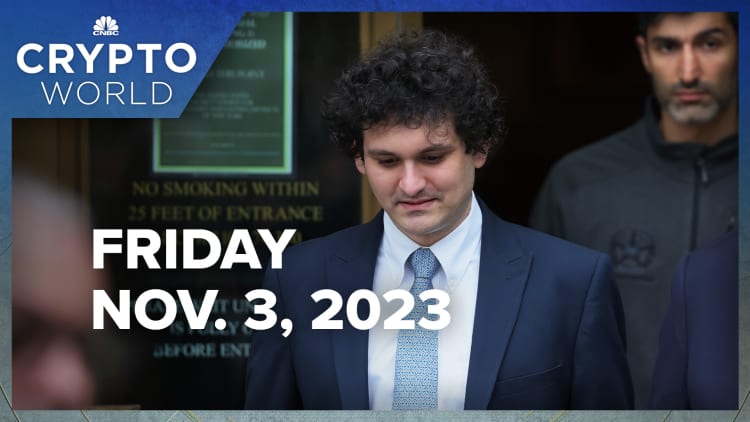
A jury of twelve found FTX founder Sam Bankman-Fried guilty of all seven criminal charges brought against him. The question of how long he’ll remain in prison, however, is one that Judge Lewis Kaplan will spend the next few months deliberating by himself.
The no-nonsense 78-year-old judge is a veteran of the Southern District of New York and has presided over some of the biggest cases to roll through the courthouse at 500 Pearl Street in downtown Manhattan.
Kaplan is straightforward and has no patience for pageantry in his courtroom. If a witness is deliberately avoiding a question, or an attorney is being redundant and sloppy in his cross-examination, Judge Kaplan is quick to admonish the offender and set the conversation back on course. He also has no problem calling out members of the gallery for chewing gum in his courtroom.
The judge’s lack of patience with Bankman-Fried during the defendant’s four days on the stand was obvious to anyone who was there — or who later read the transcript.
The 31-year-old graduate of Massachusetts Institute of Technology was a sight to behold on the stand. Under direct examination, he would sometimes rush through convoluted, repetitive and contradictory sentences.
“So I should preface this by saying I’m not a lawyer,” Bankman-Fried began one answer.
“I’m not giving a legal interpretation of this. I’m just giving, as best I can, what my memory is. And the parts of this that jibe with that, I, you know — I’m not trying to give a definitive legal ruling on what this does or doesn’t say. The — I’m not sure that I would quite answer yes to the question as you most recently phrased it. I’m going to try as best I can to give the answer that I believe, which is that the — as — at least as I remember understanding it at the time, FTX either itself or I think as actually happened, without FTX as an intermediary, customers’ fiat funds would be sent to Alameda bank accounts, FTX would retain a — effectively a debt from Alameda for those and a — in the lien section here, a lien on Alameda’s assets as security for that ongoing liability, that it would be repayable on direction from FTX in the return section here, and — and in the payment directive section.”
Later, on cross-examination, Bankman-Fried suddenly clammed up, replying with “Yup,” and “I don’t recall,” hundreds of times. After several dozen of these instances, the government often presented evidence that would either directly refute the defendant’s testimony or offer an answer to the question Bankman-Fried had dodged.
Multiple litigators told CNBC that Bankman-Fried’s combative attitude toward Assistant U.S. attorney, Danielle Sassoon, wasn’t a good look for the jury or judge either.
So now, the question of prison time goes to Judge Kaplan. The sentencing date is March 28 at 9:30 a.m. ET.
Government exhibit in the case against former FTX CEO Sam Bankman-Fried.
Source: SDNY
Bankman-Fried was convicted of wire fraud and conspiracy to commit wire fraud against FTX customers and against Alameda Research lenders, conspiracy to commit securities fraud and conspiracy to commit commodities fraud against FTX investors, and conspiracy to commit money laundering.
That the jury was able to reach a unanimous verdict in a just few hours suggests that they were truly convinced and that there were no holdouts that needed to be coaxed, Yesha Yadav, law professor and Associate Dean at Vanderbilt University, told CNBC.
“This overwhelming consensus should give the judge confidence to follow the jury’s decisiveness by imposing a more severe sentence than a lighter one,” continued Yadav.
In this case, the statutory maximum sentence is around 115 years, but there is a sliding scale for sentencing according to recommended guidelines given the scale of the crimes and the criminal history of the defendant.
“I wouldn’t be surprised if SBF spends the next 20 or 25 years of his life in prison,” Renato Mariotti, a former prosecutor in the U.S. Justice Department’s Securities and Commodities Fraud Section, told CNBC.
“The sheer scale of his fraud was immense, he was defiant and lied on the witness stand, and Judge Kaplan had very little patience for his antics while out on bond. He will have more sympathy for the victims than he has for Bankman-Fried,” added Mariotti.
Caroline Ellison, former chief executive officer of Alameda Research LLC, leaves Manhattan Federal Court after testifying during the trial of FTX CEO Sam Bankman-Fried, on October 10, 2023 in New York City.
Michael M. Santiago | Getty Images
In August, Judge Kaplan revoked Bankman-Fried’s bail and sent him back to jail for witness tampering.
“The federal sentencing guidelines will likely be sky high, but they are just that — guidelines — and the judge is required to consider all of the circumstances surrounding SBF and his offense,” said Mariotti.
Yadav added that the issue of sentencing is governed by guidelines that look to factors such as how many have been harmed and the overall dollar quantum, as well as the seriousness of the damage a defendant has inflicted.
“Here, there are some factors that could push the judge toward a very lengthy prison term, possibly close to the 110 years that the sentencing guidelines suggest,” said Yadav.
The sentence will come down to what the judge believes is sufficient to punish Bankman-Fried, deter others, and promote respect for the law, he added.
Former Assistant U.S. Attorney Kevin J. O’Brien, who specializes in white-collar criminal defense in NYC, agreed, saying that, “Since judges have discretion even under the Guidelines, I believe his sentence will be in the 15 to 20 year range.”
O’Brien added that given Bankman Fried’s age, he thinks the judge will be inclined to give him a chance to live a full life after his prison term.
Bankman-Fried’s case has been compared with that of Elizabeth Holmes, founder of medical device company Theranos, which ceased operations in 2018.
Holmes, 39, was convicted in early 2022 on four counts of defrauding investors in Theranos after testifying in her own defense. She was sentenced to more than 11 years in prison, and began serving her punishment in May at a minimum-security facility in Bryan, Texas.
But former federal prosecutor Paul Tuchmann tells CNBC that he expects harsher terms for the former FTX CEO, because “the amount of losses that were suffered is simply staggering.”
Tuchmann compared Bankman-Fried’s case to that of Bernie Madoff, who was sentenced to 150 years in prison.
“Like Madoff, a lot of the losses in this case were small investors. They weren’t all large institutions, which really tends to create a greater pressure for a significant sentence,” said Tuchmann.
“Certainly, there may be some mitigation here. Sam Bankman-Fried is very young. The judge may take that into consideration. Bernie Madoff went to jail for 150 years when he was obviously much older – with limited productive years left,” Yadav said of the Madoff comparison.
“Sam Bankman-Fried still has an opportunity to make some kind of positive contribution during his lifetime. His crimes are also not violent in nature,” continued Yadav.
Another wild card is the fact that the Department of Justice may bring a second, entirely different case with separate charges against Bankman-Fried in Mar. 2024. The government has until Feb. 1 to let the court know if it plans to still proceed.
“A further issue here is that sentencing will take place in March 2024 – very close to the second criminal trial that Sam Bankman-Fried faces for campaign finance violations and bribery of foreign officials,” said Yadav. “The prosecution is likely to feel very confident going into this next trial. In other words, if he is also found guilty on these additional charges, he may see an even longer sentence potentially than the multiple decades worth of time (at least) that he is looking at presently.”


Partner at the Venture Capital firm Placeholder Capital and prominent figure in the crypto community, Chris Burniske, has given an instance where assets like Bitcoin and Ethereum could see a repeat of what happened in mid-2019.
In a post shared on his X (formerly Twitter) platform, Burniske mentioned that a repeat of mid-2019 could happen if the top two cryptocurrencies, Bitcoin and Ethereum, were to “rip” from their current levels. If that happens, the crypto founder believes that the broader crypto market could follow suit.
As to how these crypto tokens could go, he noted that they could rise enough to make people believe that they could hit new all-time highs soon, but that may not be the case as these investors could endure a “final wipeout” soon after (possibly in the first quarter of next year) with these tokens steady declining to higher lows.
To drive home his point, Burniske suggested that Bitcoin and Ethereum’s current price action shared similarities to the period between December 2019 and January 2019 before the “painful descent into March 2020 lows.” According to him, although that period was the COVID era, “everything is also the same about the actors on the stage.”
Burniske seemed to be certain about his assertions. In a subsequent post, he warned investors that the rollercoaster “could get extreme” in relation to what he had said earlier and urged them to have their seatbelts on.
ETH price sitting at $1,844 | Source: ETHUSD on Tradingview.com
Many didn’t seem to react well to Burniske’s projections, considering that it could mean that the crypto market and everyone in it could be in more pain, even if a massive rally (as the crypto founder predicts) is likely to happen before that.
A particular X user, however, seemed to agree with his position as he stated that Burniske’s prediction makes so much sense as that is how the “cycle psychology” works, just that this time, it happens to line up “perfectly” with some highly likely macro scenarios. Burniske responded to the post as he agreed that those were the points he was trying to drive home.
One of these macro scenarios, which was alluded to, could be the rising inflation and how the Federal Reserve and other authorities globally are increasing interest rates to battle the economic downturn. Bloomberg analyst Mike McGlone had once mentioned how Bitcoin could crash to $10,000, with inflation being one of the factors that could lead to the decline.
Another crypto analyst, Nicholas Merten, had also noted that Bitcoin could decline further if the Feds do not do enough to curb the rising inflation.
Featured image from The Street, chart from Tradingview.com

Jack Dorsey has been notoriously hands-off. Recent events are forcing him to change.
For years, his payments company, Block, was perceived as a success, even with him only in the background. Things changed last month when he started running Square, one of Block’s marquee units, after his handpicked deputy abruptly left.
Copyright ©2023 Dow Jones & Company, Inc. All Rights Reserved. 87990cbe856818d5eddac44c7b1cdeb8

Rivian Automotive (RIVN 0.68%) has been one of the few start-up electric vehicle (EV) companies to be delivering on its growth expectations this year. The company has produced almost 40,000 of its three EV models in the first nine months of 2023. That keeps it on track to more than double its production for the full year compared to 2022.
But signs of declining demand have begun to show for some EV offerings. That has led to a more-than 33% decline in Rivian shares in just the last month. Yet Rivian has some unique aspects as an early-stage EV company, and investors might be considering whether that share-price decline makes now a good time to buy the stock.
Rivian’s business might be on the right trajectory, but it still has a monumental amount of work to do to ensure a successful and profitable company. With other automakers delaying planned investments and pushing back prior production growth goals for EVs, there are signs that the path to success may be getting tougher.
Even EV leader Tesla discussed headwinds for the broader sector at its third-quarter conference call for investors two weeks ago. Tesla Chief Financial Officer (CFO) Vaibhav Taneja called the current environment “a period of economic uncertainty, higher interest rates, and shifting consumer sentiment.” CEO Elon Musk had even more daunting words as he lamented the affordability of some EVs for borrowers, saying “I am worried about the high interest rate environment that we’re in. I just can’t emphasize this enough.”
In more recent days, battery maker and Tesla supplier Panasonic said it had decreased automotive-battery production in the period ended Sept. 30 due to a global slowdown in EV demand. Semiconductor suppliers to EV makers have also discussed signs of slowing demand.
Much of the slowdown in growth seems to be with more high-end vehicles. One reason for that is the vehicle price cap for tax credits being offered in the Inflation Reduction Act (IRA). Rivian’s R1T and R1S pickup and SUV models are in that category. In the company’s Q2, average sales price per vehicle worked out to more than $80,000. That puts at least some of Rivian’s vehicle trims beyond eligibility for the tax credit.

Image source: Rivian Automotive.
Yet Rivian does have some of the right things going for it even in this macroenvironment. It has an existing order for 100,000 electric delivery vans from Amazon that it will continue to fill through the rest of the decade. It also has a unique product that is appealing to a niche group of off-road, adventure-seeking EV buyers.
Perhaps most importantly, it recently raised $1.5 billion in a convertible bond sale to add to the more than $10 billion in cash the company held as of the end of Q2. That money will help fund the investment that is most critical for Rivian investors.
The company recently updated investors on the status of its planned 400,000 vehicle annual-capacity plant to be built in Georgia. It is proceeding with site preparation and is on track to hold a groundbreaking ceremony and begin construction early next year. The success of that facility will be the critical factor in determining Rivian’s long-term success. It plans to build its next-generation R2 platform at that plant starting in 2026. Those vehicles will be intended for consumers seeking lower-cost EVs that Rivian hopes will appeal to a mass audience.
Knowing that much of Rivian’s success won’t be determined for at least two more years means there should be no rush for investors to buy Rivian stock now. Even with the recent stock drop, there may be more declines to come. Many EV stocks are likely to move from more macroeconomic developments in the sector. And there are going to be ebbs and flows in EV growth rates globally.
With that said, some of the stock declines would provide opportunities to gradually add shares over time. If Rivian’s business model does pan out, those incremental buys could pay off handsomely over the very long term. The next data point for investors will come on Nov. 7 when Rivian reports its full Q3 update.
John Mackey, former CEO of Whole Foods Market, an Amazon subsidiary, is a member of The Motley Fool’s board of directors. Howard Smith has positions in Amazon, Rivian Automotive, and Tesla. The Motley Fool has positions in and recommends Amazon and Tesla. The Motley Fool has a disclosure policy.

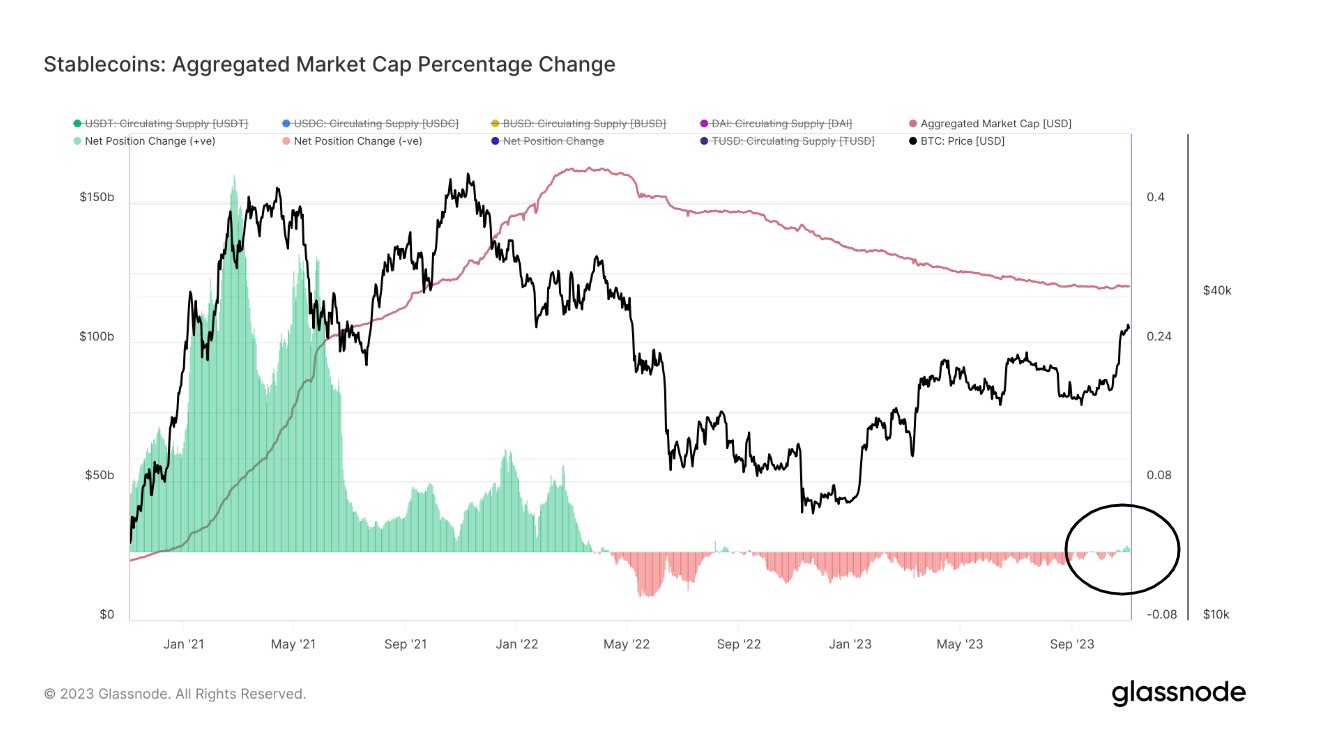
The recent data analysis illuminates an intriguing trend: a return to growth in the supply of the top five stablecoins – USDT, USDC, BUSD, TUSD, and DAI – after a period of contraction. In the wake of the 2021 bull run, the aggregate supply of these stablecoins skyrocketed from a modest 25 billion to a staggering 162 billion by February 2022. The tide turned, however, and the supply dwindled down, mirroring the downturn of Bitcoin (BTC) in 2022. As of now, the combined supply of the top five stablecoins is approximately 120 billion.
For the first time since April 2022, the supply of these leading stablecoins has begun to swell again, with the inflection point occurring on Oct. 19. Intriguingly, this expansion coincided with a surge in Bitcoin, suggesting a potential return of on-chain liquidity after a protracted bear market. This could provide Bitcoin with a much-needed buoy.
CryptoSlate’s recent observation further corroborates this notion: the influx of stablecoins into Bitcoin was a major catalyst propelling Bitcoin past the $30,000 mark in October. Therefore, tracking this trend of stablecoin supply growth could be vital in forecasting Bitcoin’s market dynamics.
Clearly, USDT constitutes a substantial 70% of the market capitalization of the top five stablecoins, accounting for 85 billion. Recently, CryptoSlate reported on the reducing supply of two of these, BUSD and USDC. However, DAI presents a different story with its circulating supply of 5.3 billion, which appears to have reached its lowest point this year at approximately 4.4 billion. Meanwhile, TUSD has continued to experience a surge, currently standing at a robust 3.3 billion.
The post New growth in top stablecoin supply could signal a return of on-chain liquidity appeared first on CryptoSlate.

THORChain’s price has been up by over 100% since the last week of October, hitting levels not seen since May 2022. This is an amazing increment in price. But caution is advised since RUNE, an altcoin, seems overbought, possibly signaling a 20% drop in the near future.
At the time of writing, RUNE was trading at $3.42, climbing over 15% in the last 24 hours, and registering an impressive 37% rally in the last seven days, figures by CoinMarketCap shows.
If RUNE closes above the psychological $3.500 mark, it could negate the present downturn and cause the bearish attitude to change. The significance of RUNE closing above the critical $3.500 mark lies in its potential to reverse the prevailing bearish trend and trigger a shift in market sentiment.
Achieving this milestone could signify a break in the current downtrend, potentially instigating a more positive outlook among investors and traders.
Source: CoinMarketCap
THORChain underwent a notable phase of consolidation, a period marked by relatively stable prices and limited fluctuations. Following this consolidation, the market witnessed a substantial surge, propelling THORChain’s price upwards by over 40%.
However, in the aftermath of this surge, the price has demonstrated a consistent stability, remaining within a relatively similar range. This stability has coincided with a broader downturn in market dynamics, where fluctuations and overall activity have shown a decrease across the market.
Despite the prior surge, THORChain’s price has maintained a consistent level, reflecting a degree of resilience amid the current market trends.
RUNE market cap currently at $1.16 billion on the weekend chart: TradingView.com
The RUNE token holds a substantial long-term liquidation value surpassing $70 million, signifying a considerable reserve or potential value inherent in the token’s existence. However, a cautionary note emerges from the chart analysis, which reveals a prominent positive deviation highlighted in green.
3. $RUNE LIQUIDATION LEVEL analysis:
– More than 70M in futures liquidations. Green DELTA, means confluence to short.
– More than 1M in Liquidation profile between 2.75$ and 2.65$ (support)
– PA and MS is bearish. There’s more liquidity below than above, at current price. pic.twitter.com/48j9hI5h35
— CryptoSoulz (@SoulzBTC) November 2, 2023
This deviation might signify an impending decrease in price in the near future, suggesting a potential shift or correction in the market valuation of the token. This could prompt investors to stay vigilant and consider potential fluctuations in the token’s value in their future investment decisions.
The price of RUNE garnered significant attention subsequent to a substantial market surge, as the cryptocurrency experienced a portfolio increase of more than 40% inside that period.
Analyzing the technical indicators, THORChain reveals an RSI figure of 72.24, typically signaling overbought conditions when surpassing 70. This situation hints at the possibility of profit-taking or a slight downturn in the coming days.
Despite indicating a robust bullish sentiment with an RSI above 50, THORChain might be treading into overextended territory, potentially requiring cautious observation for signs of a market correction or adjustment.
Source: Santiment
Meanwhile, according to Santiment’s research, there is a decline in the social dominance of the RUNE cryptocurrency, which means there is less of a presence and conversation on social media. When conversations do happen, they usually center on the altcoin’s remarkable rise, which may allude to investor anticipation of an upcoming fall.
In line with this reality is the rising open interest, which is the sum of all long and short positions in the market. After such a meteoric increase of 120%, short sellers should outnumber long sellers for RUNE among traders.
(This site’s content should not be construed as investment advice. Investing involves risk. When you invest, your capital is subject to risk).
Featured image from Frank Cone/Pexels

For the past 22 years, national pollster Gallup has surveyed retirees to gauge their reliance on Social Security income to make ends meet. In each of these years, anywhere from 80% to 90% of then-current retirees noted that their Social Security benefit comprises a “major” or “minor” part of their monthly income.
Considering how important Social Security is to current retirees and the key role it’s likely to play in keeping future generations of retired workers out of poverty, there’s arguably nothing more important than deciding when to begin taking your Social Security benefit. And making this decision begins with understanding how your monthly benefit is calculated.

Image source: Getty Images.
While there are certain elements that could alter what retirees ultimately get to keep of their payout (e.g., the federal taxation of benefits and penalties for certain early filers), there are four factors used by the Social Security Administration (SSA) to calculate what you’ll receive each month from the program. Assuming you’ve earned the 40 requisite lifetime credits to receive a retired-worker benefit, these four factors are your:
The first two components, work history and earnings history, take into account how long you’ve worked and the amount you’ve earned each year (wages and salary, but not investment income). As you might imagine, more earned income will almost certainly result in a bigger Social Security check.
The caveat is that the SSA will account for your 35 highest-earning, inflation-adjusted years when calculating your Social Security benefit. Every year less than 35 worked will result in a $0 being factored into your calculation. If you have any aspirations of maximizing your payout, you’ll need to work a minimum of 35 years.
The third factor, your full retirement age, is solely determined by your birth year and represents the age you become eligible to receive 100% of your retired-worker benefit. A majority of the current labor force was born in or after 1960, which equates to a full retirement age of 67.
The fourth factor, and the one capable of meaningfully altering how much you’ll receive each month or during your lifetime from Social Security, is your claiming age. Retired-worker checks can be taken as early as age 62, but as you can see in the table, patience is encouraged. For every year an eligible beneficiary waits to take their benefit, their monthly payout can increase by up to 8%, through age 69.
| Birth Year | Age 62 | Age 63 | Age 64 | Age 65 | Age 66 | Age 67 | Age 68 | Age 69 | Age 70 |
| 1943-1954 | 75% | 80% | 86.7% | 93.3% | 100% | 108% | 116% | 124% | 132% |
| 1955 | 74.2% | 79.2% | 85.6% | 92.2% | 98.9% | 106.7% | 114.7% | 122.7% | 130.7% |
| 1956 | 73.3% | 78.3% | 84.4% | 91.1% | 97.8% | 105.3% | 113.3% | 121.3% | 129.3% |
| 1957 | 72.5% | 77.5% | 83.3% | 90% | 96.7% | 104% | 112% | 120% | 128% |
| 1958 | 71.7% | 76.7% | 82.2% | 88.9% | 95.6% | 102.7% | 110.7% | 118.7% | 126.7% |
| 1959 | 70.8% | 75.8% | 81.1% | 87.8% | 94.4% | 101.3% | 109.3% | 117.3% | 125.3% |
| 1960 or later | 70% | 75% | 80% | 86.7% | 93.3% | 100% | 108% | 116% | 124% |
Data source: Social Security Administration. Table by author.
As you can see from the percentages in the table, there’s a lot riding on your claiming decision. The challenge is there’s no concrete formula that’ll tell us which age is best to begin taking benefits. Without knowing our expiration date, there’s always going to be some guesswork involved.
Every claiming age, from 62 through 70, has its advantages and drawbacks. In the years to come, ages 65, 67, and 70 are all likely to become increasingly popular claiming choices. Here’s a breakdown of what each of these three claiming ages offers retirees, along with potential drawbacks.
The all-important question is, which of these claiming ages — 65, 67, or 70 — is going to be best for a majority of future retirees? The answer to that question can be found in an extensive study released four years ago.

Image source: Getty Images.
In 2019, Washington, D.C.- based financial planning company United Income released a study that examined the claiming decisions of approximately 20,000 retirees using the University of Michigan’s Health and Retirement Study. The goal of this analysis was to extrapolate these claims and determine whether retirees made an optimal choice. For United Income, “optimal” means a claiming decision that resulted in the highest possible lifetime income, which may not necessarily correlate with the highest monthly income.
What researchers at United income found was a glaring disparity between actual claims and optimal claims. Whereas the bulk of the 20,000 claimants studied chose to take their Social Security benefit prior to reaching full retirement age (ergo, accepting a permanent monthly payout reduction), the lion’s share of optimal claims occurred at or after full retirement age.
More specifically, United Income found that a jaw-dropping 57% of claimants would have optimized their lifetime income by taking benefits at age 70. Although age 67 was the second-most-optimal claiming age — around 10% of retirees would have benefited most from an age 67 claim — it’s well behind age 70 in terms of maximizing lifetime income. Meanwhile, age 65 came in behind ages 66 through 70 in terms of optimized lifetime benefits.
Keep in mind that there are instances where earlier filings make sense. For example, a person with one or more chronic health conditions who could have their life expectancy shortened may receive more lifetime income with an earlier claim.
Nevertheless, United Income’s extensive study suggests that a majority of future retirees would be better off financially by waiting until age 70 to begin receiving their Social Security check.

In a significant move to combat sanctions evasion and illicit financial activities, the US Department of the Treasury’s Office of Foreign Assets Control (OFAC) has imposed sanctions on Ekaterina Zhdanova, a Russian national allegedly involved in laundering and transferring funds using crypto on behalf of Russian elites.
According to the announcement, the action aligns with the G7’s commitment to closing loopholes that allow Russian state actors, oligarchs, and proxies to exploit virtual currency to circumvent international sanctions.
Under Secretary of the Treasury for Terrorism and Financial Intelligence, Brian E. Nelson emphasized the alleged role played by key facilitators like Zhdanova in aiding Russian elites, ransomware groups, and other illicit actors in evading US and international sanctions through the abuse of cryptocurrencies.
Nelson stated that the Treasury remains steadfast in its efforts to safeguard the global financial system against such exploitation and other risks within the crypto ecosystem.
Allegedly, Zhdanova’s involvement in obfuscating the source of wealth for a Russian client, enabling the transfer of over $2.3 million into Western Europe via fraudulent investment accounts and real estate purchases, drew OFAC’s attention.
Zhdanova’s services provided sanctioned Russian individuals access to Western financial markets that would otherwise be restricted due to US and international prohibitions.
The US Treasury Department alleges that such illicit financial activities enable the evasion of multilateral sanctions and undermine efforts to hold Russia accountable for its unprovoked war and aggression.
Utilizing cryptocurrencies as a facilitator of large cross-border transactions, Zhdanova relied on entities lacking Anti-Money Laundering/Combating the Financing of Terrorism (AML/CFT) controls, including the OFAC-designated Russian cryptocurrency exchange, Garantex Europe OU.
Zhdanova employed various methods to transfer funds internationally, including cash transactions and leveraging connections with other money laundering associates and organizations.
Additionally, she utilized traditional businesses, such as a luxury watch company with global offices, to maintain access to the international financial system.
Furthermore, it is alleged that Zhdanova conducted crypto exchange transfers on behalf of oligarchs who relocated internationally, facilitating the movement of over $100 million to the United Arab Emirates.
Zhdanova also provided a tax residency service in the UAE to Russian clients, potentially participating in identity obfuscation. This service offered clients a UAE tax residency, identification card, and bank account, with payments made in cash or virtual currency, subsequently transferred to foreign bank accounts at the client’s discretion.
Notably, Zhdanova’s services extended to individuals associated with the notorious Russian Ryuk ransomware group. Zhdanova allegedly laundered approximately $2.3 million in suspected victim payments for a Ryuk ransomware affiliate, which has targeted numerous victims worldwide, including the United States, particularly in the healthcare sector.
As a consequence of this action, all US persons must report any property or interests in property belonging to Zhdanova or any entities directly or indirectly owned by her. Transactions involving such property are generally prohibited unless authorized by OFAC.

Featured image from Shutterstock, chart from TradingView.com


A 10% drop in the yen since December has forced Japan to scale back defense spending, Reuters reported.
The currency’s decline has boosted the cost of US-made weapons that Japan plans to procure.
In response, Japan is prioritizing frontline weapons and spending less on support systems.
Japan is scaling back plans for its largest military build-up since World War II, after weakness in the yen raised the cost of US-made defense equipment, sources told Reuters.
When the $320 billion budget plan was first announced in December, its estimated price tag was based on a 108 yen-to-dollar exchange rate, according to the report. But the currency has since slid more than 10%, dipping to 151 earlier this week.
And because the defense ministry doesn’t hedge against foreign-currency volatility, it must shoulder higher costs for top acquisition programs like the F-35 stealth fighter and Tomahawk cruise missile, the report said.
In response, Japan is prioritizing outlays on US-made frontline weapons that would be key in any conflict with China, sources told Reuters.
The tradeoff is less money for secondary equipment, such as support aircraft. For instance, an expected order of 34 twin-rotor Chinook transport helicopters was pared to 17 in next year’s budget request, given that their cost rose by about 5 billion yen each. Around half the increase was due to the weak yen.
And the purchase of two ShinMaywa Industries US-2 seaplanes was also scrapped as the aircraft’s price almost doubled from three years ago.
The historic military build-up is in response to rising geopolitical tensions that require the US ally to prepare for any potential conflict with China.
Meanwhile, the yen’s plunge results from ultra-loose monetary policy in Japan, as record low yields in the country have pulled down its competitiveness against other global markets. That’s as other central banks like the Federal Reserve have become more hawkish, making overseas assets more attractive.
Though the Bank of Japan has recently eased its yield curve control — a unique measure that restricted yields from climbing — analysts have suggested that this isn’t enough. In a recent note, Deutsche Bank outlined that yen volatility will continue until the central bank lifts interest rates and sheds its quantitative easing campaign.
Since the start of this year, the yen has plunged 12% against the dollar.
Read the original article on Business Insider

