United Auto Worker employees at Ford Motor and Stellantis
are voting on a new labor deal. General Motors workers are about to vote.

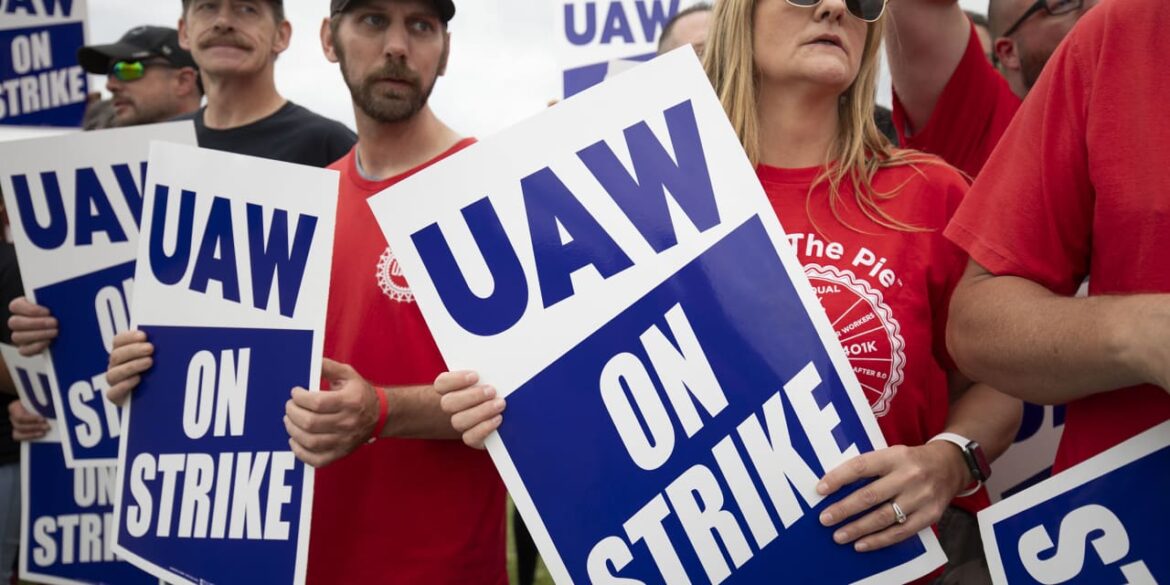
United Auto Worker employees at Ford Motor and Stellantis
are voting on a new labor deal. General Motors workers are about to vote.

It was a tough month for investors in the electric vehicle (EV) sector, with negative headlines on multiple fronts. For long-term investors, though, that makes it a good time to analyze whether the drops are opportunities to add shares or see if the new reality is thesis-changing.
EV charging station network company ChargePoint (CHPT 6.57%) lost a whopping 48.9% last month. The stocks of electric heavy truck maker Nikola (NKLA -1.72%) and Chinese EV maker Nio (NIO 5.65%) dropped by 31.2% and 19.2%, respectively, according to data provided by S&P Global Market Intelligence.
For one of these names, a bit of news in the sector last month could indeed mean it’s time to sell and move on.
All the companies above are working to grow their EV businesses with the goal of becoming profitable within a few years. For that to happen, these companies must execute their business plans and will need more macro trends to work in their favor. But ChargePoint may have just run into a competitor it won’t be able to overcome.
Global EV leader Tesla already has its own network of fast-charging Superchargers with its North American Charging Standard (NACS) plug. Other EV makers are adopting that charging connector, and even ChargePoint has begun producing Tesla-compatible NACS chargers. But Tesla has also now begun using its leadership position as a competitive advantage by selling its charging hardware directly to third parties.
The first deal announced by Tesla was a $100 million sale to energy giant BP. BP will install Tesla’s fast-charging units at company brands, including truck stop operator TravelCenters of America. If Tesla has plans to continue making deals for its charging hardware, ChargePoint’s future prospects could be limited. That explains why investors nearly cut the company’s valuation in half last month.
ChargePoint wasn’t the only struggling EV sector company that faced headwinds last month. Nikola recently recalled about 200 battery-electric semi trucks for a battery safety problem. The company raised additional capital, partially to help pay the unanticipated costs to rectify the problem.
In its third-quarter update, Nikola revealed the recall will cost about $62 million. But Nikola also announced some good news in the update it provided on Nov. 2. It increased the amount of cash on its balance sheet in the quarterly period and has orders for nearly 300 of its hydrogen-powered electric trucks. That helped the stock recover some of its October losses.
Nio shares also recovered in the first week of November. Its October slump really didn’t come from any company-specific news. But these early-stage companies need supportive macroeconomic backdrops to succeed as well.
These stocks are highly risky investments. ChargePoint is not one that I would add to or buy right now. Its future could be at risk. Nio and Nikola also need many things to go right for long-term success. Only speculative money should be used if one believes the demand for electric trucks and cars will be so great that there’s room for many EV makers to win.
Howard Smith has positions in ChargePoint, Nikola, Nio, and Tesla. The Motley Fool has positions in and recommends BP, Nio, and Tesla. The Motley Fool has a disclosure policy.
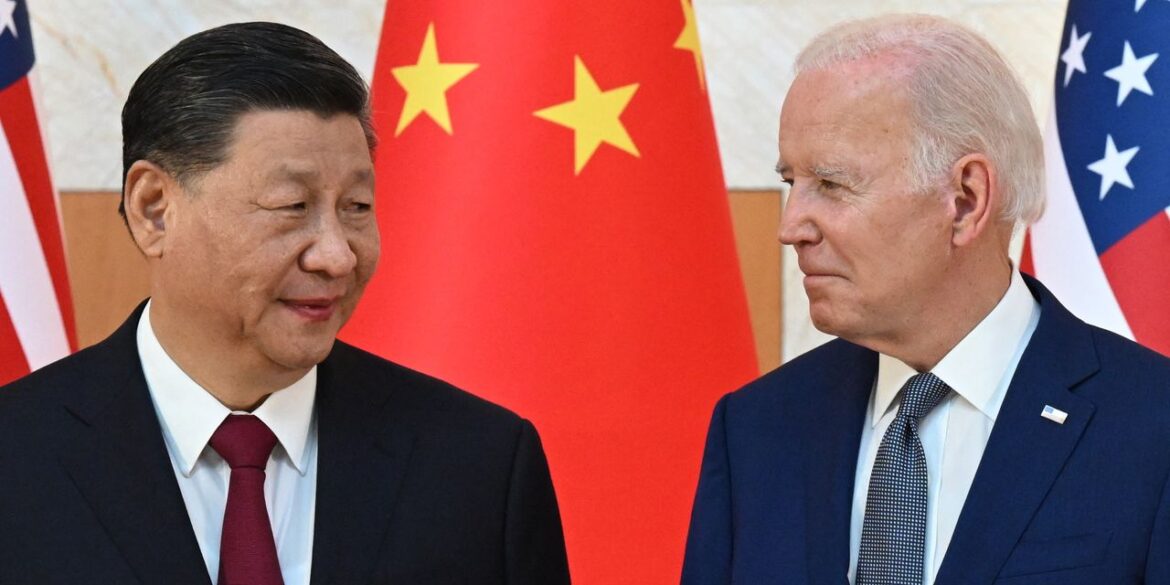
All eyes are on the upcoming leaders’ meeting of the Asia-Pacific Economic Cooperation (APEC), to be held in San Francisco Nov. 11-17. And with good reason: there is a distinct possibility that U.S. President Joe Biden and Chinese President Xi Jinping will meet on the sidelines of this pan-regional gathering, exactly one year after their last summit in Bali on the eve of the annual G20 summit.
The Bali meeting accomplished little. While Biden and Xi agreed to set a “floor” for the deteriorating Sino-American relationship, the outcome has been anything but stable. Less than three months after the Bali summit, the U.S. downing of a Chinese surveillance balloon was followed by a temporary freeze in diplomatic engagement, additional sanctions on Chinese technology, and several close calls between the world’s two most powerful militaries. Meanwhile, the U.S. Congress has turned up the heat on China over Taiwan, and Xi accused the United States of implementing “all-around containment.” Some floor!
A Biden-Xi summit now could be a sorely needed second chance. Both sides appear to be hard at work preparing. Unlike the Bali meeting, the San Francisco summit must be scripted for success. With the U.S.-China relationship in serious trouble, and a war-torn world in urgent need of leadership, this summit should pursue three key objectives.
The first is deliverables. Notwithstanding America’s revisionist aversion to engagement with China — in effect, blaming the current conflict on decades of “appeasement” that began when China joined the World Trade Organization in 2001 — it is critical to find common ground on which to re-establish constructive dialogue.
The focus should be less on sloganeering — last year’s “floor” or this year’s “de-risking” — and more on clear and achievable objectives. This could include reopening closed consulates (for example, the U.S. consulate in Chengdu and the Chinese consulate in Houston), relaxing visa requirements, increasing direct air flights (now 24 per week, compared to more than 150 pre-COVID), and restarting popular student exchanges (such as the Fulbright Program).
Improving people-to-people ties — which the two presidents can easily address if they are serious about re-engagement — often leads to reduced political animosity. By reaching for the low-hanging fruit, Biden and Xi could open the door to talks on more contentious topics, such as relaxing constraints on NGOs, the glue that holds societies together, or tackling the fentanyl crisis, in which both countries play a key role.
“The U.S. and China could make a real difference by brokering peace agreements in Ukraine and the Middle East.”
But the most urgent deliverable would be a resumption of regular military-to-military communications, which the Chinese suspended after former U.S. House Speaker Nancy Pelosi visited Taiwan in August 2022. The danger posed by this breakdown in military contacts was glaringly obvious during the balloon fiasco in early February, as well as in recent near-misses between the two superpowers’ warships in the Taiwan Strait and aircraft over the South China Sea. As tensions escalate between two uncommunicative militaries, the risks of accidental conflict are high and rising.
Second, it is also necessary to articulate aspirational goals. A joint statement from Biden and Xi should underscore their shared recognition of two existential threats facing both countries: climate change and global health. Even though U.S. Special Presidential Envoy for Climate John Kerry has met with senior Chinese officials several times this year, collaboration on clean energy has stalled, owing to alleged national-security concerns on both sides. Moreover, progress on global health continues to be stymied by the political theater of the charged debate over the origins of COVID-19.
Of course, a Biden-Xi summit can hardly be expected to resolve these existential problems. But naming them is an important symbolic gesture, evidence of a shared commitment to the collective stewardship of an increasingly precarious world. That is especially the case with the outbreak of the Israel-Hamas war, which risks spilling over into a major regional conflict at the same time that the Ukraine war is at a pivotal moment. The U.S. and China could make a real difference by brokering peace agreements in both wars.
Third, Sino-American relations need a new architecture of engagement. A Biden-Xi meeting at APEC would certainly be a positive development. But annual summits aren’t enough to resolve deep-rooted conflicts between two superpowers.
I have long favored a shift from the personalized diplomacy that occurs during infrequent leader-to-leader meetings to an institutionalized model of engagement that provides a permanent, robust framework for continuous trouble-shooting and problem solving.
My proposal for a U.S.-China Secretariat is one such possibility. Despite the generally positive reception to this idea in China and elsewhere in Asia, American policymakers have shown no interest. In fact, U.S. Representative Mike Gallagher, the Republican Chairman of the new House Select Committee on China, is beating the drum of “zombie engagement,” warning that efforts to reconnect with the Chinese could lead to America’s demise.
At the same time, I am encouraged by the establishment of four new U.S.-Chinese working groups — a result of recent diplomatic efforts. But this is not nearly enough, especially when compared with the 16 active working groups that were established under the umbrella of the Joint Commission on Commerce and Trade, which the Trump administration disbanded in 2017.
Summits between national leaders are often nothing more than media events. Unfortunately, that was the case last year in Bali. Neither the U.S. nor China, to say nothing for the rest of the world, can afford a similarly vacuous outcome this year in San Francisco. The time for collective action is growing short. Any opportunity for Biden and Xi to agree on realistic deliverables, underscore aspirational goals and lay the foundations for a new architecture of engagement must not be squandered.
Stephen S. Roach, a faculty member at Yale University and former chairman of Morgan Stanley Asia, is the author of Unbalanced: The Codependency of America and China (Yale University Press, 2014) and Accidental Conflict: America, China, and the Clash of False Narratives (Yale University Press, 2022).
This commentary was published with the permission of Project Syndicate — A Better Biden-Xi Summit?
Also read: Financial markets worldwide now face a higher chance of extreme events, El-Erian warns
More: Israel-Hamas war could be the tipping point for a fragile financial system

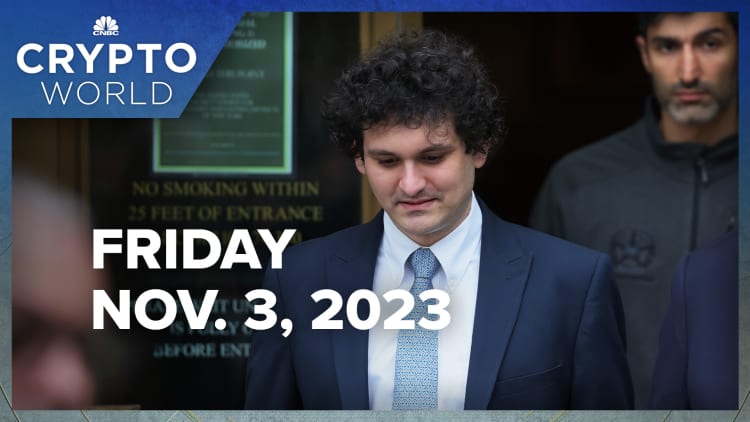
A jury of twelve found FTX founder Sam Bankman-Fried guilty of all seven criminal charges brought against him. The question of how long he’ll remain in prison, however, is one that Judge Lewis Kaplan will spend the next few months deliberating by himself.
The no-nonsense 78-year-old judge is a veteran of the Southern District of New York and has presided over some of the biggest cases to roll through the courthouse at 500 Pearl Street in downtown Manhattan.
Kaplan is straightforward and has no patience for pageantry in his courtroom. If a witness is deliberately avoiding a question, or an attorney is being redundant and sloppy in his cross-examination, Judge Kaplan is quick to admonish the offender and set the conversation back on course. He also has no problem calling out members of the gallery for chewing gum in his courtroom.
The judge’s lack of patience with Bankman-Fried during the defendant’s four days on the stand was obvious to anyone who was there — or who later read the transcript.
The 31-year-old graduate of Massachusetts Institute of Technology was a sight to behold on the stand. Under direct examination, he would sometimes rush through convoluted, repetitive and contradictory sentences.
“So I should preface this by saying I’m not a lawyer,” Bankman-Fried began one answer.
“I’m not giving a legal interpretation of this. I’m just giving, as best I can, what my memory is. And the parts of this that jibe with that, I, you know — I’m not trying to give a definitive legal ruling on what this does or doesn’t say. The — I’m not sure that I would quite answer yes to the question as you most recently phrased it. I’m going to try as best I can to give the answer that I believe, which is that the — as — at least as I remember understanding it at the time, FTX either itself or I think as actually happened, without FTX as an intermediary, customers’ fiat funds would be sent to Alameda bank accounts, FTX would retain a — effectively a debt from Alameda for those and a — in the lien section here, a lien on Alameda’s assets as security for that ongoing liability, that it would be repayable on direction from FTX in the return section here, and — and in the payment directive section.”
Later, on cross-examination, Bankman-Fried suddenly clammed up, replying with “Yup,” and “I don’t recall,” hundreds of times. After several dozen of these instances, the government often presented evidence that would either directly refute the defendant’s testimony or offer an answer to the question Bankman-Fried had dodged.
Multiple litigators told CNBC that Bankman-Fried’s combative attitude toward Assistant U.S. attorney, Danielle Sassoon, wasn’t a good look for the jury or judge either.
So now, the question of prison time goes to Judge Kaplan. The sentencing date is March 28 at 9:30 a.m. ET.
Government exhibit in the case against former FTX CEO Sam Bankman-Fried.
Source: SDNY
Bankman-Fried was convicted of wire fraud and conspiracy to commit wire fraud against FTX customers and against Alameda Research lenders, conspiracy to commit securities fraud and conspiracy to commit commodities fraud against FTX investors, and conspiracy to commit money laundering.
That the jury was able to reach a unanimous verdict in a just few hours suggests that they were truly convinced and that there were no holdouts that needed to be coaxed, Yesha Yadav, law professor and Associate Dean at Vanderbilt University, told CNBC.
“This overwhelming consensus should give the judge confidence to follow the jury’s decisiveness by imposing a more severe sentence than a lighter one,” continued Yadav.
In this case, the statutory maximum sentence is around 115 years, but there is a sliding scale for sentencing according to recommended guidelines given the scale of the crimes and the criminal history of the defendant.
“I wouldn’t be surprised if SBF spends the next 20 or 25 years of his life in prison,” Renato Mariotti, a former prosecutor in the U.S. Justice Department’s Securities and Commodities Fraud Section, told CNBC.
“The sheer scale of his fraud was immense, he was defiant and lied on the witness stand, and Judge Kaplan had very little patience for his antics while out on bond. He will have more sympathy for the victims than he has for Bankman-Fried,” added Mariotti.
Caroline Ellison, former chief executive officer of Alameda Research LLC, leaves Manhattan Federal Court after testifying during the trial of FTX CEO Sam Bankman-Fried, on October 10, 2023 in New York City.
Michael M. Santiago | Getty Images
In August, Judge Kaplan revoked Bankman-Fried’s bail and sent him back to jail for witness tampering.
“The federal sentencing guidelines will likely be sky high, but they are just that — guidelines — and the judge is required to consider all of the circumstances surrounding SBF and his offense,” said Mariotti.
Yadav added that the issue of sentencing is governed by guidelines that look to factors such as how many have been harmed and the overall dollar quantum, as well as the seriousness of the damage a defendant has inflicted.
“Here, there are some factors that could push the judge toward a very lengthy prison term, possibly close to the 110 years that the sentencing guidelines suggest,” said Yadav.
The sentence will come down to what the judge believes is sufficient to punish Bankman-Fried, deter others, and promote respect for the law, he added.
Former Assistant U.S. Attorney Kevin J. O’Brien, who specializes in white-collar criminal defense in NYC, agreed, saying that, “Since judges have discretion even under the Guidelines, I believe his sentence will be in the 15 to 20 year range.”
O’Brien added that given Bankman Fried’s age, he thinks the judge will be inclined to give him a chance to live a full life after his prison term.
Bankman-Fried’s case has been compared with that of Elizabeth Holmes, founder of medical device company Theranos, which ceased operations in 2018.
Holmes, 39, was convicted in early 2022 on four counts of defrauding investors in Theranos after testifying in her own defense. She was sentenced to more than 11 years in prison, and began serving her punishment in May at a minimum-security facility in Bryan, Texas.
But former federal prosecutor Paul Tuchmann tells CNBC that he expects harsher terms for the former FTX CEO, because “the amount of losses that were suffered is simply staggering.”
Tuchmann compared Bankman-Fried’s case to that of Bernie Madoff, who was sentenced to 150 years in prison.
“Like Madoff, a lot of the losses in this case were small investors. They weren’t all large institutions, which really tends to create a greater pressure for a significant sentence,” said Tuchmann.
“Certainly, there may be some mitigation here. Sam Bankman-Fried is very young. The judge may take that into consideration. Bernie Madoff went to jail for 150 years when he was obviously much older – with limited productive years left,” Yadav said of the Madoff comparison.
“Sam Bankman-Fried still has an opportunity to make some kind of positive contribution during his lifetime. His crimes are also not violent in nature,” continued Yadav.
Another wild card is the fact that the Department of Justice may bring a second, entirely different case with separate charges against Bankman-Fried in Mar. 2024. The government has until Feb. 1 to let the court know if it plans to still proceed.
“A further issue here is that sentencing will take place in March 2024 – very close to the second criminal trial that Sam Bankman-Fried faces for campaign finance violations and bribery of foreign officials,” said Yadav. “The prosecution is likely to feel very confident going into this next trial. In other words, if he is also found guilty on these additional charges, he may see an even longer sentence potentially than the multiple decades worth of time (at least) that he is looking at presently.”
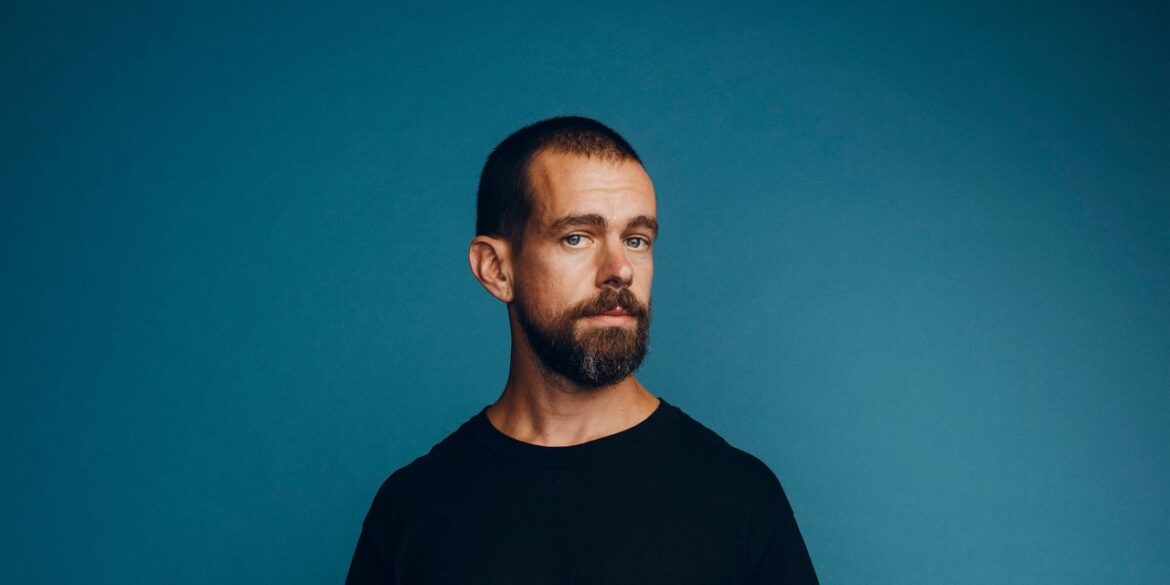
Jack Dorsey has been notoriously hands-off. Recent events are forcing him to change.
For years, his payments company, Block, was perceived as a success, even with him only in the background. Things changed last month when he started running Square, one of Block’s marquee units, after his handpicked deputy abruptly left.
Copyright ©2023 Dow Jones & Company, Inc. All Rights Reserved. 87990cbe856818d5eddac44c7b1cdeb8

Rivian Automotive (RIVN 0.68%) has been one of the few start-up electric vehicle (EV) companies to be delivering on its growth expectations this year. The company has produced almost 40,000 of its three EV models in the first nine months of 2023. That keeps it on track to more than double its production for the full year compared to 2022.
But signs of declining demand have begun to show for some EV offerings. That has led to a more-than 33% decline in Rivian shares in just the last month. Yet Rivian has some unique aspects as an early-stage EV company, and investors might be considering whether that share-price decline makes now a good time to buy the stock.
Rivian’s business might be on the right trajectory, but it still has a monumental amount of work to do to ensure a successful and profitable company. With other automakers delaying planned investments and pushing back prior production growth goals for EVs, there are signs that the path to success may be getting tougher.
Even EV leader Tesla discussed headwinds for the broader sector at its third-quarter conference call for investors two weeks ago. Tesla Chief Financial Officer (CFO) Vaibhav Taneja called the current environment “a period of economic uncertainty, higher interest rates, and shifting consumer sentiment.” CEO Elon Musk had even more daunting words as he lamented the affordability of some EVs for borrowers, saying “I am worried about the high interest rate environment that we’re in. I just can’t emphasize this enough.”
In more recent days, battery maker and Tesla supplier Panasonic said it had decreased automotive-battery production in the period ended Sept. 30 due to a global slowdown in EV demand. Semiconductor suppliers to EV makers have also discussed signs of slowing demand.
Much of the slowdown in growth seems to be with more high-end vehicles. One reason for that is the vehicle price cap for tax credits being offered in the Inflation Reduction Act (IRA). Rivian’s R1T and R1S pickup and SUV models are in that category. In the company’s Q2, average sales price per vehicle worked out to more than $80,000. That puts at least some of Rivian’s vehicle trims beyond eligibility for the tax credit.

Image source: Rivian Automotive.
Yet Rivian does have some of the right things going for it even in this macroenvironment. It has an existing order for 100,000 electric delivery vans from Amazon that it will continue to fill through the rest of the decade. It also has a unique product that is appealing to a niche group of off-road, adventure-seeking EV buyers.
Perhaps most importantly, it recently raised $1.5 billion in a convertible bond sale to add to the more than $10 billion in cash the company held as of the end of Q2. That money will help fund the investment that is most critical for Rivian investors.
The company recently updated investors on the status of its planned 400,000 vehicle annual-capacity plant to be built in Georgia. It is proceeding with site preparation and is on track to hold a groundbreaking ceremony and begin construction early next year. The success of that facility will be the critical factor in determining Rivian’s long-term success. It plans to build its next-generation R2 platform at that plant starting in 2026. Those vehicles will be intended for consumers seeking lower-cost EVs that Rivian hopes will appeal to a mass audience.
Knowing that much of Rivian’s success won’t be determined for at least two more years means there should be no rush for investors to buy Rivian stock now. Even with the recent stock drop, there may be more declines to come. Many EV stocks are likely to move from more macroeconomic developments in the sector. And there are going to be ebbs and flows in EV growth rates globally.
With that said, some of the stock declines would provide opportunities to gradually add shares over time. If Rivian’s business model does pan out, those incremental buys could pay off handsomely over the very long term. The next data point for investors will come on Nov. 7 when Rivian reports its full Q3 update.
John Mackey, former CEO of Whole Foods Market, an Amazon subsidiary, is a member of The Motley Fool’s board of directors. Howard Smith has positions in Amazon, Rivian Automotive, and Tesla. The Motley Fool has positions in and recommends Amazon and Tesla. The Motley Fool has a disclosure policy.

For the past 22 years, national pollster Gallup has surveyed retirees to gauge their reliance on Social Security income to make ends meet. In each of these years, anywhere from 80% to 90% of then-current retirees noted that their Social Security benefit comprises a “major” or “minor” part of their monthly income.
Considering how important Social Security is to current retirees and the key role it’s likely to play in keeping future generations of retired workers out of poverty, there’s arguably nothing more important than deciding when to begin taking your Social Security benefit. And making this decision begins with understanding how your monthly benefit is calculated.

Image source: Getty Images.
While there are certain elements that could alter what retirees ultimately get to keep of their payout (e.g., the federal taxation of benefits and penalties for certain early filers), there are four factors used by the Social Security Administration (SSA) to calculate what you’ll receive each month from the program. Assuming you’ve earned the 40 requisite lifetime credits to receive a retired-worker benefit, these four factors are your:
The first two components, work history and earnings history, take into account how long you’ve worked and the amount you’ve earned each year (wages and salary, but not investment income). As you might imagine, more earned income will almost certainly result in a bigger Social Security check.
The caveat is that the SSA will account for your 35 highest-earning, inflation-adjusted years when calculating your Social Security benefit. Every year less than 35 worked will result in a $0 being factored into your calculation. If you have any aspirations of maximizing your payout, you’ll need to work a minimum of 35 years.
The third factor, your full retirement age, is solely determined by your birth year and represents the age you become eligible to receive 100% of your retired-worker benefit. A majority of the current labor force was born in or after 1960, which equates to a full retirement age of 67.
The fourth factor, and the one capable of meaningfully altering how much you’ll receive each month or during your lifetime from Social Security, is your claiming age. Retired-worker checks can be taken as early as age 62, but as you can see in the table, patience is encouraged. For every year an eligible beneficiary waits to take their benefit, their monthly payout can increase by up to 8%, through age 69.
| Birth Year | Age 62 | Age 63 | Age 64 | Age 65 | Age 66 | Age 67 | Age 68 | Age 69 | Age 70 |
| 1943-1954 | 75% | 80% | 86.7% | 93.3% | 100% | 108% | 116% | 124% | 132% |
| 1955 | 74.2% | 79.2% | 85.6% | 92.2% | 98.9% | 106.7% | 114.7% | 122.7% | 130.7% |
| 1956 | 73.3% | 78.3% | 84.4% | 91.1% | 97.8% | 105.3% | 113.3% | 121.3% | 129.3% |
| 1957 | 72.5% | 77.5% | 83.3% | 90% | 96.7% | 104% | 112% | 120% | 128% |
| 1958 | 71.7% | 76.7% | 82.2% | 88.9% | 95.6% | 102.7% | 110.7% | 118.7% | 126.7% |
| 1959 | 70.8% | 75.8% | 81.1% | 87.8% | 94.4% | 101.3% | 109.3% | 117.3% | 125.3% |
| 1960 or later | 70% | 75% | 80% | 86.7% | 93.3% | 100% | 108% | 116% | 124% |
Data source: Social Security Administration. Table by author.
As you can see from the percentages in the table, there’s a lot riding on your claiming decision. The challenge is there’s no concrete formula that’ll tell us which age is best to begin taking benefits. Without knowing our expiration date, there’s always going to be some guesswork involved.
Every claiming age, from 62 through 70, has its advantages and drawbacks. In the years to come, ages 65, 67, and 70 are all likely to become increasingly popular claiming choices. Here’s a breakdown of what each of these three claiming ages offers retirees, along with potential drawbacks.
The all-important question is, which of these claiming ages — 65, 67, or 70 — is going to be best for a majority of future retirees? The answer to that question can be found in an extensive study released four years ago.

Image source: Getty Images.
In 2019, Washington, D.C.- based financial planning company United Income released a study that examined the claiming decisions of approximately 20,000 retirees using the University of Michigan’s Health and Retirement Study. The goal of this analysis was to extrapolate these claims and determine whether retirees made an optimal choice. For United Income, “optimal” means a claiming decision that resulted in the highest possible lifetime income, which may not necessarily correlate with the highest monthly income.
What researchers at United income found was a glaring disparity between actual claims and optimal claims. Whereas the bulk of the 20,000 claimants studied chose to take their Social Security benefit prior to reaching full retirement age (ergo, accepting a permanent monthly payout reduction), the lion’s share of optimal claims occurred at or after full retirement age.
More specifically, United Income found that a jaw-dropping 57% of claimants would have optimized their lifetime income by taking benefits at age 70. Although age 67 was the second-most-optimal claiming age — around 10% of retirees would have benefited most from an age 67 claim — it’s well behind age 70 in terms of maximizing lifetime income. Meanwhile, age 65 came in behind ages 66 through 70 in terms of optimized lifetime benefits.
Keep in mind that there are instances where earlier filings make sense. For example, a person with one or more chronic health conditions who could have their life expectancy shortened may receive more lifetime income with an earlier claim.
Nevertheless, United Income’s extensive study suggests that a majority of future retirees would be better off financially by waiting until age 70 to begin receiving their Social Security check.


A 10% drop in the yen since December has forced Japan to scale back defense spending, Reuters reported.
The currency’s decline has boosted the cost of US-made weapons that Japan plans to procure.
In response, Japan is prioritizing frontline weapons and spending less on support systems.
Japan is scaling back plans for its largest military build-up since World War II, after weakness in the yen raised the cost of US-made defense equipment, sources told Reuters.
When the $320 billion budget plan was first announced in December, its estimated price tag was based on a 108 yen-to-dollar exchange rate, according to the report. But the currency has since slid more than 10%, dipping to 151 earlier this week.
And because the defense ministry doesn’t hedge against foreign-currency volatility, it must shoulder higher costs for top acquisition programs like the F-35 stealth fighter and Tomahawk cruise missile, the report said.
In response, Japan is prioritizing outlays on US-made frontline weapons that would be key in any conflict with China, sources told Reuters.
The tradeoff is less money for secondary equipment, such as support aircraft. For instance, an expected order of 34 twin-rotor Chinook transport helicopters was pared to 17 in next year’s budget request, given that their cost rose by about 5 billion yen each. Around half the increase was due to the weak yen.
And the purchase of two ShinMaywa Industries US-2 seaplanes was also scrapped as the aircraft’s price almost doubled from three years ago.
The historic military build-up is in response to rising geopolitical tensions that require the US ally to prepare for any potential conflict with China.
Meanwhile, the yen’s plunge results from ultra-loose monetary policy in Japan, as record low yields in the country have pulled down its competitiveness against other global markets. That’s as other central banks like the Federal Reserve have become more hawkish, making overseas assets more attractive.
Though the Bank of Japan has recently eased its yield curve control — a unique measure that restricted yields from climbing — analysts have suggested that this isn’t enough. In a recent note, Deutsche Bank outlined that yen volatility will continue until the central bank lifts interest rates and sheds its quantitative easing campaign.
Since the start of this year, the yen has plunged 12% against the dollar.
Read the original article on Business Insider

Dow Jones entertainment giant Disney (DIS) announced late Wednesday plans to purchase the remaining outstanding stake in the Hulu streaming service held by NBC Universal. Disney also revealed the official launch date for its new online sportsbook. DIS stock and CMCSA stock added to their Thursday gains on Friday. PENN stock jumped on the sports betting news.
X
Disney will acquire the remaining 33% stake in Hulu from Comcast (CMCSA)-owned NBC Universal. The House of Mouse expects to pay NBCU about $8.61 billion by Dec. 1, based on the terms of an options agreement between the two companies from 2019. The figure represents NBC Universal’s percentage of the $27.5 billion guaranteed floor value set for Hulu in the 2019 agreement.
Under the agreement, the companies will reassess Hulu’s value as of Sept. 30. If it is greater than the guaranteed floor value, Disney will pay NBCU the percentage of the difference.
Disney noted the timing of the appraisal process is uncertain but it expects the deal to close in the 2024 calendar year.
The Dow Jones entertainment powerhouse offers the Disney+, Hulu and ESPN+ streaming services, with bundle options and ad-free tier plans. Disney hiked the prices for its streaming services for the second time this year on Oct. 12, a move that was first announced during Q3 earnings in August.
The price of ad-free Disney+ increased to $13.99 per month, while Hulu and ESPN+ subscriptions increased to $17.99 per month and $10.99 per month, respectively.
Disney is also exploring ways to crack down on account sharing. Later this year, the company will update its terms and roll out a new sharing policy in 2024.
Disney announced plans early Thursday to launch its ESPN BET online sportsbook across 17 states in the U.S. on Nov. 14. Subject to final approvals, ESPN BET will go live in Arizona, Colorado, Illinois, Indiana, Iowa, Kansas, Kentucky, Louisiana, Maryland, Massachusetts, Michigan, New Jersey, Ohio, Pennsylvania, Tennessee, and the Virginias.
Additionally, ESPN is now using official odds provided by ESPN BET across its editorial and other content. And ESPN’s Daily Wager program will rebrand to ESPN BET Live, starting Nov. 10.
ESPN partnered with Penn Entertainment on a gambling sportsbook in August. Under the deal, Penn Entertainment (PENN) rebranded its Barstool Sportsbook as ESPN Bet. Meanwhile, ESPN will use ESPN BET exclusively. And Penn will pay ESPN $1.5 billion cash over 10 years, plus $500 million in warrants to buy PENN stock. In return, Penn will have exclusive rights to the ESPN BET trademark in the U.S. for the next decade.
Disney stock added another 2.1% Friday after swinging 2.7% higher Thursday. Shares have been in a steady downtrend this year as earnings declined the past four quarters. Disney is also implementing a major restructuring plan to cut $5.5 billion in costs.
Disney stock is down 2.1% in 2023 and trading near its lowest level since March 2020.
CMCSA stock rose 1.6% during trade Friday, matching its advance from Thursday.
PENN stock climbed 1.7% Friday after spiking nearly 14% Thursday.
You can follow Harrison Miller for more stock news and updates on X/Twitter @IBD_Harrison
YOU MAY ALSO LIKE:
Best Growth Stocks To Buy And Watch: See Updates TO IBD Stock Lists
Looking For The Next Big Stock Market Winners? Start With These 3 Steps
Join IBD Live And Learn Top Chart Reading And Trading Techniques From Pros
Learn How To Time The Market With IBD’s ETF Market Strategy
What To Do Now After Huge Market Week

Figs (FIGS 21.17%) stock is seeing strong gains in Friday’s trading. The nursing-scrubs specialist’s share price was up 27.4% as of 2:15 p.m. ET, according to data from S&P Global Market Intelligence.
Figs published results for its third quarter after the market closed yesterday. While the company’s earnings were in line with the market’s expectations, the business posted quarterly sales that topped Wall Street’s target. Even better, it increased its full-year performance target.
Figs posted adjusted non-GAAP (generally accepted accounting principles) earnings per share of $0.03 on revenue of $142.4 million. Adjusted earnings were in line with the average analyst estimate, but sales managed to beat the forecast by roughly $11 million. Third-quarter revenue was up roughly 10.7% compared to performance in Q3 last year.
While the company’s average net revenue per active revenue declined 6.6% year over year to $212, its total active customer count increased 19.6% to reach 2.6 million. With solid expansion for Figs’ active customer base, investors are feeling more bullish about the stock.
For the full-year period, Figs now expects overall revenue to grow roughly 8.5% year over year. Previously, the company had guided for a sales increase between 5.5% and 7.5%.
Management also raised its adjusted earnings before interest, taxes, depreciation, and amortization (EBITDA) margin target to approximately 14%. Prior to the recent Q3 update, Figs had forecasted an adjusted EBITDA margin between 12.5% and 13.5% for the year.
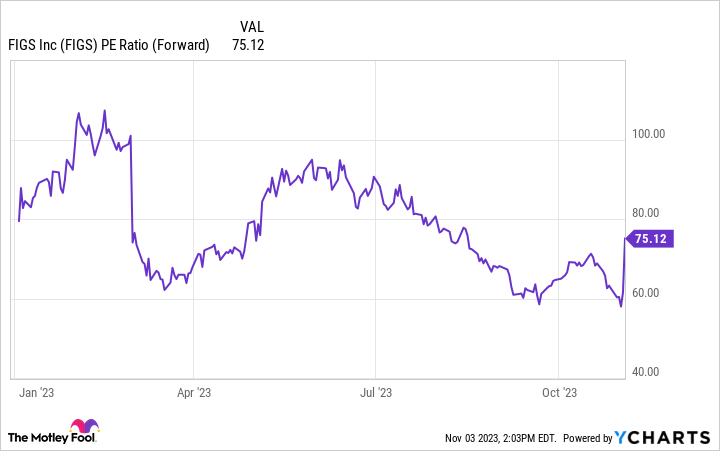
FIGS PE Ratio (Forward) data by YCharts
Following today’s gains, Figs is now valued at roughly 75 times this year’s expected earnings. With such a growth-dependent valuation, the company will need to post strong sales growth and margin expansion in order to deliver wins for long-term shareholders.
If the business can carve out a lasting niche and continue to improve operational efficiency, the stock could see impressive gains above current levels. But investors should keep in mind that some strong performance is already factored into Figs’ valuation before betting heavily on the stock.
Keith Noonan has no position in any of the stocks mentioned. The Motley Fool has no position in any of the stocks mentioned. The Motley Fool has a disclosure policy.