Four months ago, a total of 179 decentralized autonomous organizations (DAOs) boasted treasuries exceeding $1 million or more each. As of today, this figure has climbed to 211 distinct DAOs meeting the same criteria. Furthermore, since Nov. 1, 2023, the collective value of DAO treasuries has expanded by more than $20 billion across a period […]
Source link
Market

Over the last several decades, retiring and buying a condominium in Florida has been a rite of passage for millions of Americans entering their golden years. Unfortunately, a combination of high insurance rates, high homeowners’ association fees and high interest rates is scaring off buyers and turning Florida’s once highly vaunted condominium market into a disaster zone. This has left condo owners facing a perfect storm that was unimaginable as recently as 10 years ago.
A Market In Freefall
According to a recent Redfin report, Florida’s condominium market is in a state of freefall. Every indicator shows evidence of a market struggling to come to terms with a new reality. First, condo listings have increased by 30% in comparison to the same period one year ago. Another shocking aspect of the report is the extent to which prices in some of Florida’s largest markets are retreating in comparison to condominiums nationwide.
-
Tampa condominiums are selling for an average of 1% less ($235,000).
-
Miami condominiums are selling for an average of 2.5% less ($385,000).
-
Orlando condominiums are selling for an average of 4.8% less ($200,000).
-
Jacksonville condominiums are selling for an average of 6.5% less ($254,000).
More alarming is the fact that pending sales of condominiums in four of Florda’s largest markets are significantly down, or at best flat, compared to a year ago. That means Florida condos are losing their luster in the eyes of many prospective buyers.
Don’t Miss:
“Condos are sitting on the market much longer than they used to, with less interest from buyers,” Jacksonville agent Heather Kruayai said in the Redfin report.
Prospective Buyers Are Spooked
The culprit for this rapid cooling of the Florida condominium market is a squeeze play that savvy buyers are choosing to steer clear of. First, Florida has the highest homeowner insurance premiums in the country, with the average Floridian paying an estimated three times more than the nationwide average. Second, the only expense rising faster than the insurance premiums are homeowners association (HOA) fees on many Florida condominiums.
Since the collapse of the Surfside Towers in 2021, many Florida condominium communities have been dramatically raising HOA fees to cover both the cost of rising group premiums and assessments for needed maintenance. That’s assuming HOAs can find an insurer willing to write a policy for the community. In many cases, insurers will only cover communities after they make numerous (and costly) repairs or upgrades to existing facilities.
Orlando-based Redfin agent Juan Castro summed up the problem, saying, “Condo costs are shocking. Condos that used to have a $400 monthly maintenance fee may now have a $700 fee. It’s causing buyers to rethink their plans.” Failure to pay HOA fees can lead to foreclosure, which is why buyers are taking a hard look at the numbers and offering less for Florida condominiums. Many are avoiding the Florida condo market entirely.
A Bitter Irony
The most brutal irony of all is that despite Florida condominium prices being down compared to a year ago, they are still higher than they were during the pandemic. Add that to spiraling HOA fees, insurance premiums and interest rates, and you end up with a perfect recipe for buyers collectively hitting the pause button on Florida condominiums. Unfortunately for sellers, the new reality is hitting them in the pocketbook.
Read Next:
Image Credit: Shutterstock
“ACTIVE INVESTORS’ SECRET WEAPON” Supercharge Your Stock Market Game with the #1 “news & everything else” trading tool: Benzinga Pro – Click here to start Your 14-Day Trial Now!
Get the latest stock analysis from Benzinga?
This article Florida’s Condominium Market Is Becoming A Disaster Zone originally appeared on Benzinga.com
© 2024 Benzinga.com. Benzinga does not provide investment advice. All rights reserved.
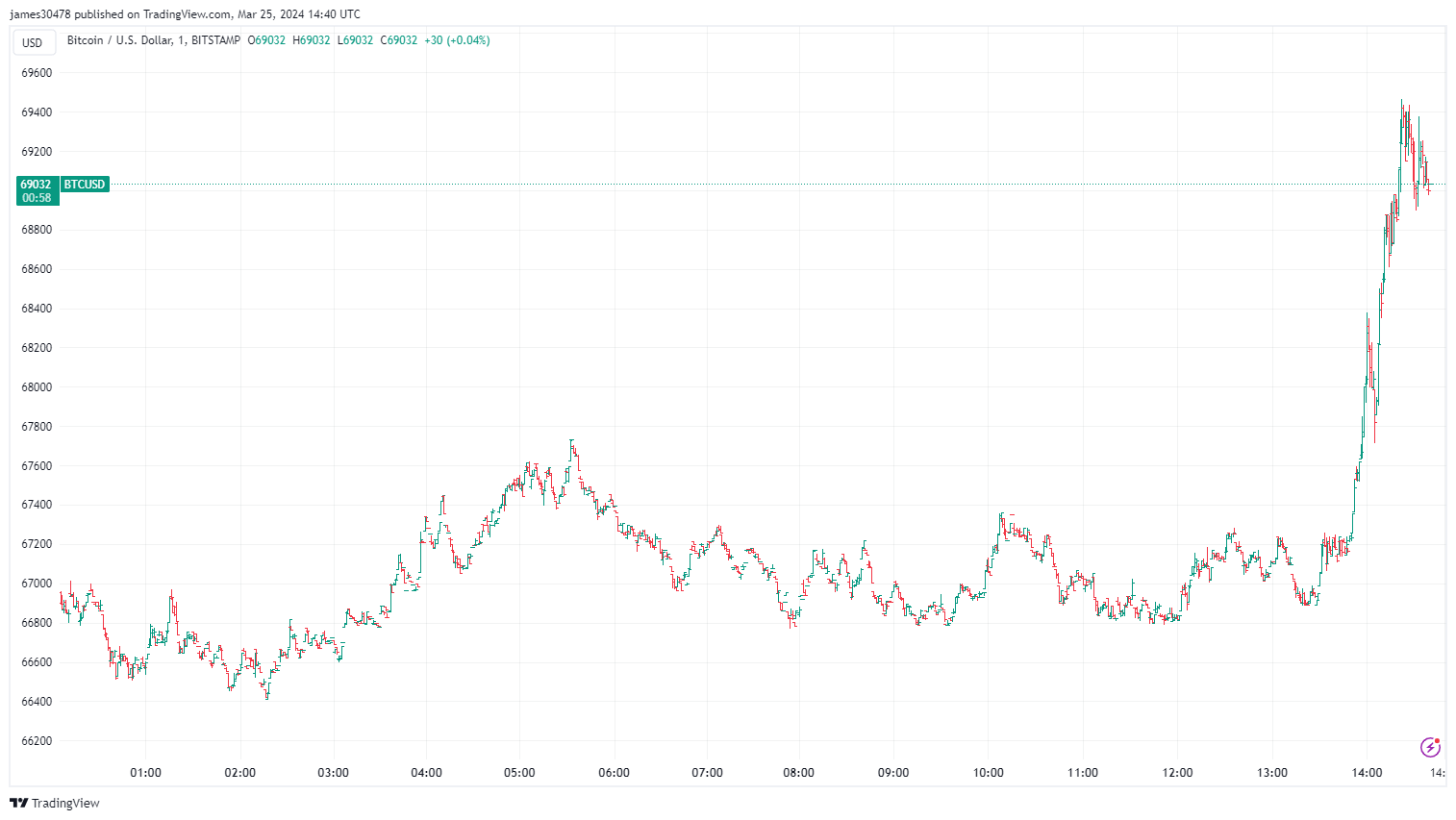
Bitcoin’s price rally above $69,000 leads to widespread market liquidations
Quick Take
Bitcoin has started the week strong with a push above $69,000—up more than 3% today and marking its highest value since March 16. The move triggered a flood of liquidations in the digital asset ecosystem. These liquidations stem partly from the digital assets strong rally, peaking at an impressive $69,400.

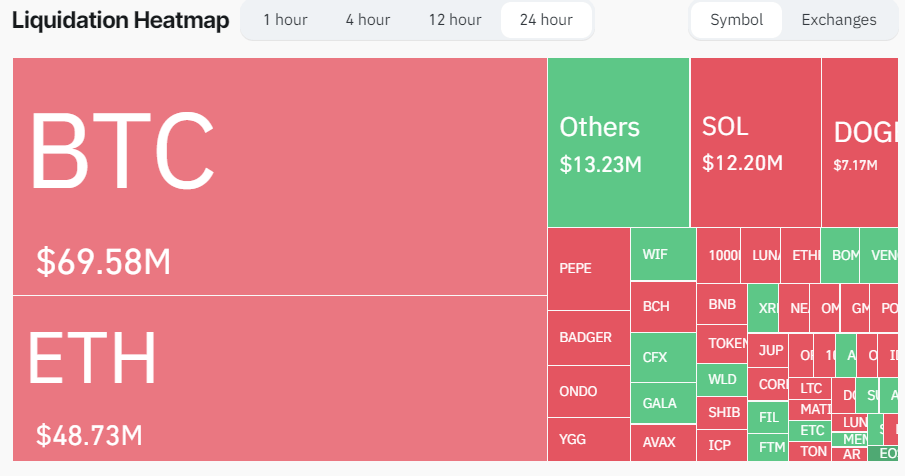
Coinglass data shows that, in the past 24 hours, the ecosystem has seen nearly $200 million in liquidations, with shorts accounting for a predominant portion of the total, around $129 million. The last hour alone witnessed a massive $35 million worth of liquidations, primarily comprising of shorts.

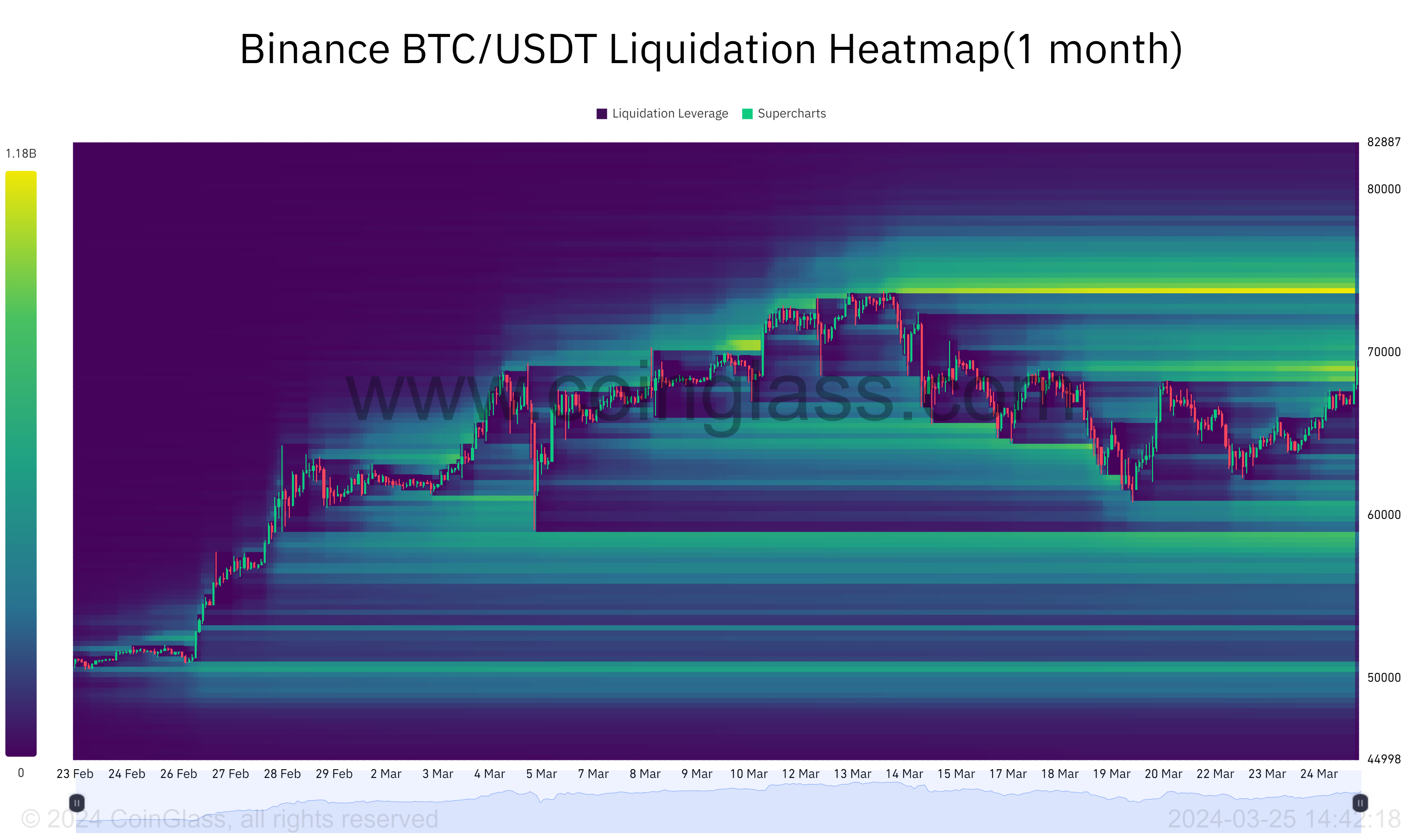
Data from Coinglass indicates a substantial amount of leverage, approximately $1.18 billion, parked just above the $73,000 mark.

The post Bitcoin’s price rally above $69,000 leads to widespread market liquidations appeared first on CryptoSlate.
Nissan looks to address ‘extreme market volatility’ with 30 new models, EV cost cuts

Nissan is targeting an additional 1 million vehicle sales over the next three years and a 30% reduction in electric vehicle production costs by 2030, the Japanese carmaker announced Monday.
In a new medium-term business plan, Nissan also said it would launch 30 new models by fiscal 2026, with 16 of these electrified. It’s aiming for EV and combustion engine costs to reach parity by 2030.
“This plan will enable us to go further and faster in driving value and competitiveness,” Nissan President and CEO Makoto Uchida said in a statement.
“Faced with extreme market volatility, Nissan is taking decisive actions guided by the new plan to ensure sustainable growth and profitability.”
The automaker also said it is targeting an operating profit margin of more than 6% by the end of fiscal 2026, as well as “long-term profitable growth.”
‘A lot of uncertainty’
A Nissan Ariya electric car is on display during 2020 Beijing International Automotive Exhibition (Auto China 2020) at China International Exhibition Center on September 27, 2020 in Beijing, China.
Vcg | Visual China Group | Getty Images
To address this, Nissan plans to develop EVs in “families,” integrate powertrains and focus on battery innovations as it looks to cut the cost of its next-generation fleet by 30% when compared with the current model Ariya crossover.
“In order to do that, we have to have a great partnership with our suppliers to work on from the app stream earlier with the scale that we have to provide,” Uchida told CNBC’s “Squawk Box Europe.”
“Otherwise, I think the next five years, there’s a lot of uncertainty that we are facing. The scalability will be most important, and how are we going to make that as a Nissan collaboration with a partnership is going to be one of the key items.”
Nissan’s plan: The Arc
Under the two-part plan dubbed The Arc, Nissan said it will aim to ensure volume growth through a “tailored regional strategy,” and prepare for an accelerated EV transition by balancing its portfolio between EV and combustion cars, growing volumes in major markets, and financial discipline.
This will be supported by “smart partnerships, enhanced EV competitiveness, differentiated innovations and new revenue streams.”
Nissan said this strategy could yield potential revenues of 2.5 trillion yen ($16 billion) from new business opportunities by fiscal 2030.
Are Stocks Going to Plunge if Joe Biden Wins a Second Term? Here’s What History Says About Stock Market Returns When Democrats Win.
It’s that time again — and I’m not talking about earnings season.
In a little over seven months, Americans across the country will head to the polls or mail in their ballots to determine who’ll lead the country over the coming four years. Although there are plenty of aspects of politics that have no bearing on Wall Street, fiscal policy changes that originate in Washington, D.C., and are signed into law by the president of the United States, can ultimately impact corporate earnings and the health of the U.S. economy.
With nearly 2,500 delegates in the ongoing primaries, incumbent Joe Biden is the presumptive nominee for president from the Democratic Party. Since Biden took office as the 46th president on Jan. 20, 2021, the ageless Dow Jones Industrial Average (DJINDICES: ^DJI), benchmark S&P 500 (SNPINDEX: ^GSPC), and growth-fueled Nasdaq Composite (NASDAQINDEX: ^IXIC), have respectively gained 28%, 36%, and 22%. All three major stock indexes have also achieved fresh all-time highs since the year began.
But could a second term of Joe Biden at the helm cause stocks to plunge? Let’s take a closer look at some of the downside catalysts that could lie ahead and let history be the ultimate judge.

Are stocks going to crash if Joe Biden wins in November?
Regardless of who’s president, Wall Street is always contending with headwinds. Should Joe Biden get the nod from voters in November, a combination of policy proposals (if signed into law) and macroeconomic factors have the potential to push the Dow Jones Industrial Average, S&P 500, and Nasdaq Composite off of their respective pedestals.
One of the more concerning proposals, from an investment perspective, is Biden’s recent call to raise the tax on stock buybacks from the current 1% to 4%. This may not sound like much, but S&P 500 companies are estimated to have repurchased in the neighborhood of $800 billion worth of their common stock in 2023.
For businesses with steady or growing net income, share repurchase programs that lower their outstanding share count can have a positive impact on earnings per share (EPS). In other words, companies enacting buybacks can appear more attractive to fundamentally focused investors. Quadrupling the buyback tax could make share repurchase programs less attractive, thereby slowing EPS growth.
Additionally, President Biden has called for an increase to the corporate alternative minimum tax rate to 21% from the current rate of 15% for businesses with at least $1 billion in profits, and has proposed increasing the peak U.S. corporate income tax rate to 28% from 21%. On paper, taxing corporate profits at a higher rate would be expected to reduce spending on innovation, hiring, and acquisitions.
However, it’s not just policy proposals from President Biden that could give Wall Street the jitters. A couple of money-based metrics and recession-predicting tools suggest a second term for Biden could involve meaningful downside for the Dow, S&P 500, and Nasdaq Composite.
WARNING: the Money Supply is officially contracting. 📉
This has only happened 4 previous times in last 150 years.
Each time a Depression with double-digit unemployment rates followed. 😬 pic.twitter.com/j3FE532oac
— Nick Gerli (@nickgerli1) March 8, 2023
For example, U.S. M2 money supply is declining by more than 2% from its all-time high for only the fifth time when back-tested more than 150 years, and the first time since the Great Depression, as highlighted in the post above by Reventure Consulting CEO Nick Gerli. M2 money supply accounts for everything in M1 (cash and coins in circulation, along with demand deposits in a checking account) and adds in savings accounts, money market accounts, and certificates of deposit (CDs) below $100,000.
The previous four times M2 money supply notably declined occurred in 1878, 1893, 1921, and 1931-1933. All four of these instances are associated with deflationary depressions and high periods of unemployment. While fiscal and monetary tools make it highly unlikely that we’d see a depression materialize today, a sizable decline in M2 money supply does suggest consumers and businesses will make fewer discretionary purchases.
Other predictive tools, such as the Conference Board’s Leading Economic Index, and the Federal Reserve Bank of New York’s recession probability measure, suggest economic weakness is in the cards.
On paper, a stock market plunge can’t be ruled out, regardless of who’s in the Oval Office come Jan. 20, 2025. But there’s another side to history that should have patient investors excited about the future.

Here’s what history says happens to stocks when Democrats win the presidency
Historically speaking, the stock market has averaged a positive annualized return with both Democrats and Republicans as president. But since 1945, Democrats in the Oval Office have outperformed Republicans.
According to an analysis from independent financial intelligence company CFRA Research in 2020 (i.e., prior to Biden taking office), Democrat presidents have overseen an 11.2% annualized return in the S&P 500, compared to 6.9% for their Republican counterparts. For instance, Bill Clinton and Barack Obama oversaw respective annualized gains of 15.2% and 13.8% during their eight-year terms.
While there have been a few Republican presidents that have been in office during a rough period for Wall Street — e.g., the S&P 500 shed 5.6% on an annualized basis while George W. Bush was in office — Republican Calvin Coolidge oversaw the best stock market performance of any president. In the roughly 5-1/2 years Coolidge was president during the Roaring Twenties, the market delivered a blistering annualized return of 26.1%!
The point being that, over long periods, it doesn’t matter which party finds itself in the Oval Office. Although budget proposals from presidential candidates can occasionally stir the pot and upset Wall Street, these events tend to be very short-lived.
Widening the lens beyond four- and eight-year presidential terms yields even more encouraging results for patient investors.
Last June, analysts at market insights firm Bespoke Investment Group published a data set that examined the length of bear and bull markets in the S&P 500 dating back to the start of the Great Depression in September 1929. What they found was a milewide disparity between optimism and pessimism on Wall Street.
Over the past 94 years, the 27 bear markets the S&P 500 has worked its way through cleared in an average of 286 calendar days, or about 9.5 months. By comparison, the typical bull market has lasted 1,011 calendar days, or 3.5 times as long.
A separate study conducted by Crestmont Research looked back even further. Since the components of the S&P could be found in other major stock indexes prior to the creation of the S&P in 1923, Crestmont was able to back-test its return data to 1900.
What the researchers at Crestmont did was analyze the rolling 20-year total returns (I.e., including dividends paid) of the S&P 500 since 1900. This yielded 105 unique periods of rolling 20-year total returns (1919-2023).
Here’s the kicker: All 105 rolling 20-year periods produced a positive total return. Regardless of which party controls the White House, hypothetically holding an S&P 500 tracking index for 20 years has been a foolproof investment strategy for more than a century.
To add, these weren’t paltry gains, either. Whereas you can count on one hand how many rolling 20-year timelines produced annualized total returns of between 3.1% and 5%, more than 50 of these 105 rolling 20-year time frames generated annualized total returns of between 9% and 17.1%.
If Joe Biden wins a second term as president, history suggests long-term investors are going to be well-positioned to grow their wealth on Wall Street.
Where to invest $1,000 right now
When our analyst team has a stock tip, it can pay to listen. After all, the newsletter they have run for over a decade, Motley Fool Stock Advisor, has nearly tripled the market.*
They just revealed what they believe are the 10 best stocks for investors to buy right now…
*Stock Advisor returns as of March 21, 2024
Sean Williams has no position in any of the stocks mentioned. The Motley Fool has no position in any of the stocks mentioned. The Motley Fool has a disclosure policy.
Are Stocks Going to Plunge if Joe Biden Wins a Second Term? Here’s What History Says About Stock Market Returns When Democrats Win. was originally published by The Motley Fool
This week’s non-fungible token (NFT) sales have taken another nosedive, intensifying the downtrend that began with a 16.55% decline from March 9 to March 16, 2024. The last seven days have witnessed an even steeper drop, with NFT sales plummeting by 18.57%. Cryptopunk #7,804 Shines in a Week of Falling NFT Sales In line with […]

Source link
4 Magnificent Growth Stocks You’ll Regret Not Buying in the New Nasdaq Bull Market
Who needs theme parks packed with roller coasters when you can simply put your money to work on Wall Street? Over the previous four years, all three major stock indexes have traded off bear and bull markets, with the wildest swings observed in the growth stock-driven Nasdaq Composite (NASDAQINDEX: ^IXIC).
When 2022 came to a close, the innovation-fueled Nasdaq had lost 33% of its value and badly trailed the iconic Dow Jones Industrial Average in the return column. But since the proverbial curtain opened on 2023, the Nasdaq Composite has been off to the races, with the widely followed index gaining nearly 57% and pushing to all-time highs. There’s absolutely no question that a new bull market has emerged on Wall Street.

But just because the Nasdaq Composite can’t be stopped, it doesn’t mean opportunistic long-term investors can’t still find amazing deals among growth stocks.
What follows are four magnificent growth stocks you’ll regret not buying in the new Nasdaq bull market.
Meta Platforms
The first astounding growth stock you’ll be kicking yourself for not scooping up with the Nasdaq Composite still in a relatively young bull market is none other than social media powerhouse Meta Platforms (NASDAQ: META).
To be fair, there are a couple of money-based figures and predictive indicators that suggest a recession could be in the cards this year. Meta generated nearly 98% of its revenue last year from advertising. Ad-based businesses typically struggle during economic contractions, which is the biggest worry for Meta and its current shareholders in 2024.
However, recessions are a short-term concern. Out of the one dozen U.S. recessions that have occurred since the end of World War II in September 1945, only three reached the 12-month mark and none surpassed 18 months. Businesses that bring in most of their revenue from ads, like Meta, thrive from long-winded periods of growth.
What makes Meta Platforms so special is its top-notch social media real estate. Facebook is the most-visited social site in the world. When added to Instagram, WhatsApp, and Threads, Meta is luring close to 4 billion active users to its family of apps each month. There isn’t a social media platform that offers access to more eyeballs than Meta. If the U.S. economy is expanding, this is a company that’s going to command strong ad-pricing power.
It’s also a company that knows how to rake in cash. In 2023, Meta Platforms generated north of $71 billion in cash from its operations and closed out the year with $65.4 billion in cash, cash equivalents, and marketable securities. This cash buffer affords the company the ability to take risks, such as the development of augmented/virtual reality devices and furthering its metaverse ambitions.
Maybe the hardest thing to believe about Meta is that it’s still incredibly cheap. Earnings per share (EPS) is expected to more than double between 2023 and 2027. Further, it’s trading at a 9% discount to its average cash-flow multiple over the past five years, based on Wall Street’s consensus cash-flow estimates for 2025.
Exelixis
A second magnificent growth stock you’ll regret not buying hand over fist during the early stages of the Nasdaq bull market is cancer-drug developer Exelixis (NASDAQ: EXEL).
One of the best things about healthcare stocks is that they’re highly defensive. Since people can’t control when they get sick or what ailment(s) they develop, demand for things like prescription drugs and healthcare services remains consistent in any economic climate. For a biotech stock like Exelixis, it means highly predictable cash flow year after year.
Lead drug Cabometyx is what makes Exelixis tick. It’s been approved to treat first- and second-line renal cell carcinoma, as well as advanced hepatocellular carcinoma. These indications alone have helped push Cabometyx’s annual sales to north of $1 billion.
However, Exelixis is examining its top cancer drug in more than five dozen clinical trials as a monotherapy or combination treatment. Late-stage studies for patients with advanced pancreatic and extra-pancreatic neuroendocrine tumors, as well as metastatic castration-resistant prostate cancer (in combination with Roche‘s Tecentriq) recently met their primary endpoints and may pave the way for additional label expansion opportunities.
Don’t overlook Exelixis’ amazing balance sheet, either. Though it doesn’t have Meta’s massive treasure chest, it did close out 2023 with a healthy $1.72 billion in cash, cash equivalents, and investments. This is more than enough capital to fuel the company’s internal research engine and promote collaborations.
Based on Wall Street’s consensus expectations, Exelixis is expected to nearly quadruple its EPS, based on generally accepted accounting principles (GAAP), to $2.50 per share over the next four years.

SentinelOne
The third jaw-dropping growth stock you’ll regret not adding to your portfolio with the Nasdaq Composite powering its way to new highs is cybersecurity company SentinelOne (NYSE: S). Although investors were less than enthused about SentinelOne’s first-quarter revenue guidance, there are a number of reasons for opportunistic investors to be excited about the recent swoon in its share price.
Similar to Exelixis, SentinelOne enjoys cash-flow stability. With businesses shifting their data online and into the cloud at an accelerated pace, endpoint cybersecurity providers like SentinelOne are being relied on more than ever. Since hackers don’t take time off, demand for cybersecurity solutions remains steady in any economic environment.
One of the reasons SentinelOne has become a trusted partner for protecting sensitive information is its Singularity platform. Singularity is artificial intelligence (AI)-driven and utilizes machine learning so that it can evolve over time and become more effective at hunting down potential threats before they become a problem.
But what investors are bound to love is the company’s key performance indicators, which are predominantly moving in the right direction. Fourth-quarter sales increased 38%, with annualized recurring revenue (ARR) rising by 39%. SentinelOne is predominantly subscription-driven, which reinforces the predictability of its operating cash flow, and is steadily lifting its adjusted gross margin (currently 78%, as of the fourth quarter of fiscal 2024, ended Jan. 31, 2024).
Another key for SentinelOne is that it’s winning over larger customers. It ended fiscal 2024 with 1,133 customers generating ARR of at least $100,000, which is 30% more than the year-ago period. These bigger fish should help the company turn the corner to recurring profits in fiscal 2025.
With revenue on pace to potentially triple over the next four years, now looks like the perfect time to add this fast-paced cybersecurity stock to your portfolio.
The fourth magnificent growth stock you’ll regret not buying in the new Nasdaq bull market is social media up-and-comer Pinterest (NYSE: PINS).
If there’s been a prevailing concern with Pinterest over the past couple of years, it’s been the company’s monthly active user (MAU) growth. Though there’s more to valuing a social media company than MAUs, investors were clearly not pleased with Pinterest’s MAUs shrinking in 2022 following the worst of the COVID-19 pandemic. But with the company’s MAUs growing by 11% during the December-ended quarter to a record 498 million, reasons to be skeptical of Pinterest are dwindling.
Similar to Meta Platforms, Pinterest has time on its side. Since most periods of economic growth last years, if not a full decade, advertising-based businesses tend to be a smart place for investors to put their money to work. With nearly a half-billion MAUs, Pinterest’s ad-pricing power should climb.
As I’ve pointed out in the past, Pinterest is uniquely positioned to succeed regardless of what app developers do with regard to data-tracking tools. Whereas most social media sites are relying on data-tracking tools to help advertisers target users, the entire premise of Pinterest’s platform is for users to freely and willingly share what things, places, and services they like. This makes it incredibly easy for Pinterest to serve targeted data to advertisers.
Pinterest’s robust cash position is another catalyst for the company. It closed out 2023 with roughly $2.5 billion in cash, cash equivalents, and marketable securities — and this was after repurchasing $500 million worth of its common stock. Having a healthy cash position allows Pinterest to innovate, as well as return capital to its long-term investors.
Lastly, Pinterest’s valuation is enticing. On top of sustained double-digit sales growth, Wall Street is looking for the company’s annual EPS to double over the next four years. With a price/earnings-to-growth ratio (PEG ratio) below 1, Pinterest is a screaming bargain.
Should you invest $1,000 in Meta Platforms right now?
Before you buy stock in Meta Platforms, consider this:
The Motley Fool Stock Advisor analyst team just identified what they believe are the 10 best stocks for investors to buy now… and Meta Platforms wasn’t one of them. The 10 stocks that made the cut could produce monster returns in the coming years.
Stock Advisor provides investors with an easy-to-follow blueprint for success, including guidance on building a portfolio, regular updates from analysts, and two new stock picks each month. The Stock Advisor service has more than tripled the return of S&P 500 since 2002*.
*Stock Advisor returns as of March 21, 2024
Randi Zuckerberg, a former director of market development and spokeswoman for Facebook and sister to Meta Platforms CEO Mark Zuckerberg, is a member of The Motley Fool’s board of directors. Sean Williams has positions in Exelixis, Meta Platforms, and Pinterest. The Motley Fool has positions in and recommends Exelixis, Meta Platforms, and Pinterest. The Motley Fool recommends Roche Ag. The Motley Fool has a disclosure policy.
4 Magnificent Growth Stocks You’ll Regret Not Buying in the New Nasdaq Bull Market was originally published by The Motley Fool
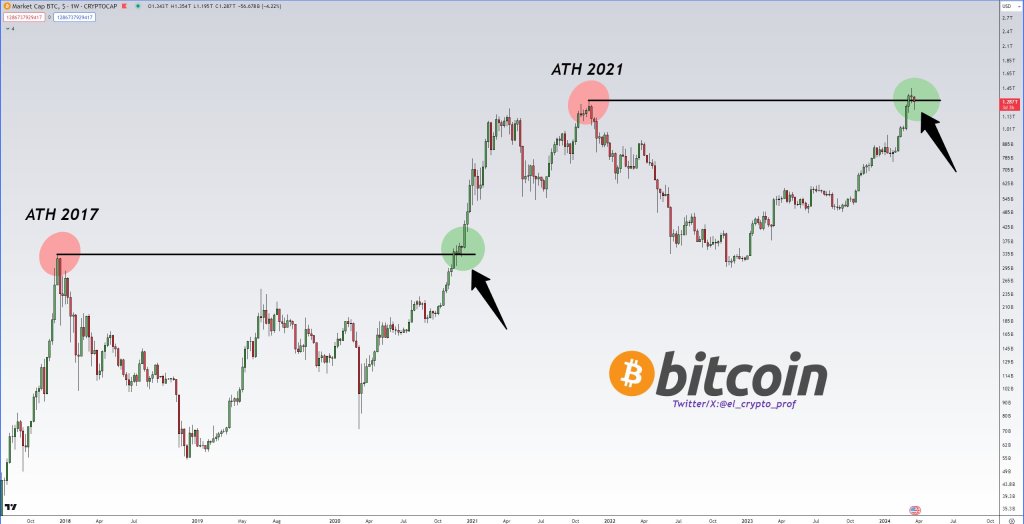
Bitcoin Market Cap Hints at Potential Price Surge After Retesting 2021 Highs
A crypto analyst on X is confident that Bitcoin has bottomed and is poised for major gains in the sessions ahead. Interestingly, the bullish outlook hinges on the Bitcoin market cap retesting all-time highs at press time.
Will BTC Rally? Market Dynamics Changing
So far, the Bitcoin price is around 2021 highs in USD terms but recently broke all-time highs, peaking at around $73,800. This fluctuation is also reflected in its market cap. It currently stands at $1.25 trillion, down 5% in the past 24 hours.
Notably, it is at the same price level as in 2021, when Bitcoin prices peaked, recording new all-time highs.

While optimism abounds and the trader expects more sharp price expansions in the days ahead, it is not immediately clear whether the coin will rip higher, aligning with this forecast. Bitcoin is volatile and has remained so despite changing market dynamics.
At the same time, unlike in the past, Bitcoin prices are driven not only by retail forces but by institutions. These institutions are regulated by the United States Securities and Exchange Commission (SEC), which also approved the spot Bitcoin exchange-traded fund (ETF).
This Bitcoin derivative product has been the primary driving force in the past ten weeks. This is from looking at how prices have evolved since its approval in mid-January 2024.
However, since BlackRock and Fidelity are regulated by the United States SEC, unlike retailers, they cannot act as they wish. Considering the millions and billions of dollars at play, their comments or assessments on the coin, now and in the future, can greatly impact sentiment.
Sentiment Is Dented, BTC Facing Headwinds
Sentiment has been dented when writing. Even with the United States Federal Reserve (Fed) ‘s decision to hold rates at 5.5%, the highest in 2023, lifting prices, there has been no solid follow-through in price action. The coin remains steady below $70,000.
Whether prices will rally over the weekend remains to be seen. However, for now, there are some headwinds to consider.
First, there has been a slowdown in inflows to spot BTC ETFs. At the same time, outflows from the Grayscale Bitcoin Trust (GBTC) have increased. Second, after rallying sharply from October 2023, a cool-off before halving might see the coin trend lower.
Feature image from DALLE, chart from TradingView
Disclaimer: The article is provided for educational purposes only. It does not represent the opinions of NewsBTC on whether to buy, sell or hold any investments and naturally investing carries risks. You are advised to conduct your own research before making any investment decisions. Use information provided on this website entirely at your own risk.