According to a recent Form N-1A, Grayscale has approached the U.S. Securities and Exchange Commission (SEC) with a proposal for a unique exchange-traded fund (ETF) dedicated to the privacy and cybersecurity realm. The Grayscale Privacy ETF aims to be the first to encapsulate the burgeoning sector of privacy technology and cybersecurity. Privacy Takes Center Stage […]
Source link
privacyfocused
Ocean Mining defends accusations of censoring privacy-focused Bitcoin transactions by Samourai Wallet

Samourai Wallet, a Bitcoin mobile app wallet, accused Ocean Mining, a decentralized BTC mining pool, of censoring “privacy enhancing transactions” on the blockchain network in an extensive Dec. 7 thread on social media platform X (formerly Twitter).
However, Ocean Mining’s top executive retorted that a bug in Samurai’s system caused the problem.
The issue
The BTC wallet provider claimed that the mining pool enacted a policy of censoring Whirlpool Coinjoin transactions and BIP47 notification transactions from Dec. 6. The firm pointed fingers at Ocean Mining’s leadership, including CTO Luke Dashjr and lead investor Jack Dorsey, alleging ‘hostility’ towards its transactions.
According to Samourai, Dashjr’s claim that Whirlpool transactions are non-standard is “totally wrong and a lie” because it is imposing a 46-byte limit on the OP_RETURN function instead of the previous 80 bytes set in Bitcoin Core version 0.12. Samourai Wallet contends that this alteration effectively causes Ocean to exclude privacy-enhancing transactions.
The platform wrote:
“Ocean is choosing to pursue a very slippery slope in their decision to exclude privacy enhancing transactions…Unfortunately the action of Ocean deciding to censor privacy enhancing transactions is yet another example of the dilution of cypherpunk roots of the bitcoin project.”
In response, Dashjr countered that the issue was due to a bug in Samourai’s system.
Furthermore, the Ocean Mining CTO questioned why Samourai exceeded the 42-byte data carrier size. “What is this data even for? I’ve looked at trying to work around it, but can’t find any technical details,” Dashjr added.
However, he concluded that Samourai should fix the problem on their end since it’s reducing privacy.
Meanwhile, this is not the first time that Dashjr has been accused of trying to censor transactions on the BTC network. On Dec. 6, crypto community members likened his attempt to end Ordinals Inscription to censoring transactions on the blockchain network.
Israeli crypto entrepreneur joins privacy-focused project amid fraud allegations
Disclaimer: The article is updated to clarify allegations about Moshe Hogeg and his time in house arrest.
Moshe Hogeg, an Israeli entrepreneur, has returned to the spotlight of the crypto industry after speaking at a conference in Morocco on “alternative internet network” Tomi.
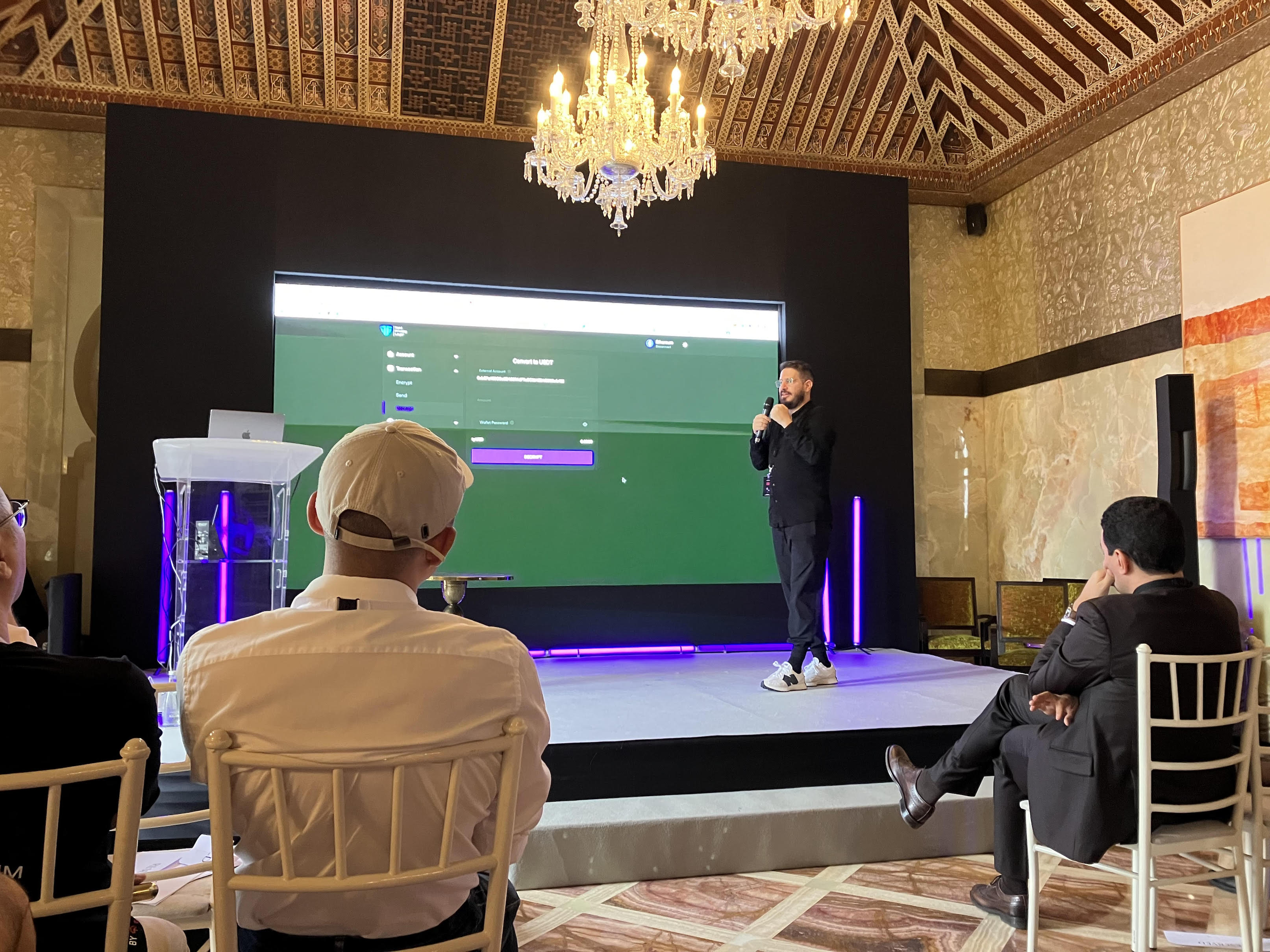
Speaking at the Nakamoto Forum in Marrakech on June 6, Hogeg was one of a handful of project leaders at Tomi who spoke on the network’s privacy features to a crowd of investors, representatives from crypto and blockchain firms, and members of the media.
In an interview with Cointelegraph, Hogeg compared himself to other industry leaders, including Binance CEO Changpeng Zhao, who was targeted by United States authorities in their case against the global exchange. The Israeli entrepreneur claimed officials understood the power of public opinion among those in crypto and the financial world and conducted “a well-orchestrated attack” to damage his reputation.
“I see that more and more key figures in the crypto industry are becoming targets to authorities,” Hogeg told Cointelegraph. “Whenever there’s something like this, […] they try to eliminate the risks. I think that something very similar happened to me in Israel.”

The entrepreneur was arrested by Israeli authorities in November 2021 for allegedly engaging in “sex crimes and cryptocurrency fraud.” However, Hogeg said there had been no official indictment in his case, which largely required him to be under house arrest for less than a month.
Several members of the Tomi team introduced features of the project, ranging from a content creator platform to minting nonfungible tokens. Hogeg described himself as being a “small” but “significant” part of the Tomi team amid his own controversies in his talks at the Nakamoto Forum.
Related: Privacy should be considered in ‘potential retail CBDC’ — Treasury official
As part of a demonstration for attendees, Hogeg and a Tomi developer showed how they encrypted Tether (USDT) to create a “totally private” token. He spoke on the network’s privacy solution, which seemed to allow crypto users to send ERC-20 and Ethereum-based tokens without any trace of the transaction on blockchain analytics platform Etherscan.
“Ethereum is great, but Ethereum is not private,” Hogeg told attendees. “Privacy is a basic, basic right. So, developing a technology that allows you to transact billions of dollars without risking your privacy is groundbreaking.”
With the addition of Hogeg to the team, Tomi recently raised $10 million for the project on top of a $40 million funding round the firm announced in March. The price of the network’s tomiNET (TOMI) token surged to an all-time high of $6.59 on June 6 amid the Nakamoto Forum, but has since dropped to $4.70 at the time of publication.
Magazine: Bitcoin in Senegal: Why is this African country using BTC?