Scott Melker, also known as the “Wolf of All Streets,” believes that we are at the start of a major bull run for both bitcoin and the broader crypto market. “We will likely see a huge bubble and that coins with no fundamental value will also skyrocket before it inevitably pops,” he warned, adding that […]
Source link

Sees
Bitcoin sees violent volatility after hitting new ATH second time in a week
Bitcoin hit a new all-time high for the second time this week and once again experienced a violent sell-off that erased its gains and stirred memories of past volatilities in the crypto space.
Bitcoin broke its previous record early in the US trading hours on March 8, climbing to an all-time high of $70,136 after US jobs data raised expectations of rate cuts in the coming month.
However, the jubilation was short-lived as a wave of sell pressure engulfed the market, driving the price down by more than 3% to a low of $66,500 in less than an hour. The wider crypto market experienced similar volatility.
As of press time, BTC was trading at $67,890, according to CryptoSlate data.
Over the past four hours, the volatility caused $181.5 million in total liquidations, with longs making up more than $100 million. Meanwhile, Bitcoin liquidations during the period stood at $70.57 million, with longs accounting for $40.3 million, according to CoinGlass data.
The wall
This week’s market movements have been particularly turbulent, with Bitcoin’s value fluctuating widely. After setting a new record earlier in the week, BTC suffered a dramatic 14% drop, plummeting to around the $59,000 level before recovering.
Such volatility has become a defining characteristic of the crypto market, reflecting both the speculative nature of digital assets and the evolving landscape of financial markets.
Analysts identified a significant volume of sell orders on major exchanges, including Binance and OKX, as a pivotal factor in the rapid price reversal.
The sell orders, valued at roughly $70 million and totaling approximately 1000 BTC, created a formidable barrier that halted any further price increase beyond the $70,000 mark.
Institutional influence
Market analysts attribute the initial price surge to a combination of factors, including investor optimism regarding the US economic outlook and the introduction of spot Bitcoin exchange-traded funds (ETFs).
These developments have increasingly aligned crypto trading activity with traditional stock market hours, highlighting the growing integration of digital assets into conventional financial systems.
The backdrop to Bitcoin’s record-breaking rally was the latest US unemployment data, which suggested a potential easing of inflationary pressures and fueled speculation about the Federal Reserve’s interest rate policy.
The unexpected rise in the unemployment rate to 3.9%, coupled with downward revisions to job growth figures, has bolstered hopes for a more accommodative monetary stance.
As Bitcoin’s price ascension coincides with a weakening US dollar, the implications for the Fed’s upcoming policy decisions are being closely watched.
With the Fed’s next interest rate decision anticipated on March 20, market participants remain vigilant as the interplay between macroeconomic indicators and monetary policy could significantly influence the trajectory of Bitcoin and the wider digital assets market.
Bitcoin Market Data
At the time of press 5:39 pm UTC on Mar. 8, 2024, Bitcoin is ranked #1 by market cap and the price is up 1.19% over the past 24 hours. Bitcoin has a market capitalization of $1.35 trillion with a 24-hour trading volume of $53.2 billion. Learn more about Bitcoin ›
Crypto Market Summary
At the time of press 5:39 pm UTC on Mar. 8, 2024, the total crypto market is valued at at $2.59 trillion with a 24-hour volume of $148.59 billion. Bitcoin dominance is currently at 51.89%. Learn more about the crypto market ›
Mentioned in this article
Latest Alpha Market Report
GBTC AUM sees modest $1.6 billion drop post-ETF launch, despite major outflows
Quick Take
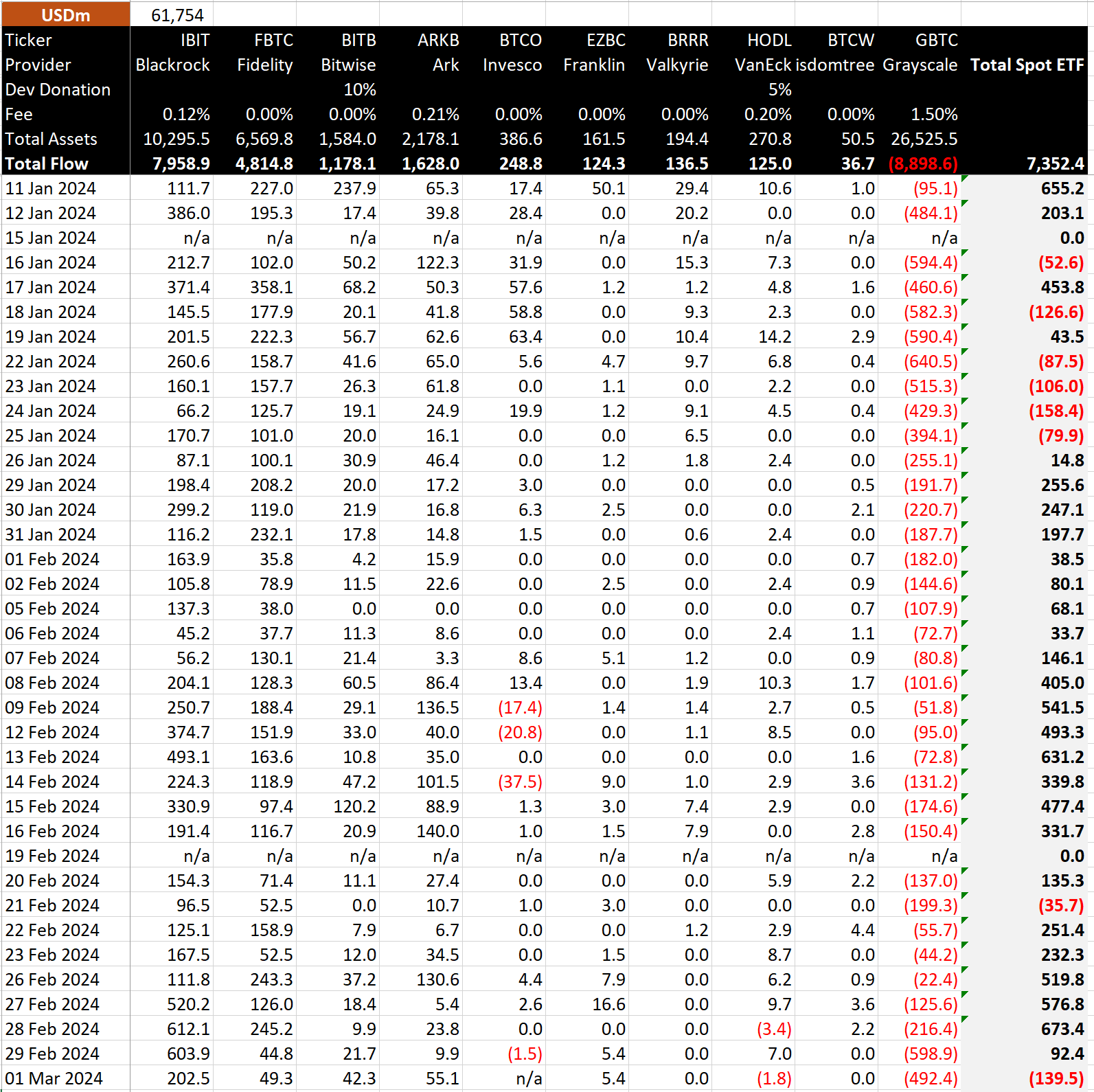
Data from BitMEX shows March began with the first total outflow since Feb. 21. The day saw an outflow of $140 million, significantly impacted by a massive $492 million outflow from the Grayscale Bitcoin Trust (GBTC), marking one of the largest single-day outflows.

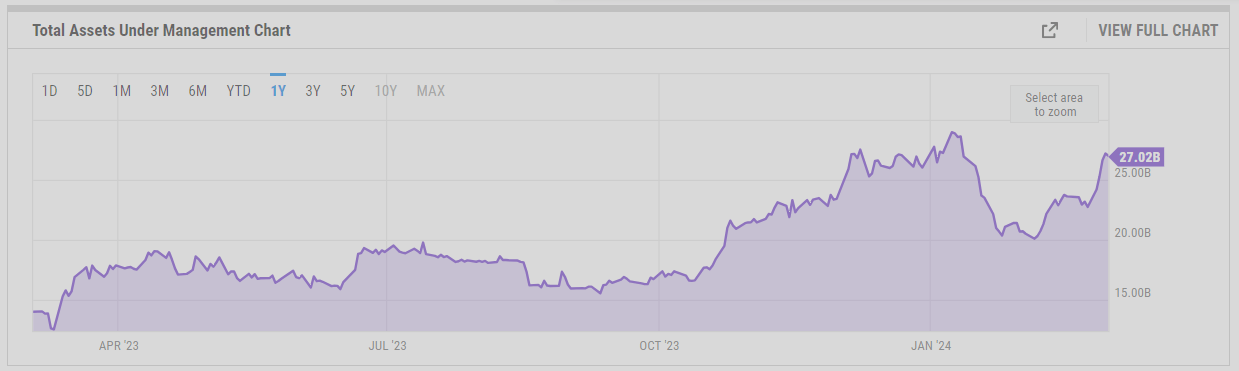
According to BitMEX data, the Grayscale Bitcoin Trust (GBTC) has experienced outflows totaling $8.9 billion. Despite this significant outflow, the assets under management (AUM) of GBTC only decreased by $1.6 billion, moving from $28.6 billion to $27 billion, as reported by ycharts.
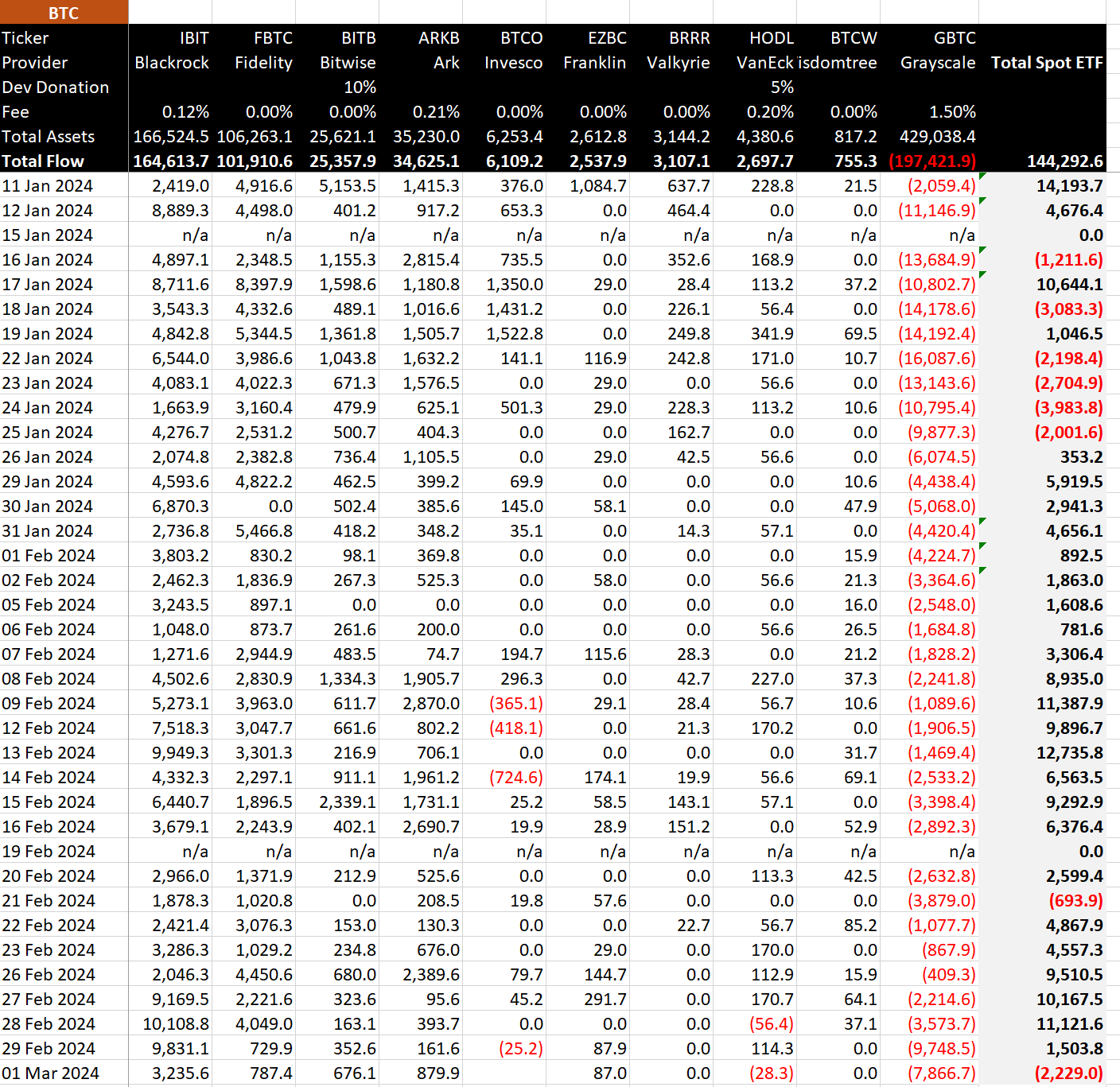
This relatively small decrease in AUM, in the face of large outflows, can be attributed to the increase in Bitcoin’s price, which rose from $49,000 to $65,000 since the ETF was launched on Jan. 11.

Despite these outflows, GBTC maintains a strong market presence with a 55% share, though down from 100% two months ago, as noted by ETF Store President Nate Geraci.
Furthermore, GBTC’s annual fee revenue stands at a significant $398 million, dwarfing the $53 million from the nine new ETFs, not including fee waivers, according to Geraci.

Meanwhile, BlackRock’s IBIT saw much quieter inflows of $203 million on Mar. 1, following consecutive record-breaking days. These inflows have taken their total net inflow to $8 billion, roughly equivalent to holding 165,000 Bitcoin, according to BitMEX.
BitMEX has noted that Invesco Galaxy Bitcoin ETF (BTCO) has not disclosed its data for Mar. 1.
The post GBTC AUM sees modest $1.6 billion drop post-ETF launch, despite major outflows appeared first on CryptoSlate.
Stablecoin Sector Sees $3.26 Billion Growth Spurt; Tether Nears $100B Milestone, USDE Supply Swells by 374%
The stablecoin sector experienced a $3.26 billion expansion within the last eight days, climbing from $140.82 billion to $144.08 billion by Sunday, March 3, 2024. During February, increases in supply were observed in four of the top five stablecoins by market cap, with FDUSD’s supply growth leading amongst the five. Stablecoin Economy Rises 2.31% in […]

Source link
Galaxy Digital Sees ‘Tremendous Global Demand for Bitcoin’ — CEO Says ‘There’s a New Army of Buyers’
Galaxy Digital CEO Mike Novogratz sees “a tremendous global demand for bitcoin,” emphasizing: “This is probably the first time in the history of bitcoin that we have true price discovery.” Noting that there is “a new army of buyers” and there is also “an army of salespeople,” he expects the price of bitcoin to be […]

Source link
Bloomberg Strategist Sees Bitcoin as Global Alternative Currency — Warns Stock Market Drawdown Could Impact BTC
Bloomberg Intelligence’s senior commodity strategist, Mike McGlone, says bitcoin is “becoming an alternative currency on a global basis,” noting that “The world’s going towards intangible assets and bitcoin is the most significant in cryptos.” However, the strategist warned that as bitcoin’s price approaches $70,000, a key test for the cryptocurrency may come “when the U.S. […]
Source link
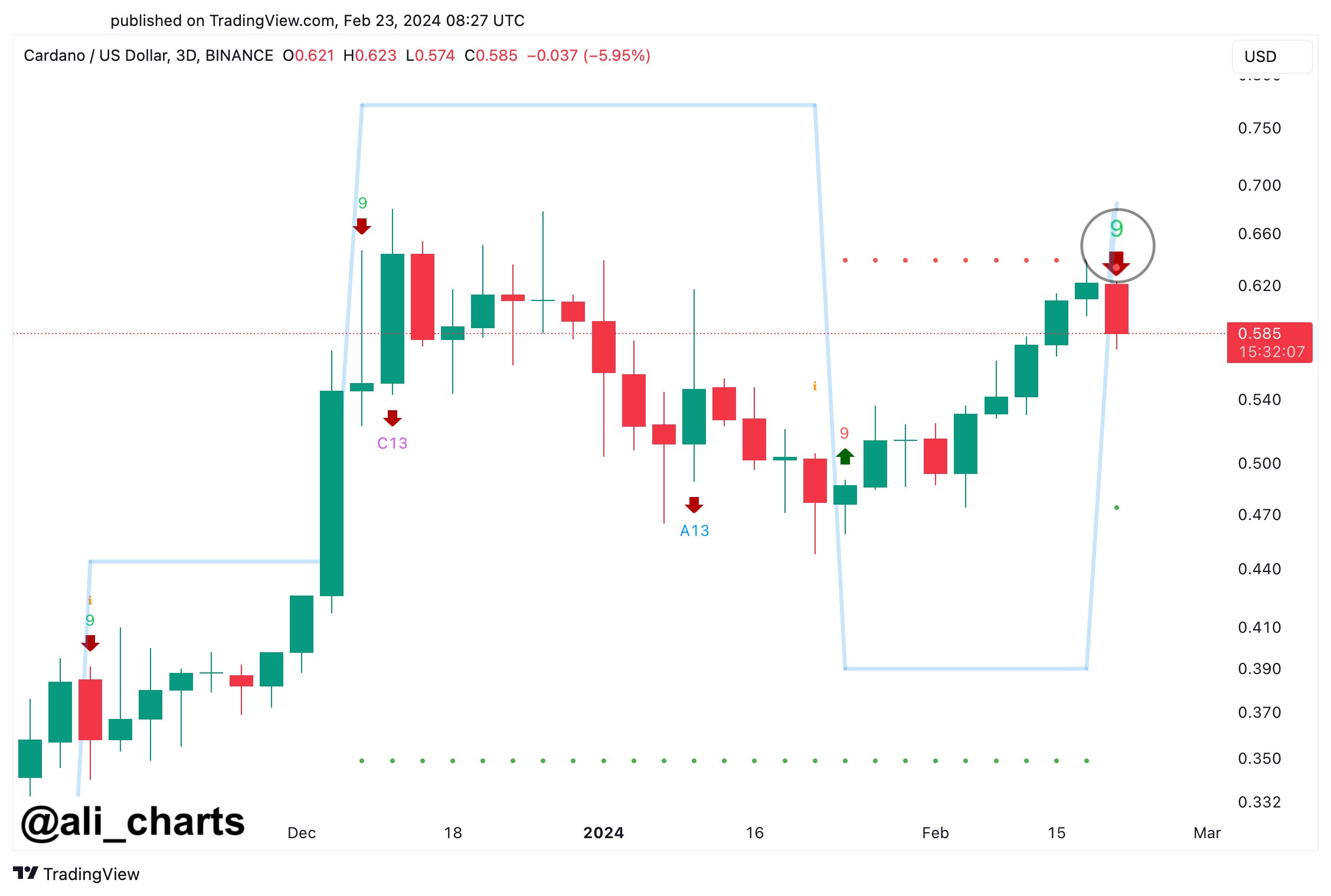
In a recent technical analysis by crypto analyst Ali Martinez, known on social media as @ali_charts, a potential sell signal has been identified on the three-day chart for Cardano (ADA) against the US dollar. This analysis, shared on X on February 23, suggests caution among ADA traders due to the appearance of a bearish signal from the TD Sequential indicator.
Martinez’s chart showcases the TD Sequential indicator presenting a ‘9’ signal, a classic sell indication that suggests the current trend may be exhausted and a reversal could be imminent. This signal is highlighted on the candlestick that has been forming over the last three days, marked by a red rectangle surrounding a green candlestick.
The ‘9’ setup, traditionally seen as a sign to take profits or to prepare for a trend change, implies that ADA’s recent upward momentum may face a setback. The analysis further notes that this is not the first instance of such a signal appearing on Cardano’s chart.

Previous occurrences of the TD Sequential ‘9’ sell signal were followed by price corrections for ADA. Traders may be particularly vigilant now, as the chart indicates that the last two signals of this nature were succeeded by downward price action. Martinez remarked:
The TD Sequential indicator shows a sell signal on the #Cardano 3-day chart. It’s important to note that the last two times this indicator signaled bearish, ADA experienced a price correction!
How Low Could Cardano (ADA) Price Retrace?
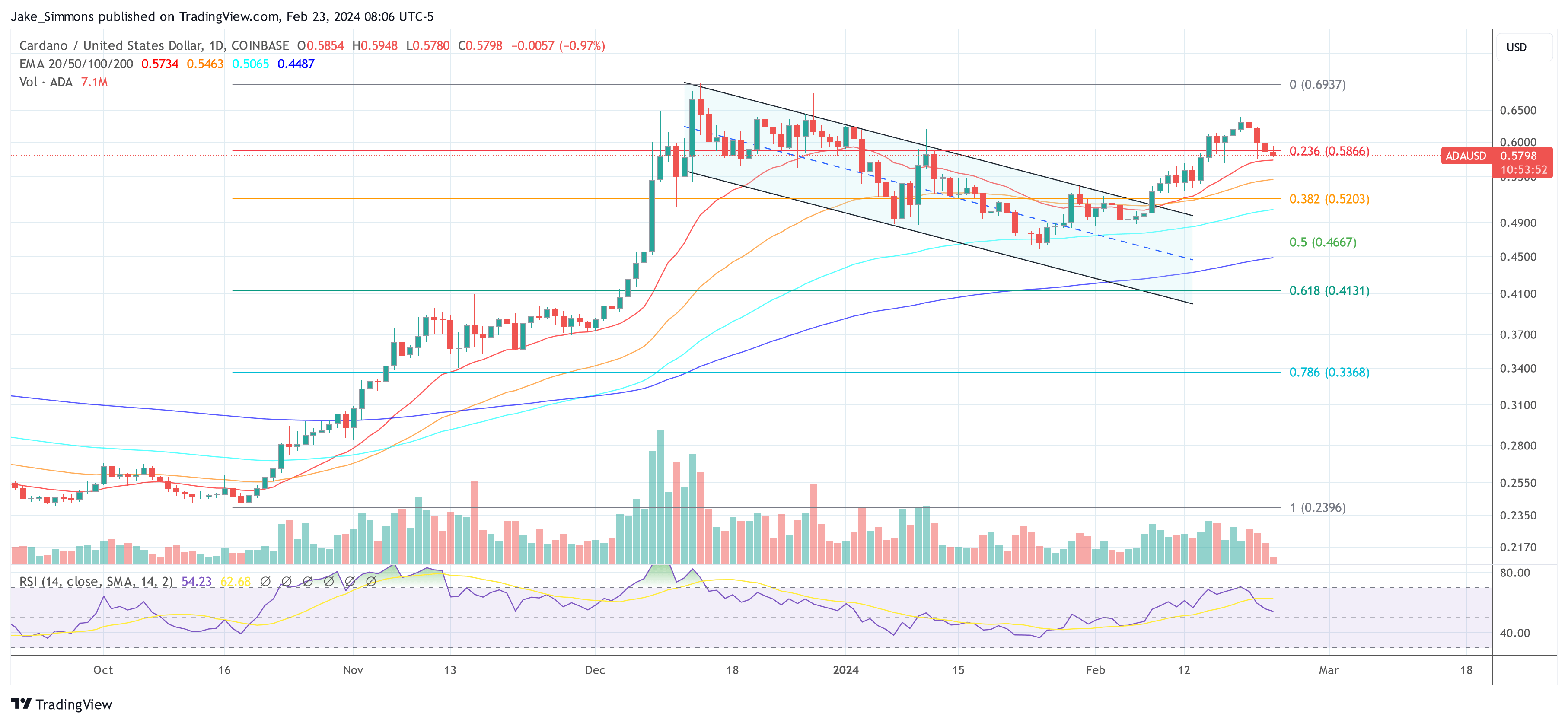
As of February 23, 13:06 UTC, the ADA/USD pair shows a complex interplay between bullish and bearish signals on the daily time frame. The chart presents a constricted pattern following a descent from a local high.
The ADA price is currently trading at $0.5790. Importantly, the price is above the 20-day Exponential Moving Average (EMA) at $0.5733, the 50-day EMA at $0.5462, the 100-day EMA at $0.5065 and notably, the 200-day EMA at $0.4487. The positioning above these EMAs can be a sign of an underlying bullish sentiment in the market.

The Fibonacci retracement levels, drawn from the peak to the trough of the recent move, highlight significant levels of potential support and resistance. The 0.236 level at $0.5866 is immediately overhead, acting as a minor resistance level. The 0.382 level at $0.5203 and the 0.5 level at $0.4667 are key support zones to watch if a bearish reversal occurs.
A break below these levels could signal a deeper retracement towards the 0.618 level at $0.4131 or even the 0.786 level at $0.3368. However, the most crucial support at the moment is the 20-day EMA which could forebode a changing trend.
Notably, the volume has been relatively consistent, with a slight decrease in trading volume accompanying the recent price consolidation. This could indicate a lack of conviction among traders. Confirming this, the Relative Strength Index (RSI) is at 54, indicating neither overbought nor oversold conditions. The RSI trend is neutral, providing no clear directional bias at the moment.
In conclusion, while there are hints of bearishness, there are still good arguments to be bullish on Cardano and not wait for a larger correction. However, if the price does not hold above several key EMAs on the daily chart, the trend change could be confirmed.
Featured image created with DALL·E, chart from TradingView.com
Disclaimer: The article is provided for educational purposes only. It does not represent the opinions of NewsBTC on whether to buy, sell or hold any investments and naturally investing carries risks. You are advised to conduct your own research before making any investment decisions. Use information provided on this website entirely at your own risk.
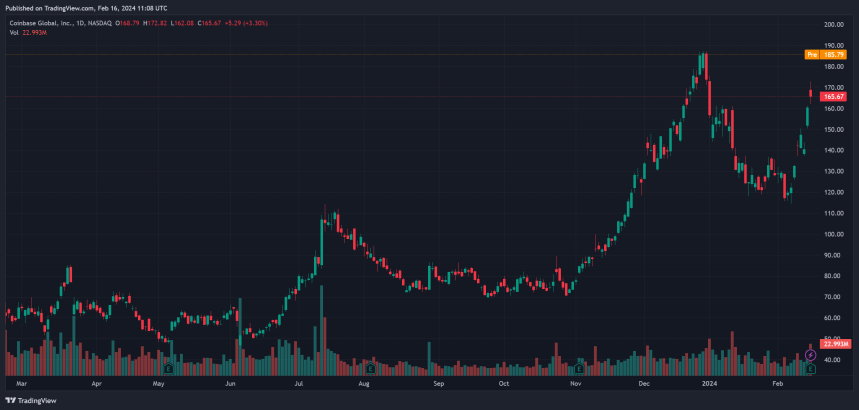
4 Surprising Insights From The Coinbase Earnings Report, COIN Sees Bullish Surge
The foremost crypto exchange in the United States, Coinbase, released its earnings report on February 15th. As expected, there were major takeaways from the financial report, highlighting the crypto company’s performance in the fourth quarter of last year.
Coinbase’s Trading Volume Exceeds Expectations
Coinbase maximalist Coinbase Duck noted in an X (formerly Twitter) post how the crypto exchange defied expectations in the fourth quarter of 2023. Coinbase recorded $170.6 billion in spot trading volume, exceeding the estimated $168.
Specifically, a considerable influx of retail investors accounted for 18% of the total spot trading volume against the estimated 16% that the crypto exchange was projected to record. The return of these retail investors is believed to have been partly due to the resurgence that Bitcoin and the broader crypto market experienced towards the end of the year.
Meanwhile, consumer transaction revenue ($492.5 million) was way below the estimate of $570.9 million. However, Coinbase Duck noted that this wasn’t necessarily bad, as some investors started using advanced trading.
In a letter to its shareholders, the crypto exchange also revealed that some existing users traded significantly higher volumes, which could have necessitated the move to advanced trading.
Coinbase also recorded a total operating expense of $838 million, which happened to be below the projected estimate of $878 million. Specifically, the crypto exchange did a great job in its transaction expenses, recording an expense of $126 million compared to the estimate of $163 million.
However, the company’s sales and marketing expenses ($106 million) exceeded the estimate of $90 million. Coinbase revealed that this growth was “primarily driven by higher seasonal NBA spending, higher performance marketing spending due to strong market conditions, and increased USDC reward payouts due to growth in on-platform balances.”
Coinbase Had A Profitable Fourth Quarter
Coinbase recorded a net income of $273 million, beating the estimate of $104 million. Interestingly, going by figures from its Shareholder letter, the fourth quarter of 2023 was the only one in the year in which the crypto exchange didn’t record a loss for its net income. Meanwhile, the company also recorded its largest net revenue during that period.
Coinbase suggested that the excitement around the Spot Bitcoin ETFs and the expectations of more favorable market conditions in 2024 had contributed to its success in Q4 of 2023. Coinbase is a primary custodian for most Bitcoin ETFs, including BlackRock’s iShares Bitcoin Trust (IBIT).
Meanwhile, the crypto exchange earned $1.13 per share, beating the forecast of $0.43. This is without the crypto exchange accounting for the FASB change, which Coinbase Duck revealed could bring its earnings per Share (EPS) to $2.1.

Chart from Tradingview
Disclaimer: The article is provided for educational purposes only. It does not represent the opinions of NewsBTC on whether to buy, sell or hold any investments and naturally investing carries risks. You are advised to conduct your own research before making any investment decisions. Use information provided on this website entirely at your own risk.
Quick Take
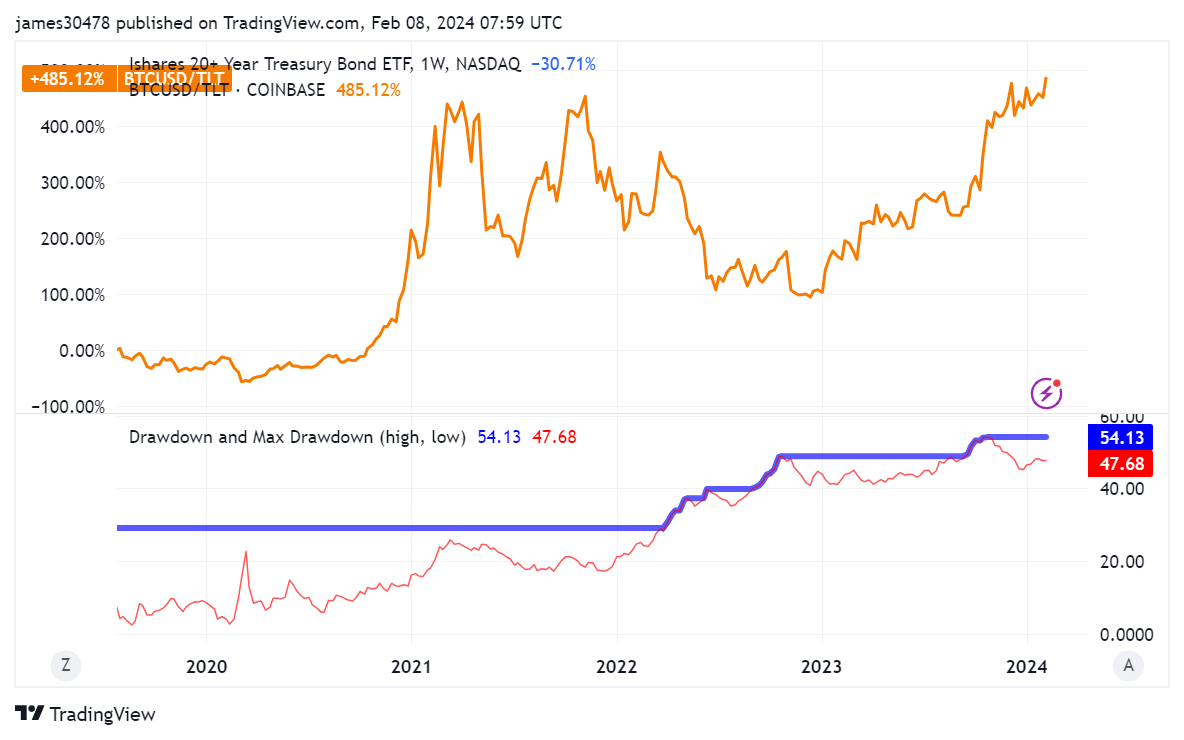
A trend emerged between Bitcoin and TLT, the U.S. long bond ETF, in early December as BTC denominated in TLT hit a triple top level previously seen in 2021.
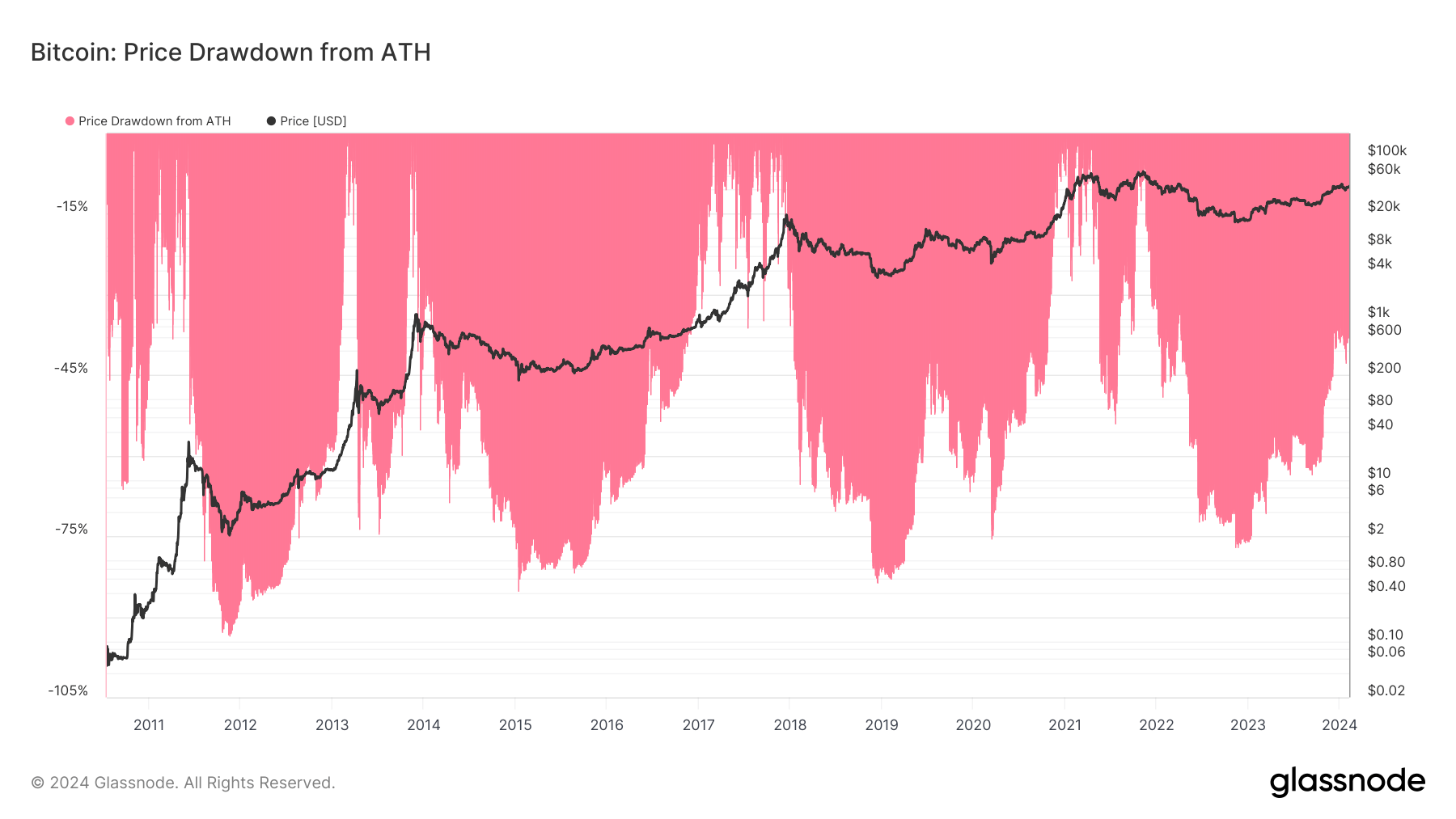
Bitcoin just rallied above $44,200 and is 36% off its all-time high of $69,000; it has showcased a significant dominance in relation to TLT, which is currently trading around $94 and stands 48% off its peak. This divergence is further highlighted as it currently requires 471 TLT to purchase one Bitcoin, surpassing previous highs of approximately 420 and 440 in March and November 2021, respectively, when Bitcoin was trading well above $50,000.

This trend suggests an interesting aspect of the financial markets, as Bitcoin, traditionally viewed as a risky asset, displays resilience compared to TLT, a global benchmark for relatively safe assets. Notably, BTC ETFs are experiencing substantial inflows, potentially offering tailwinds to Bitcoin’s price.

Contrarily, market forecasts may dampen TLT’s prospects; the CME fed watch tool is currently projecting an 82% chance of a pause by March 2024, contrary to the optimism that prompted TLT to rally in recent weeks.
Compounded by challenges in the banking sector, for example, New York Community Bank stock is nearly down 70% year-to-date, according to The Kobeissi Letter; these developments present a compelling narrative of potential shifts in asset dynamics, worthy of close attention.
The post Bitcoin breakout against US bonds sees it hit new all-time high appeared first on CryptoSlate.
Quick Take
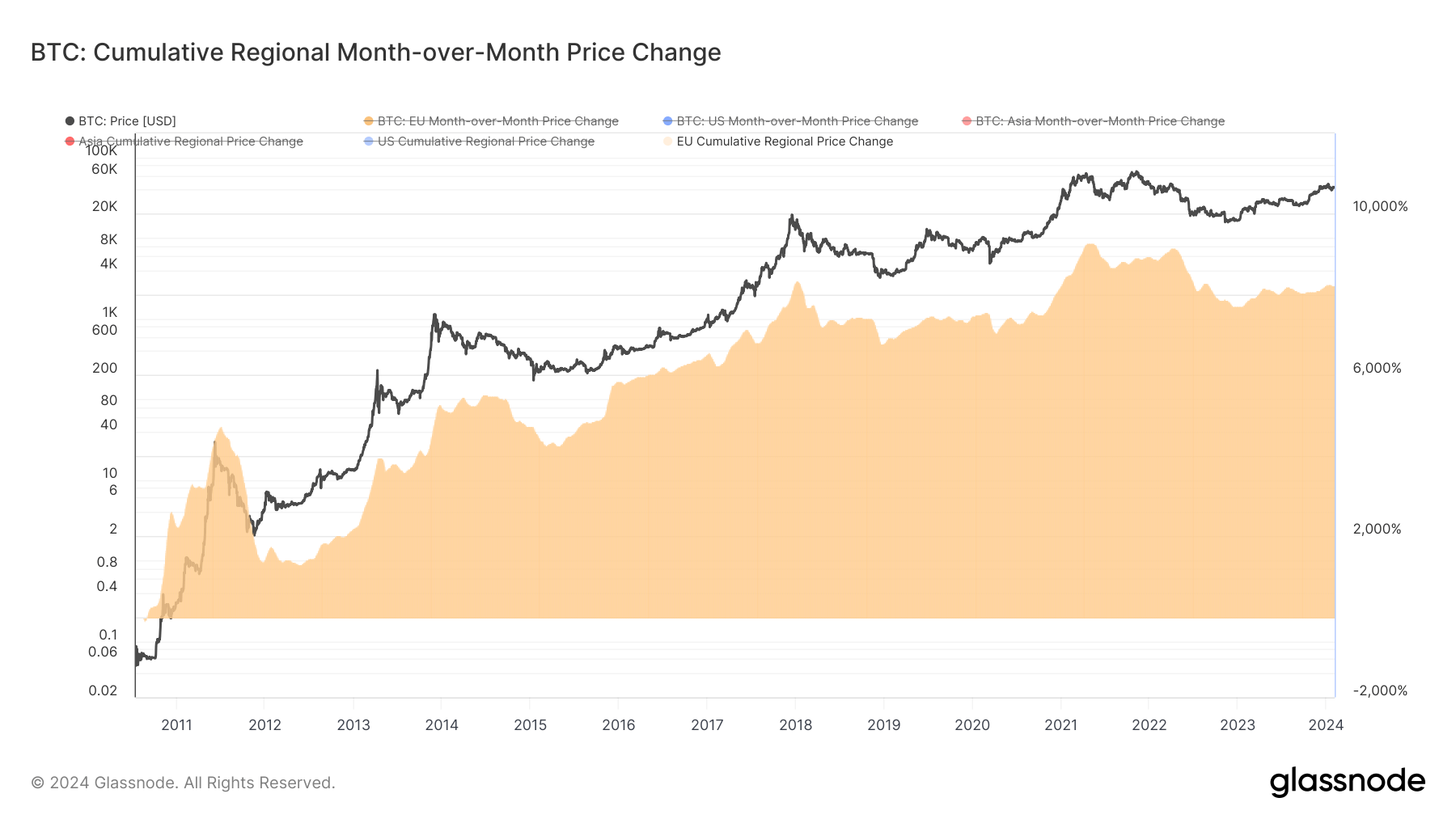
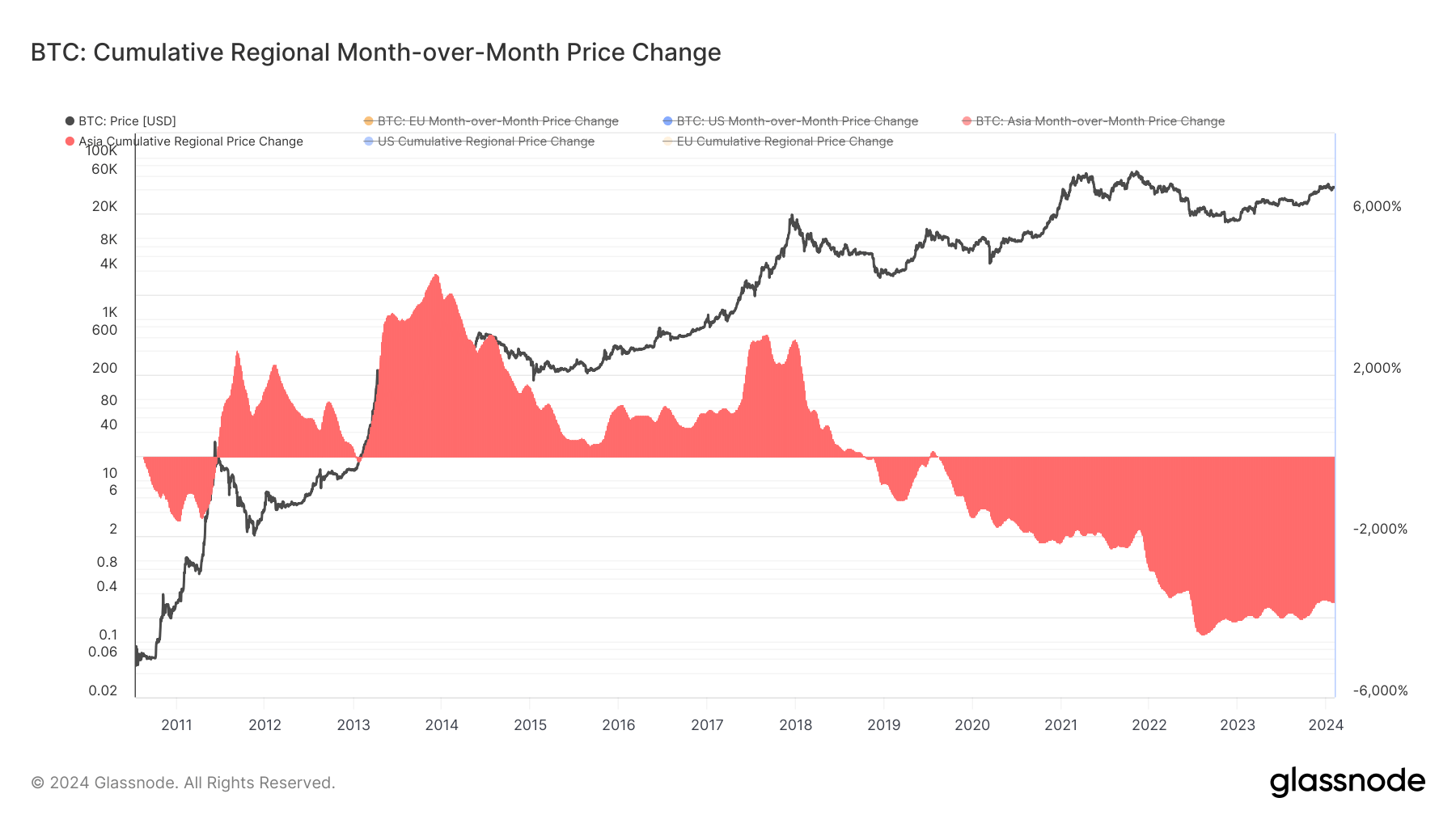
A deep analysis of Bitcoin transactions and their correlation with working hours across major geographical regions reveals a striking disparity in price performance.
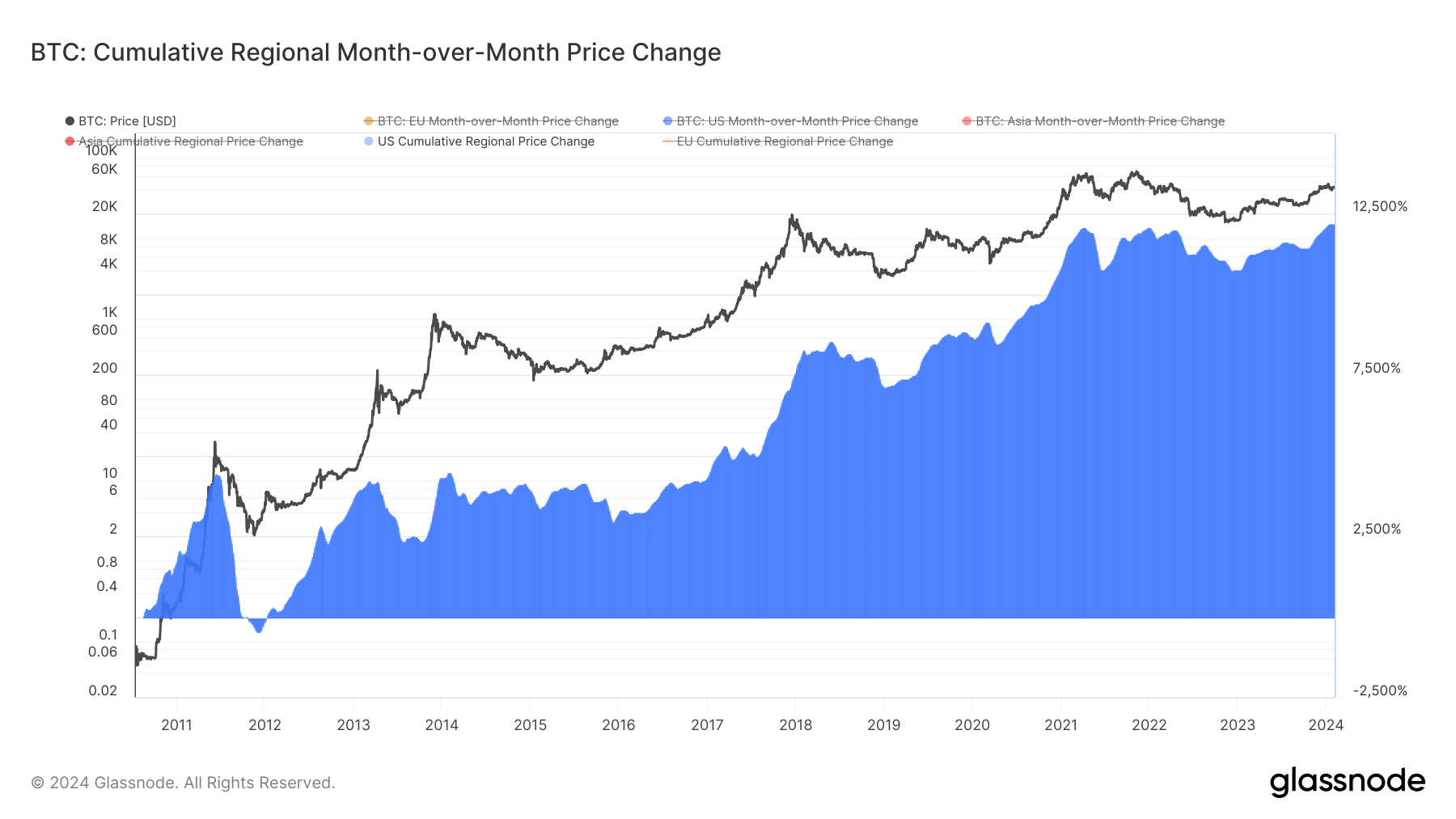
Analyzing 8 am to 8 pm Eastern Time, Central European Time, and China Standard Time for the U.S., Europe, and Asia, respectively, allows insights into Bitcoin price change within work hours in each region.
Looking at the month-on-month cumulative price change within each time period reveals notable discrepancies.
The United States, with its bullish stance on Bitcoin, leads the pack with a whopping 12,200% price change. This trend appears to strengthen as Bitcoin’s lifespan prolongs, suggesting an increasing favor towards the digital currency.
The U.S.’s bullish trend can be supported by the recent approval of spot BTC exchange-traded funds (ETFs), which have seen a total net inflow of $1.5 billion.

Despite a similar trajectory, Europe trails slightly, boasting a significant 8,000% price change. Despite falling short compared to the U.S., Europe’s performance demonstrates a steady confidence in Bitcoin’s potential.

However, the narrative differs starkly for Asia. Once bullish, their stance flipped negative in 2019, and the region hasn’t recovered since, with an alarming negative 3,500% price change. Conversely, Asia’s negative performance may be traced back to multiple Bitcoin bans, notably in China, which saw a notable decline in the Bitcoin hash rate in 2021.

The post U.S. leads in Bitcoin price surge as Asia sees decline appeared first on CryptoSlate.