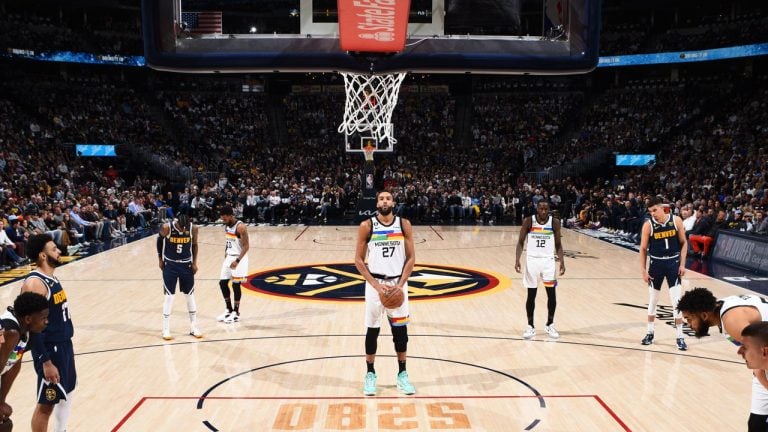
Investors in the bankrupt cryptocurrency exchange Voyager Digital are suing the National Basketball Association (NBA), and New Jersey’s oldest law firm, McCarter & English. This emerging legal battle illustrates how even some of the largest and most reputable brands and companies can quickly become ensnared in controversy in an industry marred by a tangled web […]
Source link

Voyager
As part of the agreement, Voyager will be “permanently restrained and enjoined” from marketing or providing products or services related to digital assets.
On Tuesday, November 28, the federal judge approved an order requiring crypto lending firm Voyager Digital and its affiliates to pay $1.65 billion in monetary relief to the United States Federal Trade Commission (FTC).
In a November 28 filing in US District Court for the Southern District of New York, Judge Gregory Woods ordered Voyager to pay $1.65 billion following a settlement between the lending firm and the FTC announced in October.
As part of the agreement, Voyager will be “permanently restrained and enjoined” from marketing or providing products or services related to digital assets.
Judge Woods stated that the recently approved order is unlikely to significantly impact proceedings in the bankruptcy court. Voyager sought Chapter 11 protection in July 2022, revealing liabilities ranging from $1 billion to $10 billion. In May, the court greenlit a plan enabling Voyager users to receive an initial 35.72% of their claims from the lending firm.
As part of the settlement, entities linked to Voyager need to collaborate with FTC officials, participating in hearings, trials, and discovery processes. Voyager must also provide compliance reports after a year, subject to monitoring by the commission.
In October, both the US Commodity Futures Trading Commission (CFTC) and the FTC filed simultaneous lawsuits against former Voyager CEO Stephen Ehrlich, alleging misleading statements about the use and safety of customer funds. Ehrlich, at the time, also contended that Voyager’s team had consistently communicated and collaborated closely with regulators, largely refuting the allegations.
Furthermore, in a separate case in July, the FTC ordered crypto lending company Celsius to pay $4.7 billion in fees, accusing the co-founders of misappropriating user assets and providing misleading information to investors about the platform’s services. Former Celsius CEO Alex Mashinsky, arrested by US officials, remains free on bail until his trial, scheduled to commence in September 2024.
DCG Ends $620 Million Lawsuit with Genesis
In another development, Digital Currency Group (DCG) has reached a new repayment agreement with its bankrupt subsidiary, Genesis Global Holdco LLC, as part of a resolution to a lawsuit seeking approximately $620 million from DCG.
During a Tuesday hearing, Genesis lawyer Sean O’Neal stated that the deal is expected to provide the bankrupt cryptocurrency lender with around $200 million in value over the next few weeks. The agreement stipulates that DCG must fulfill outstanding payments by April 2024, and in the event of a default, Genesis retains the right to pursue the collection of any unpaid amount, according to court documents.
The proposed agreement aims to settle a lawsuit initiated by Genesis in September, seeking to recover outstanding loans from its parent company. Despite DCG making payments to Genesis since the lawsuit’s filing, court documents indicate that, as of Nov. 28, DCG still owes its subsidiary $324.5 million.
Genesis has expressed that the agreement will prevent lengthy and costly litigation with its parent company, ensuring that the bankrupt crypto lender receives partial repayment of its owed amount. However, O’Neal clarified that the deal does not address other disputes between Genesis and DCG related to the resolution of Genesis’s bankruptcy.
next
Blockchain News, Cryptocurrency News, News
You have successfully joined our subscriber list.
CFTC weighs enforcement action against former Voyager Digital CEO: Report

Officials at the United States Commodity Futures Trading Commission (CFTC) are reportedly considering an enforcement action against Stephen Ehrlich, the former CEO of crypto lending firm Voyager Digital.
According to an Oct. 6 Bloomberg report, CFTC staff are considering taking action against Ehrlich following an investigation concluding the former CEO violated U.S. derivatives regulations prior to Voyager’s bankruptcy filing. The firm filed for Chapter 11 protection in July 2022 amid the crypto market downturn.
Ehrlich was reportedly “angered and perplexed” by the claims:
“These allegations appear to be one of those times where the referees are making new rules and calling foul after the game has ended.”
Related: Creditors for bankrupt Voyager Digital billed $5.1M in legal fees
Voyager, still in the middle of bankruptcy proceedings, was already under scrutiny from the U.S. Federal Trade Commission “for [its] deceptive and unfair marketing of cryptocurrency to the public.” A bankruptcy court approved Voyager’s plan to repay customers in May, and the case was ongoing at the time of publication.
The CFTC has several cases pending against crypto firms that have the potential to make waves across the U.S. regulatory space, but many of the enforcement actions in 2023 have been brought by the Securities and Exchange Commission. Binance and its CEO, Changpeng Zhao, have pushed for authorities to dismiss a CFTC lawsuit filed in March, while many executives at Binance.US have left the exchange amid regulatory scrutiny.
Magazine: US enforcement agencies are turning up the heat on crypto-related crime
More Selling? Bankrupt Voyager Sends Millions In SHIB And ETH To Coinbase
Voyager Digital has been busy in recent months as it looks to sell its remaining crypto holdings on centralized exchanges. In its latest move, the bankrupt crypto brokerage has transferred millions in SHIB and ETH to Coinbase. According to on-chain data, Voyager moved SHIB and ETH tokens to Coinbase’s ledger on Friday, August 11.
Millions In SHIB And ETH Transferred To Coinbase By Voyager
Voyager has been selling off assets since the beginning of the year. Specifically, the latest on-chain transactions show that Voyager moved a total of $5.5 million in crypto to Coinbase. The transactions consisted of 1,500 ETH sent in two transactions.
Before being moved to Coinbase, 1,000 ETH and 500 ETH, with a combined value of $2.77 million, were sent to separate wallets. Another 250 billion SHIB valued at $2.7 million was then sent to Coinbase.
On-chain data also shows that Voyager has been moving all its token holdings to its primary address. This likely means the company is consolidating its crypto assets before moving them to crypto exchanges.
Bankrupt crypto firm Voyager transferred 1,500 ETH ($2.77 million) and 250 billion SHIB ($2.7 million) to Coinbase. Additionally, Voyager is moving all remaining tokens to the main address. There are currently about $81.63 million worth of cryptocurrency in Voyager addresses.…
— Wu Blockchain (@WuBlockchain) August 12, 2023
Looking To Pay Pack Customers
Voyager’s goal is to eventually reimburse all customer accounts, at least partially. The firm went bankrupt last year after the failure of crypto hedge fund Three Arrows Capital which failed to repay its $665 million Voyager loan. The company, however, received court approval in May 2023 to begin winding down its operations and start repaying customers a portion of their crypto assets that’s been locked for over a year.
According to court filings, Voyager had only about $630 million to pay back $1.8 billion in customer claims. As a result, Voyager users could only claim 35.72% of their tokens. They could either withdraw their claims immediately or choose to wait for 30 days to be paid in USD after Voyager sells the tokens.
VGX prices tanks as bankruptcy proceedings continue | Source: VGXUSDT on Tradingview.com
At the time, data from Arkham Intelligence showed that Voyager had $268 million in ETH, $236 million in USDC, and $77 million in SHIB. But now that the time for customer claims is over, Voyager seems to be consolidating its remaining assets into one address before selling them. According to Arkham Intel, there is currently about $81.63 million worth of cryptocurrency left in Voyager addresses.
What This Means For SHIB And ETH Prices
The recent transfers of millions of dollars in SHIB and ETH tokens from Voyager Digital to Coinbase could signal selling pressure is on the way for the two cryptocurrencies. If Coinbase unloads these tokens onto the open market, it may drive prices down further as supply outpaces demand.
SHIB is currently on a roll and is up by 15.55% in a 7-day timeframe. ETH, on the other hand, is currently ranging around $1,850 after the ETH ecosystem reached a milestone recently with the number of non-zero addresses reaching a new all-time high.
Featured image from Currency.com, chart from Tradingview.com
Bankrupt Voyager experiences $250M withdrawal surge as users move assets to centralized exchanges
What is CryptoSlate Alpha?
A web3 membership designed to empower you with cutting-edge insights and knowledge. Learn more ›
Connected to Alpha
Welcome! 👋 You are connected to CryptoSlate Alpha. To manage your wallet connection, click the button below.
Oops…you must lock a minimum of 20,000 ACS
If you don’t have enough, buy ACS on the following exchanges:
Connect via Access Protocol
Access Protocol is a web3 monetization paywall. When users stake ACS, they can access paywalled content. Learn more ›
Disclaimer: By choosing to lock your ACS tokens with CryptoSlate, you accept and recognize that you will be bound by the terms and conditions of your third-party digital wallet provider, as well as any applicable terms and conditions of the Access Foundation. CryptoSlate shall have no responsibility or liability with regard to the provision, access, use, locking, security, integrity, value, or legal status of your ACS Tokens or your digital wallet, including any losses associated with your ACS tokens. It is solely your responsibility to assume the risks associated with locking your ACS tokens with CryptoSlate. For more information, visit our terms page.
Gemini Allows Withdrawals for Voyager Customers Whose Funds Have Been Trapped since Bankruptcy
The 30-day window of opportunity opened on Sunday, June 25th, and would run till July 23rd.
Voyager customers who have been unable to access their funds since the company folded up last year may finally have something to cheer about. This follows after a recent blog post hinted that customers affected by Voyager’s bankruptcy can now withdraw their funds.
According to the blog post, the 30-day window of opportunity opened on Sunday, June 25th, and would run till July 23rd. During this period, the customers can take out their trapped funds onto the Gemini platform. However, any unclaimed crypto after the window will be liquidated to cash.
Gemini Shares Recovery Process for Voyager Users
In a statement, Gemini has shared its excitement about the new development. The firm claims that a promotional welcome is actively ongoing, encouraging Voyager customers to simply create an account on the Gemini platform to begin their withdrawals. Part of the statement reads:
“New US customers from Voyager will receive $5 in BTC after they sign up and become verified within 30 days of opening their account.”
Meanwhile, it appears that a little issue will inadvertently arise with the withdrawals. Gemini confirms that the withdrawal will only allow for the crypto assets its platform currently supports. That is, assets not included in the over 70 crypto assets on the Gemini exchange will be lost.
As Coinspeaker earlier reported, crypto broker Voyager Digital filed for bankruptcy protection on July 5th, 2022. At the time, the firm claimed that the filing was part of its restructuring plans.
Since then, however, several firms have attempted, albeit unsuccessfully, to acquire its assets. FTX US first won an auction for the assets in September 2022, before it went bankrupt itself by November.
Similarly, Binance also put out a $1.2 billion deal to acquire Voyager’s assets. But severe regulatory pushbacks and amendments would also see the giant exchange pull out of the race in April 2023.
After several unsuccessful attempts to sell its assets, the bankruptcy court finally approved plans to self-liquidate the platform in May 2023. As it stands though, Voyager estimates that customers will receive about 36% of the amount owed to them. It also considers a possibility that the figure goes higher if Voyager can resolve the ongoing dispute with FTX regarding a $445.8 million loan repayment.
next
Cryptocurrency news, News

Mayowa is a crypto enthusiast/writer whose conversational character is quite evident in his style of writing. He strongly believes in the potential of digital assets and takes every opportunity to reiterate this.
He’s a reader, a researcher, an astute speaker, and also a budding entrepreneur.
Away from crypto however, Mayowa’s fancied distractions include soccer or discussing world politics.
You have successfully joined our subscriber list.